iWorld
Net Neutrality: DoT Committee suggests plan of action, roots for expansion of OTT services

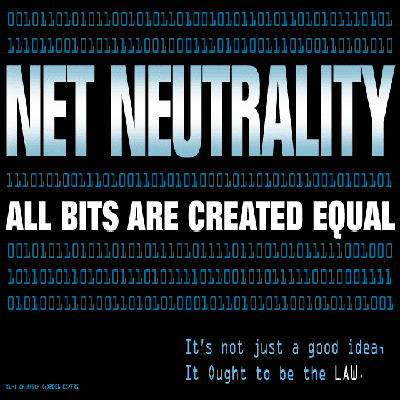
NEW DELHI: User rights on the Internet need to be ensured so that Telecom Service Providers (TSPs) and Internet Service Providers (ISPs) do not restrict the ability of the user to send, receive, display, use, post any legal content, application or service on the Internet, or restrict any kind of lawful Internet activity.
However only the Government can decide what constitutes legality in relation to the content, application or service, with scope for judicial adjudication in case of any dispute.

This has been stated by a Committee constituted by the Department of Telecom (DoT) and headed by member (Technology) A K Bhargava on 19 January this year to study Net Neutrality and its implications.
Other members were A K Mittal who is senior DDG TEC; Shashi Ranjan Kumar joint secretary (A); V Umashankar joint secretary (T); Narendra Nath – DDG (Security); and R M Agarwal – DDG (NT) who was also convenor of the committee.
The Telecom Regulatory Authority of India (TRAI) issued a consultation paper in March this year titled “Regulatory Framework for Over-the-Top (OTT) Services” where the issue of Net Neutrality in the backdrop of OTT services came to the fore.
The TRAI consultation paper sharply intensified the debate on Net Neutrality with broadcasters and telecom operators giving radically opposite views.
At the outset, the DOT Committee said India has 997 million telecom subscribers and 99.20 million broadband subscribers with an access to internet at speeds higher than 512 kbps. Out of about 300 million subscribers accessing the internet, around 93 per cent subscribers are on wireless media, whereas seven per cent are on fixed wire line media. Currently, both broadband and internet penetration in India is comparatively low in the global context.
In India, Internet traffic is likely to increase manifold in the next few years. There is a constant pressure for investment in network infrastructure and to expand capacities and increase penetration. Telecom infrastructure, being a capital intensive industry, will require significant investments by operators to meet the network capacity demands brought about by increasing broadband penetration, increasing speeds and increasing data usage.
Telecom service providers have also started facing competition from unlicensed application platforms, termed Over-the-Top (OTT) players, in their traditional voice communication field.
With an objective of enhancing revenue streams and to face competition from OTT players, telecom service providers have been exploring new opportunities for generating revenues from users and the content providers. Some of the models attempted by TSPs, such as charging higher.
The Committee said content and application providers cannot be permitted to act as gatekeepers and use network operations to extract value in violation of core principles of Net Neutrality, even if it is for an ostensible public purpose.
The Committee refrained from making any specific recommendation on search-neutrality, however, flags this issue as a concern for public policy.
In the report that runs into more than 100 pages, the Committee unhesitatingly recommends that “the core principles of Net Neutrality must be adhered to.”
The Committee suggested an enforcement process where the core principles of Net Neutrality may be made part of license conditions and the licensor may issue guidelines from time to time as learning process matures. Since Net Neutrality related cases would require specialized expertise, a cell in the DoT HQ may be set up to deal with such cases. In case of violations, the existing prescribed procedure may be followed. This would involve two stage process of review and appeal to ensure that decisions are objective, transparent and just.
The tariff shall be regulated by TRAI as at present. Whenever a new tariff is introduced it should be tested against the principles of Net Neutrality. Post implementation, complaint regarding a tariff violating principle of Net Neutrality may be dealt with by DoT. Net Neutrality issues arising out of traffic management would have reporting and auditing requirements, which may be performed and enforced by DoT. QoS issues fall within the jurisdiction of TRAI. Similarly reporting related to transparency requirements will need to be dealt with by TRAI. TRAI may take steps as deemed fit.
National security is paramount, regardless of treatment of Net Neutrality. The measures to ensure compliance of security related requirements from OTT service providers need to be worked out through inter-ministerial consultations.
India should take a rational approach and initiate action in making an objective policy, specific to the needs of our country. It says both innovation and infrastructure have to be promoted simultaneously and neither can spread without the other.
The primary goals of public policy in the context of Net Neutrality should be directed towards achievement of developmental aims of the country by facilitating “Affordable Broadband”, “Quality Broadband” and “Universal Broadband” for its citizens.
OTT application services have been traditionally available in the market for some time and such services enhance consumer welfare and increase productivity. Therefore, such services should be actively encouraged and any impediments in expansion and growth of OTT application services should be removed.
There should be a separation of “application layer” from “network layer” as application services are delivered over a licensed network.
Specific OTT communication services dealing with messaging should not be interfered with through regulatory instruments.
In case of VoIP OTT communication services, there exists a regulatory arbitrage wherein such services also bypass the existing licensing and regulatory regime creating a non-level playing field between TSPs and OTT providers both competing for the same service provision. Public policy response requires that regulatory arbitrage does not dictate winners and losers in a competitive market for service provision.
The existence of a pricing arbitrage in VoIP OTT communication services requires a graduated and calibrated public policy response.
In case of OTT VoIP international calling services, a liberal approach may be adopted. However, in case of domestic calls (local and national), communication services by TSPs and OTT communication services may be treated similarly from a regulatory angle for the present. The nature of regulatory similarity, the calibration of regulatory response and its phasing can be appropriately determined after public consultations and TRAI’s recommendations to this effect.
For OTT application services, there is no case for prescribing regulatory oversight similar to conventional communication services.
Legitimate traffic management practices may be allowed but should be “tested” against the core principles of Net Neutrality. General criteria against which these practices can be tested are as follows:
1. TSPs/ISPs should make adequate disclosures to the users about their traffic management policies, tools and intervention practices to maintain transparency and allow users to make informed choices.
2. Unreasonable traffic management, exploitative or anti-competitive in nature may not be permitted.
3. Tariff plans offered by TSPs/ISPs must conform to the principles of Net Neutrality set forth in guidelines issued by the Government as Licensor and TRAI may examine the tariff filings made by TSPs/ISPs to determine whether the tariff plan conforms to the principles of Net Neutrality.
New legislation, whenever planned for replacing the existing legal framework, must incorporate principles of Net Neutrality. Till such time as an appropriate legal framework is enacted, interim provisions enforceable through licensing conditions as suggested by the Committee may be the way forward.
Since enforcing Net Neutrality principle is a new idea and may throw up many questions and problems in the days ahead, an oversight process may be set up by the government to advise on policies and processes, review guidelines, reporting and auditing procedures and enforcement of rules.
Capacity building through training, institution building and active engagement with stakeholders is essential. In order to deal with the complexities of the new digital world, a think-tank with best talent may also be set up.
Click here to read IAMAI welcomes DoT recommendations on Net Neutrality




iWorld
Prime Video unveils biggest India originals slate yet
Nearly 55 titles across languages signal deeper push into films, series

MUMBAI: Prime Video is turning up the volume on Indian storytelling, unveiling its largest-ever Originals slate at the ‘Prime Video Presents’ showcase, with close to 55 series and films spanning languages, genres and formats.
The new lineup, which stretches across Hindi, Tamil and Telugu, signals a clear intent: go bigger, go wider, and meet audiences wherever they are watching, whether on streaming screens or in cinemas. Alongside Originals, the platform also announced a fresh theatrical slate under Amazon MGM Studios, marking a deeper step into the big-screen business.
Among the headline acts is The Revolutionaries, a large-scale drama from Nikkhil Advani starring Bhuvan Bam and Rohit Saraf. The slate also features Matka King with Vijay Varma, Raakh starring Ali Fazal and Sonali Bendre, and Lukkhe, which marks rapper King’s acting debut. Adding a genre twist is Vansh – The Kalyug Warriors, positioned as India’s first homegrown Hindi superhero series for streaming.
Familiar favourites are also making a return, with new seasons of Farzi, Panchayat, Call Me Bae, Dupahiya, Dahaad and The Traitors in the pipeline, reinforcing the platform’s bet on established franchises.
Regional storytelling gets a notable push. Highlights include a Telugu adaptation of The Traitors hosted by Teja Sajja, the drama Guvvala Cheruvu Ghat, and Tamil titles such as Exam and returning seasons of Vadhandhi and Inspector Rishi.
The slate also opens new creative partnerships. Hrithik Roshan’s HRX Films steps into streaming with Storm and Mess, while Alia Bhatt’s Eternal Sunshine Productions backs Don’t Be Shy. Production houses including Excel Entertainment, Tiger Baby Films and The Viral Fever further deepen the creative bench.
On the theatrical front, the platform is lining up five films, including Raftaar starring Rajkummar Rao and Keerthy Suresh, VIBE directed by Kunal Kemmu, Dilkashi with music by A. R. Rahman, Nayyi Navelli featuring Yami Gautam, and Kuku Ki Kundli starring Wamiqa Gabbi.
According to Prime Video India director and head of Svod business Shilangi Mukherji, India remains central to the platform’s global growth, ranking among its top markets for new subscribers. She noted that nearly two-thirds of users watch content in more than four languages, underlining a growing appetite for diverse storytelling.
Prime Video India director and head of originals Nikhil Madhok, said the new slate reflects a continued push towards bold, culturally rooted narratives with global appeal.
In short, Prime Video is not just adding titles, it is widening the lens. From small-town dramas to superhero sagas and cinema-ready spectacles, the message is simple: more stories, more voices, and far more ways to watch them.