eNews
Need to examine legalising sports betting, says Law Commission chairman

NEW DELHI: Gaming 360, All India Gaming Federation’s one-stop portal for gaming related news and activities across India and around the globe, was launched here today to bringing the industry together and providing it with a platform where the stakeholders can make their voices heard.
This was stated by AIGF CEO Roland Landers at the India Gaming Conclave here. He said, “We appreciate the presence of such dignitaries at the inaugural event and are hopeful that in the coming years it will witness more such powerful presence to help us make a difference.”
Landers said India Gaming Conclave would now be an annual event for the stakeholders to converge and discuss on working towards a legalized and regulated gaming industry in India. The event aimed at educating and creating awareness on all aspects of gaming.

Law Commission of India chairman Justice Dr. Balbir Singh Chauhan underlined the need to examine legalising sports betting by studying the social, economic and moral implications of any such move specifically under a liberalised regime. The myths and negative opinions on these issues have to be cleared, he emphasised.
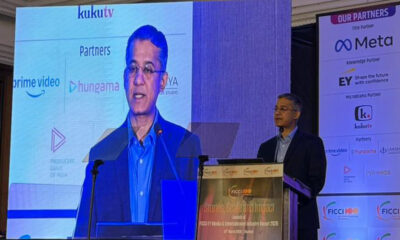
Delivering the keynote address at the Conclave (IGC) organized by FICCI jointly with All India Gaming Federation (AIGF), Justice Chauhan said individual freedom was the basic right “which we all look up to but the vulnerable sections of the society need protection at the same time”. While those in favour of legalising betting believe in the need to protect individual autonomy and minimum state interference, those disfavouring it believe that preserving societal order and morality was also important. Therefore, there was a need for reforms that aim at flexibility while ensuring freedom of choice for the consumers. Hence, there was a need to strike a balance between freedom and choice.
He said that any attempt at legalising gambling and betting has to be made in the backdrop of this socio-economic reality. There was a grave risk that legalising this activity might adversely affect the social fabric of India. There were chances that people in a bid to earn quick money through gambling might resort to unlawful means. A comprehensive analysis of the socio-economic circumstances in light of the constitutional guidelines was thereby essential before framing an umbrella legislation that legalises gambling.
There were certainly several adverse effects of gambling. The first problem with gambling was when a person becomes addicted and loses control over his/her gambling activities, resulting in financial losses that have an adverse impact on his/her personal, economic and social life. The second problem relates to the social repercussions that are a direct consequence of gambling. One fallout could be increased crime, loan sharking (taking loans at exorbitant rates for gambling), worsening of the living standards of the poor and lower middle class and changes in behavioural norms and social ethics.
Justice Chauhan said that it must be kept in mind that these adverse effects arise not from gambling per se, but are a result of excessive gambling which results in addiction. Harm resulting from excess is not something which is limited to gambling alone, as an excess of anything may negate its benefits. A common analogy would be alcohol, which when taken in moderation causes no great harm to the individual or society and may help people to socialise and relax. However, if a person develops a habit or addiction to drunkenness, it will cause health problems for him, as well as adverse consequences for the society at large, such as increased crime, violence. The response of the state in such a situation should be to regulate the activity, not seek to stop it completely. Legalisation would give the government the opportunity to bring gambling out from the dark corners of the society, impose some controls and extract some revenue. Perhaps as importantly, if betting were legal then a huge chunk of money that, at the moment circulates only round the black market, would quickly become available.
FICCI Director Rahul Chakravarty said sport and gaming were one of the fastest growing sectors in the economy with a lot of money flowing in the sector. Gambling regulation was not new to India with lotteries already being regulated business under state control.
FICCI launched the debate on regulating online sports betting and lottery in India in 2012. This regulation was not just to restrict the illegal activities but could create a scope of revenue for the government to invest in social sectors apart from sports.
He said that FICCI and AIGF will take forward the feedback on safety and security pertaining to gaming as well as other relevant issues. He added FICCI believes that this conclave will not only help in exchanging ideas and information but will initiate further policy work.






eNews
Paisabazaar launches Credit Premier League 2.0
Nationwide campaign rewards highest credit scores with Rs 1 lakh top prize.

MUMBAI: When credit scores become a national league, even your CIBIL report starts feeling like it’s playing in the IPL and Paisabazaar has just kicked off the second season. Paisabazaar, India’s leading marketplace for financial products and the country’s largest free credit score platform, has announced the return of the Credit Premier League (CPL) 2.0, a fun, nationwide initiative to recognise and reward individuals with the highest credit scores.
Building on the success of the first edition, CPL 2.0 introduces higher rewards and broader participation. The individual(s) with the highest credit score in the country will win Rs 1 lakh, while state champions will each receive Rs 10,000. Additionally, all participants from the winning state, the one with the highest average credit score will also be rewarded.
All winnings will be credited directly to winners’ PB Wallet, allowing them to pay credit card bills, recharge mobiles, or settle utility bills seamlessly on the Paisabazaar platform.
Paisabazaar CEO Santosh Agarwal said the campaign aims to make credit awareness more engaging and mainstream. “With CPL, we are bringing together engagement, gamification and rewards to make conversations around credit scores more mainstream,” he noted. “Our focus remains on building a financially aware and credit-healthy Bharat.”
The first edition of CPL saw over 5.5 million participants, with the highest individual score touching 861. Delhi recorded the highest average credit score of 746.
Consumers can participate simply by checking their free credit score on the Paisabazaar platform or app. The CPL leaderboard and rankings will be available exclusively on the Paisabazaar App.
In a country where financial dreams are serious business, Paisabazaar has found a smart way to turn credit scores into an exciting game – because when your financial health gets rewarded, everyone wants to play.






