I&B Ministry
NBDA strengthens regulations with graded penalties for broadcasters and digital publishers


Mumbai: The News Broadcasters & Digital Association (“NBDA”) is the collective voice of the news, current affairs and digital broadcasters in India, whose membership includes leading news and current affairs broadcasters and digital news publishers, who run news and current affairs channels and digital news platforms. Members of NBDA are some of the nation’s top-rated news channels and they command more than 80 per cent of news television viewership in India.
One of the significant achievements of NBDA is its independent self-regulatory body “News Broadcasting & Digital Standards Authority” (NBDSA), which was established nearly 15 years ago. NBDSA has emerged as a time-tested complaint redressal system and process for the viewers. Since its inception, NBDSA has been headed by eminent former judges of the Supreme Court of India, and by other renowned Independent Members, who have striven to improve broadcasting standards.
The NBDA Board felt that it had become necessary to review and amend the News Broadcasting & Digital Standards Regulations (regulations) to bring it in sync with the evolving media landscape.

The NBDA Board is grateful to Justice (Retd) A. K. Sikri, chairperson, NBDSA, Justice (Retd) R. V Raveendran, former chairperson, NBDSA and Senior Advocate Arvind P. Datar, for their invaluable guidance and inputs in facilitating the process.
The salient features of the regulations are:
With the inclusion of digital news media in its membership, the regulations have been amended to bring digital publishers under the purview of NBDSA. Further, several new definitions have been added in the Regulations, which include:
“Digital News Media” means digitized news content that can be transmitted over the internet or computer networks and includes content received, stored, transmitted, edited or processed by a digital publisher;
“Digital News Platforms” refers to platforms which facilitate transmission of digitized news content over the internet or computer networks including social networking sites or social media;
“OTT Platforms” refers to platforms which facilitate transmission of any program, feature, news-item, news-report or any other matter over the internet or computer networks on demand;
“Digital Publisher” includes a news portal, news aggregator, news agency and any other entity which is engaged in publishing of news and current affairs content on digital news platforms, OTT platforms, social networking sites and social media.
Penalties to be imposed for violation of the Code of Conduct have been broadened to include graded penalties, which are as follows:
7. Powers of Authority
“Where, on receipt of a complaint made to it or otherwise, the Authority has reason to believe that a Broadcaster or Digital Publisher has violated the Code of Conduct, the Authority may, after giving the Broadcaster or Digital Publisher concerned, an opportunity of being heard, hold an inquiry in such manner as is provided by these Regulations and, if it is satisfied that it is necessary so to do, it may, for reasons to be recorded in writing, direct the following penalties to be imposed upon the broadcaster or digital publisher:-
For the first violation issue/express:
a. warning, admonish, censure, disapproval, regret, apology and/or
b. impose a fine of upto Rs. 2 lacs
For the second violation issue/express:
a. warning, admonish, censure, disapproval, regret, apology and/or
b. impose a fine of upto Rs. 5 lacs
For the third violation issue/express:
a. warning, admonish, censure, disapproval, regret, apology and/or
b. impose a fine upto one per cent of the total annual turnover of the channel.
Provided such fine shall not exceed Rs.25 lakhs, in any given matter.
In addition to the above, on the third violation of the code of conduct, the authority may direct a particular programme to be suspended for up to one week and/or direct the broadcaster to suspend the anchor for upto one month and/or issue any other direction as the authority deems appropriate to the broadcaster or digital publisher and/or recommend to the concerned authority for suspension/revocation of license of such broadcaster;
Provided that the fine imposed by the authority shall be recovered from the concerned broadcaster or digital publisher.
Provided that if the authority holds that the Broadcaster or digital publisher has violated the code of conduct, it will direct the broadcaster/digital publisher to immediately remove or suitably edit the broadcast/publication from all digital news platforms, social media and social networking sites;”
Suo-Motu proceedings
“The Authority has the power to initiate suo motu proceedings and issue notice or, as the case may be, take action in respect of any matter which falls within the mischief contemplated in these regulations or relating to any matter falling within or arising from the Code of Conduct, and in such cases the Authority would be free to adopt its own procedure and such procedure need not be the same procedure as when the complaint is filed.
The authority may exercise suo motu power in cases where public interest requires immediate remedial action to be taken, or in other cases where the Authority deems it fit to do so.
Where suo motu proceedings have been taken ex-parte, the authority will issue notice to the concerned broadcasters/digital publishers within three days giving an opportunity to explain why further action under the regulations should not be taken.
The Authority may exercise its powers suo motu even on a subject matter brought to its attention by a Complainant whose complaint has been dismissed due to delay in filing the Complaint.”
New provision added in the regulations
Emergency powers
“In the event there is an emergency situation involving egregious and/or continuous and/or repetitive violation(s) of the code of conduct in the telecast/publication by the member broadcasters/digital publishers on a particular subject, the authority shall also have suo motu emergency powers to issue interim directions to broadcasters/digital publishers without following the procedures as mentioned in the regulations.
In such emergency situations, an urgent meeting of the Authority will be convened within 24 (twenty-four) hours of such violation of code of conduct being brought to the notice of the Authority.
After the urgent meeting, the Authority can take action against any broadcasters/digital publishers including a particular channel/digital platform/OTT platform which would include a direction to remove the content immediately.
After the passing of any such interim directions, the aggrieved broadcaster/digital publisher may approach the authority for redressal of its grievance immediately. If a suitable explanation is given by the broadcasters/digital publishers, the authority can set aside the Interim Directions and direct the programme/content to be restored.”
The News Broadcasting & Digital Standards Regulations dated 20.6.2024 is attached.


I&B Ministry
IT Rules tweaks are clarificatory, not expansion of powers: MeitY
Govt signals flexibility as platforms push for clarity on user content rules
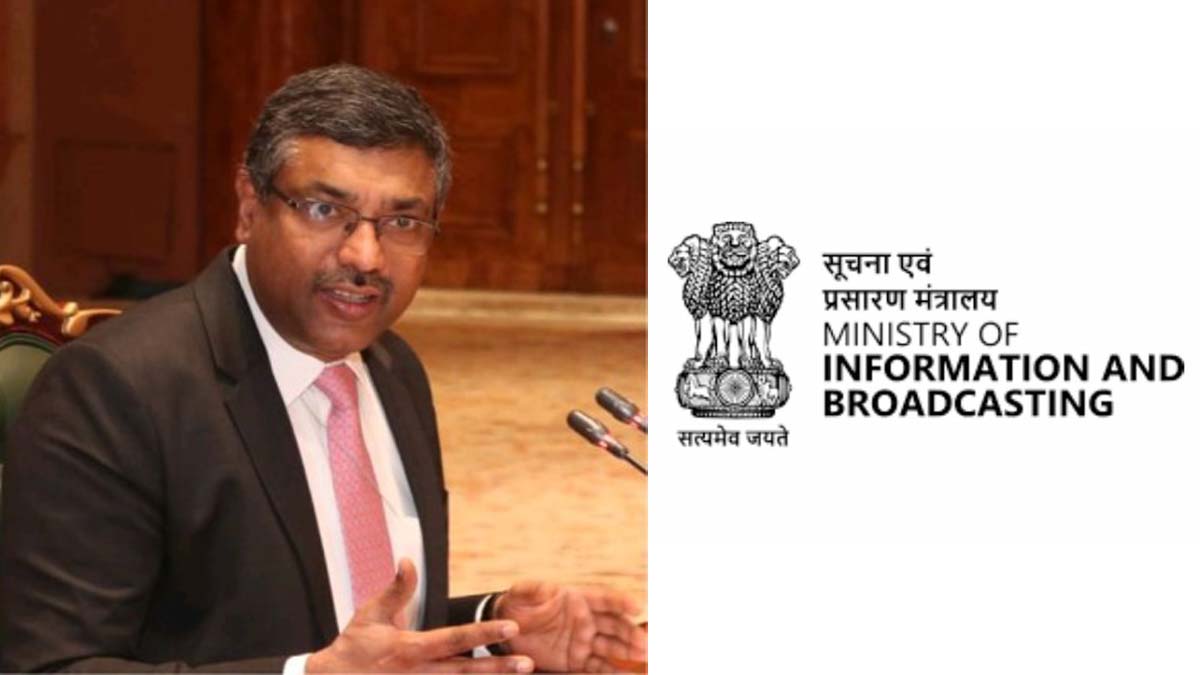
NEW DELHI: The Centre has sought to dial down concerns over its proposed amendments to the IT Rules, with Ministry of Electronics and Information Technology secretary S Krishnan asserting that the changes are intended as clarifications rather than an expansion of regulatory powers.
Pushing back against criticism from platforms and civil society, S Krishnan said the amendments “do not in any way actually give us wider powers” and are meant to remove ambiguity in how existing provisions are applied. He added that the trigger came largely from within the ecosystem, with intermediaries themselves seeking clearer guidance on compliance, takedowns and record preservation.
At the heart of the debate is the growing friction between platforms and policymakers over responsibility for user-generated content. Intermediaries have argued that they should not be treated on par with publishers, particularly when content is created and uploaded by users. Krishnan acknowledged this concern, noting that “a sharper distinction” between user content and publisher content is needed and is currently under examination.
The issue becomes more complex in enforcement scenarios. While registered publishers can be directly asked to modify or remove content, intermediaries often lack control over the original creator. “In such cases, the intermediary cannot direct those changes,” Krishnan explained, underlining the need for procedural nuance.
Another key proposal under discussion is to bring user-generated news and current affairs content within a more unified regulatory ambit, potentially under the Ministry of Information and Broadcasting. The move follows suggestions that a single authority should handle such content, regardless of whether it originates from a publisher or an individual user.
Even as the government frames the amendments as a tidy-up exercise, fault lines remain. Industry players have flagged concerns over compliance burdens, especially for smaller businesses, and questioned whether advisories could effectively become binding without explicit legislative backing. Krishnan said the government is mindful of these risks and is exploring ways to ease obligations, including possible relaxations under certain provisions.
The ministry is also considering consolidating multiple advisories and guidelines into a more structured framework, a step widely seen as addressing long-standing confusion over what platforms are expected to follow.
On takedowns, the government has reiterated that due process will remain unchanged. Krishnan stressed that actions will continue to be governed by established procedures, with reasons recorded and review mechanisms in place. He also pointed to the surge in deepfakes and synthetic media as a factor behind rising content disputes, calling it a “scale challenge” for regulators.
Interestingly, Krishnan also framed social media platforms as commercial entities rather than pure vehicles of free expression, hinting at a broader shift in regulatory thinking as platform economics come into sharper focus.
With stakeholders seeking more time and, in some cases, a rollback of the proposals, the government has kept the consultation process open-ended. Krishnan said further revisions remain on the table, signalling a willingness to adapt the draft based on feedback.
For now, the message from MeitY is clear: the rules may not be tightening in intent, but the effort to define them more clearly is well underway.






