News Broadcasting
NBC Universal’s Wright calls for greater cooperation between govts for piracy fight


MUMBAI: NBC Universal chairman and CEO Bob Wright has called for governments and businesses to join forces in a rigorous alliance to combat piracy and counterfeiting.
At the Third Global Congress on Combating Counterfeiting and Piracy, organised by the World Intellectual Property Organisation, he appealed to broadband providers, Internet auction sites, financial intermediaries and shipping companies to act more promptly in controlling the flow of illegal downloads and trading on their watch.
His speech was called “Hear No Evil No Longer”. He urged business leaders to put the issue of dealing with piracy at the top of their agendas. “The days of ‘hear no evil, see no evil’ must come to an end. The scale of the epidemic leaves no choice. Legitimate businesses have to step forward and declare that they will not profit on the back of IP theft. And if they don’t step forward, governments need to adopt laws to require cooperation.”

He noted that the technology-based, information-based society of tomorrow depends on innovation, invention, and creativity. These are the drivers of growth and progress. He warned that if they are not protected, tomorrow’s world will suffer greatly.
“And from where I sit, we are losing ground in this battle. Much more urgent and concerted action must be taken if we are to turn back a rising global surge of counterfeiting and pirating, which threatens not just to dampen but to seriously threaten the fire of innovation and invention that creates economic growth.”
He noted that one challenge involves raising the profile of the vast extent of intellectual property theft — and explaining and quantifying the threat to it. He stressed the need for action that goes beyond just modest measures.
Piracy results in a ripple effect that magnifies the losses suffered by any individual sector of the economy. For every dollar a nation’s industry loses to counterfeiting and piracy, that nation will lose at least three dollars of GDP.
When a movie studio loses revenues to piracy, it doesn’t have that money to reinvest into making more movies and television. Not only does this affect the individual studio but it also impacts all the companies that would have contributed to or benefited from these unmade productions. It reduces the revenue of the upstream suppliers to movie producers, and of the downstream industries, like movie theaters, DVD retailers, and video rentals.
He went on to note that counterfeiting and piracy depends on legitimate businesses for distribution and resale. It is these businesses that must be enlisted in order to reduce trade in counterfeit and pirated product.





News Broadcasting
CNN-News18 to host Fury in the Gulf conclave on West Asia crisis
Three-hour summit to unpack geopolitical fallout and impact on India
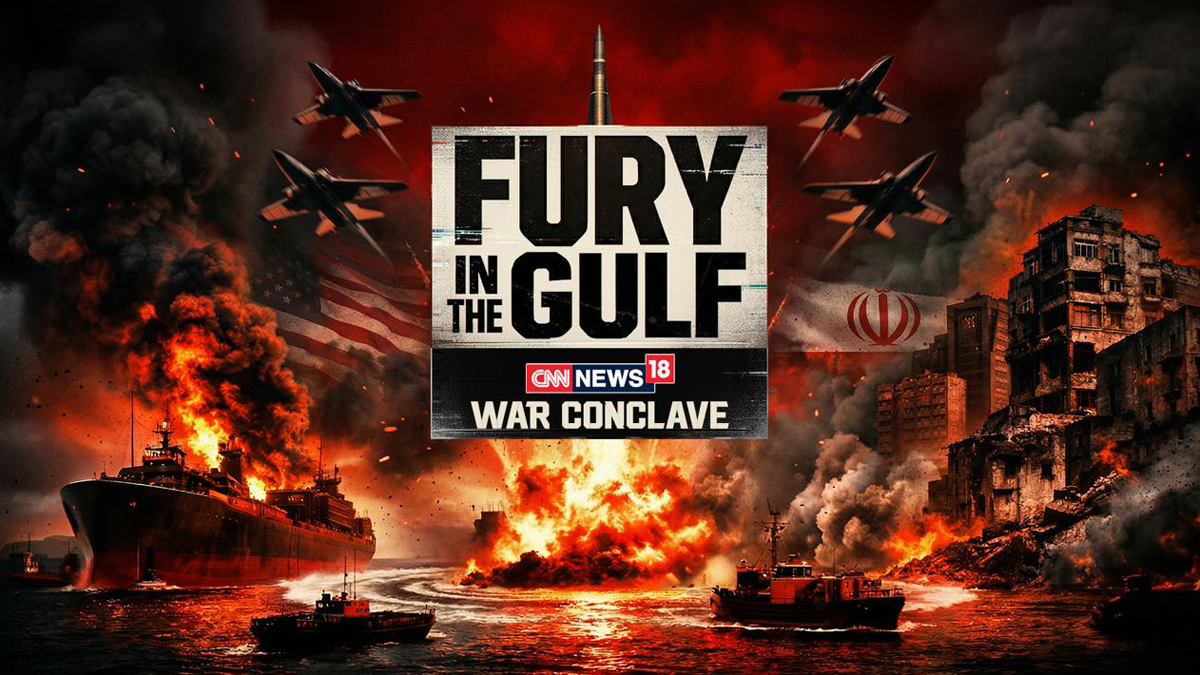
MUMBAI: CNN-News18 is set to host a special three-hour broadcast, Fury in the Gulf – War Conclave, on April 7, aiming to decode the escalating West Asia crisis and its far-reaching implications for India.
Scheduled from 4:00 PM to 7:00 PM, the conclave comes at a time when tensions between Iran and the United States are reshaping global geopolitics and triggering economic uncertainty. With India’s deep energy ties, trade links and large diaspora in the Gulf, the developments carry significant domestic relevance.
Built around the theme ‘Conflict, Consequences, and The Future,’ the programme will feature six curated sessions combining one-on-one interviews and panel discussions. The focus is to cut through the clutter and offer viewers a clearer understanding of the fast-evolving situation.
Key sessions include ‘Diplomacy in Times of War’ featuring Shashi Tharoor, and ‘World After the Iran Conflict’ with voices such as Ram Madhav, Reuven Azar, representatives from the European Union and the Iranian Deputy Envoy. Another session titled ‘Another Dunkirk?’ will bring together K. J. S. Dhillon and Jitin Prasada among others.
CNN-News18 editorial affairs director Rahul Shivshankar said, “In times of war, clarity becomes the most powerful tool. Fury in the Gulf – War Conclave brings together credible voices to address the questions and confusion that arise amid an overwhelming influx of information.”
He added that the initiative is aimed at delivering “facts, perspective, and insight” at a time when misinformation can easily cloud public understanding.
Echoing the sentiment, CNN-News18 CEO– English and business news Smriti Mehra said the conflict marks a defining global moment, with consequences that extend well beyond the region. She noted that the conclave seeks to present the crisis with “depth, nuance and responsibility” so audiences can better grasp its real-world impact.
As geopolitical tensions continue to dominate headlines, the conclave positions itself as an attempt to bring order to the noise, offering viewers a structured, insight-led look at a complex and rapidly shifting global situation.






