News Broadcasting
NBA urges PM to restrain PCI Chief from making ‘unwarranted comments’

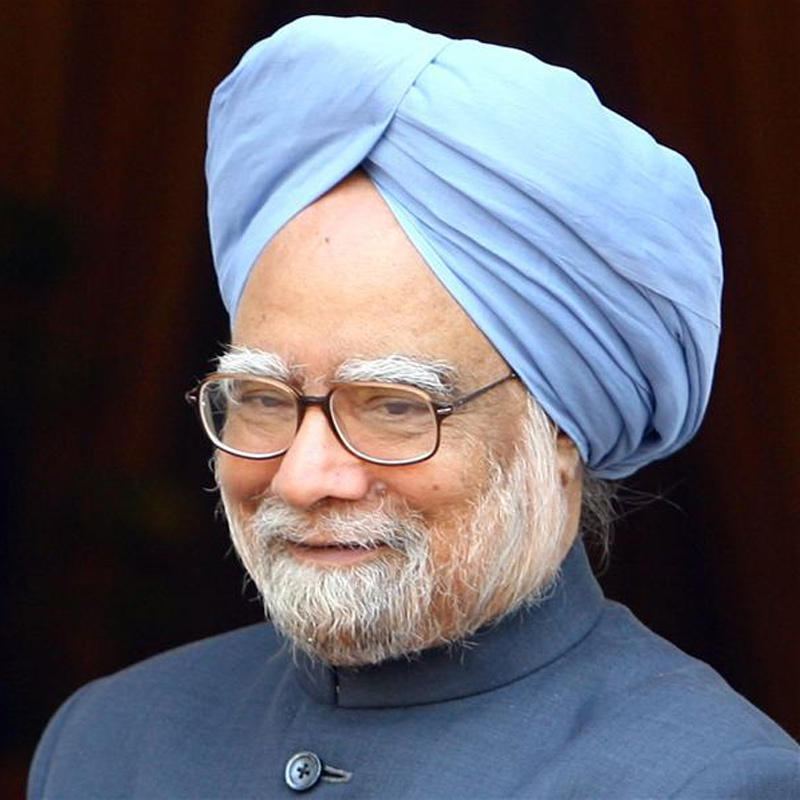
NEW DELHI: The News Broadcasters Association (NBA) has urged Prime Minister Manmohan Singh to ask Press Council of India chairman Justice Markanday Katju to “exercise restraint on commenting upon areas which are outside his jurisdiction”, reacting strongly to the demand for converting the Council into a Media Council.
In a letter to Singh, the NBA has said that he should “intervene and request the chairman of the Press Council of India to engage himself constructively with print media matters, which is the mandate he has under the Press Council Act and not to exceed his remit.”
“We are sure under your leadership no unilateral steps will be taken to regulate the electronic media as we are consciously trying to regulate with the sole endeavour to improve broadcasting standards, which are consistent with the tenets of the freedom of speech articulated in our Constitution,” the letter says.
Noting that both the Broadcasters Editors Association (BEA) and the Editors Guild have already express their unhappiness with the view of Justice Katju, the NBA has expressed “distress” over the “unwarranted comments” of Justice (Retd) Katju in his recent interview with Karan Thapar on CNN IBN that the attempt of the NBA to adopt self-regulation under the chairmanship of Justice (Retd) JS Verma, former Chief Justice of India “simply isn‘t working”; adding that the reason it is not working at all is that “there must be some fear in the media” which can only happen with a “danda”, which he was “magnanimous to say will only be used when required”.

“We are unable to understand how Katju has come to this conclusion that the self-regulatory mechanism adopted by News Broadcasters Standards Authority has failed. It is important to note that the NBSA was established in October 2008 whereas the statutorily set up Press Council of India has been in existence since 1978,” the letter says.
It has been pointed out that the NBSA in the last three years has been consciously making all efforts to ensure that broadcasting standards of news channels improve.
The NBA drew up its Code of Ethics and Broadcasting Standards and has issued various specific guidelines and advisories for covering specific situations and events, including for instance reporting on emergency situations, for covering the Ayodhya Judgment of the Allahabad High Court, the Telangana issue and reporting court proceedings etc. “It is a matter of great satisfaction that the Guidelines issued by the NBA for covering the Ayodhya Judgment were quoted verbatim and made part of the judicial order by the Allahabad High Court”, the letter says.
The Court had in fact said that “It is not our intent here to lay down any reformist agenda for the media. Any attempt to control and regulate the media from outside is likely to cause more harm than good. The norms to regulate the media and to raise its professional standards must come from inside.”
The NBSA since its inception in 2008 had considered and reviewed 198 complaints received by member broadcasters/Authority. In the year 2010-11 the Authority considered and reviewed 152 complaints; suo motu action has also been initiated in appropriate cases; and orders have been passed against nine broadcasters so far, wherein the errant news channels have been reprimanded, censured and even fine of Rs100,000 has been imposed. The NBA regulations also allows the Authority “to recommend to the concerned authority for suspension/revocation of license of such broadcaster”.
The Information and Broadcasting Ministry has recognised NBA‘s self-regulation initiative and has started forwarding complaints against even non-members for consideration of the NBSA. “If the Ministry at all believed that self-regulation had failed, evidently it would not have taken such a pro-active step. The Ministry in the last few months has forwarded 25 complaints which have been considered or are under consideration of the Authority,” the letter adds.
“In fact on seeing the effectiveness of the NBA self-regulation mechanism, a similar body – the Broadcasting Content Complaints Council (BCCC) for the general entertainment channels has been set up headed by Justice (Retd) AP Shah, former Chief Justice of the Delhi High Court,” the NBA adds.
From Justice Katju‘s interview “we are also understand he is drawing consensus from the two leading political parties of the country to bring the electronic media within the ambit of the PCI and christening it as a ‘Media Council of India‘. In this regard, we are given to understand Justice Katju has written to you and also met Sushma Swaraj, leader of the opposition in the Lok Sabha. We strongly oppose this move by the Chairman PCI.”
“In fact, we urge you to further strengthen the self-regulation initiative adopted by the NBA by persuading the Ministry to include the NBA Code of Ethics and the Redressal Regulations and various specific guidelines as part of the Programme Code under the Cable TV Rules,” the letter demands.
Justice (Retd.) Katju has “vociferously aired his sweeping and generic views on diverse matters like reporting news, what, when & how news should be reported, what should and what should not be reported, the time given for reporting news and the intellectual caliber of journalists,” the letter points out.
Other than Verma, the NBSA has members which include Kiran Karnik (former president, NASSCOM); Nitin Desai (economist and former Under Secretary General of UN), Chokila Iyer (former Foreign Secretary of India) and Dipankar Gupta (sociologist and former professor of Jawahar Lal Nehru University).




News Broadcasting
Network18 channels lead YouTube news viewership in March 2026
CNN-News18, News18 India and CNBC channels top categories with record views
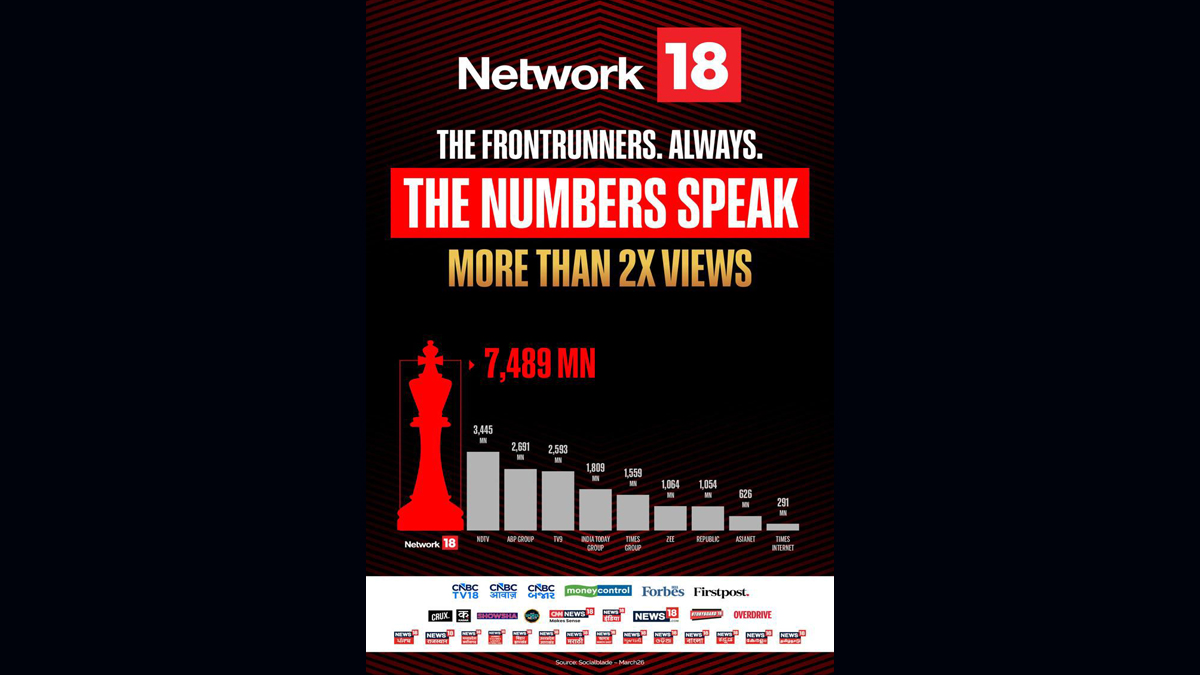
MUMBAI: When the world hit refresh on breaking news, Network18’s channels were already streaming ahead. As geopolitical tensions and war-driven headlines fuelled a surge in global news consumption, the network’s digital playbook delivered big clocking record Youtube viewership across English, Hindi and business news categories in March 2026.
At the forefront was CNN-News18, which emerged as the clear leader in the English news segment with 130 million live and video-on-demand views. The channel edged past competitors such as Times of India (126.5 million), Times Now (101.1 million), India Today (88.2 million) and NDTV (77.5 million), according to Databeings data for March.
In the Hindi news arena, News18 India delivered a commanding performance, racking up a staggering 3,297 million views on YouTube. The channel comfortably outpaced NDTV India, which recorded 3,119 million views, underlining its deep reach and consistent engagement with mass audiences, as per Playboard data.
The network’s dominance wasn’t confined to general news. In the Hindi business segment, CNBC Awaaz topped the charts with 92 million views, narrowly ahead of Zee Business (90 million) and well ahead of ET Now Swadesh (57 million). Meanwhile, its English counterpart CNBC-TV18 posted a strong 58 million views, reinforcing the network’s cross-category strength.
The spike in viewership reflects a broader shift in audience behaviour, with viewers increasingly turning to digital platforms particularly Youtube for real-time updates and in-depth coverage during high-intensity news cycles. For Network18, the numbers signal more than just scale; they underline the effectiveness of a multi-platform strategy that blends speed, credibility and continuous coverage.
In a month where the news never paused, it seems viewers chose to stay tuned where the stream never stopped.






