Hindi
Nautanki Saala: Khurrana delivers yet again

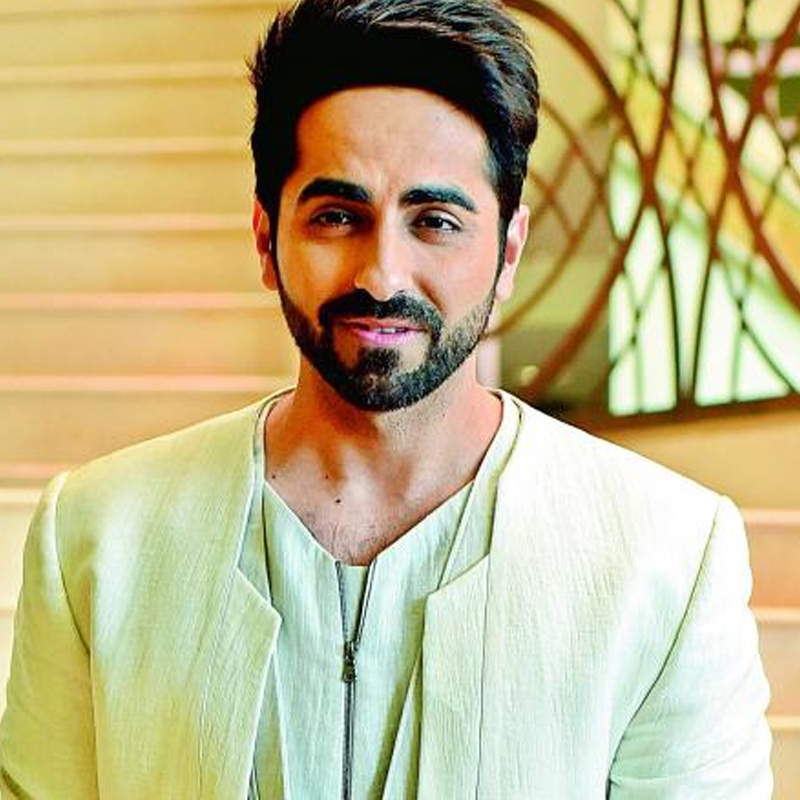
MUMBAI: This film defies all descriptions. Nautanki it is not. The film depicts the drought of imagination in story, script, casting, music, direction.
Nautanki Saala opens with the advantage of having Ayushmann Khurrana in the lead. Khurrana made an impact in his debut film, Vicky Donor and this film being his immediate second, is one looked forward to.
Khurana is a successful stage director and actor whose latest play based on the epic Ramayan has run for hundreds of shows. Late one night, he sees a man trying to hang himself from a tree in the middle of the road and being a perpetual do-gooder, he saves Kunaal Roy Kapoor, a loser on all counts. Kapoor has not only amounted to nothing in life, his latest blow is that his girlfriend, Pooja Salvi, has dropped him on the advice of his own grandmother. Khurrana takes him home to make sure he does not make another attempt. Khurrana‘s girlfriend, Gaelyn Mendonca, is not sure he should get too involved but later comes to grow fond of Kapoor.

Khurrana now takes it upon himself to find Salvi and bring her and Kapoor together. Meanwhile, he also tries to build Kapoor‘s self confidence and when the Ram from his Ramayan has left, he decides to cast Kapoor for the role. What follows is supposed to provide laughs which, most of the time, it does not. On the other hand, Khurrana has found Salvi who runs a florist shop and now keeps visiting her waiting for an opportunity to take her to Kapoor. But, there is a hurdle: she has a boyfriend and is due to marry him in few weeks. Kapoor has to get him out of her life and bring her to Kapoor. This is also supposed to provide laughs but does not. The do-gooder Khurrana finally falls for Kapoor‘s girlfriend, drops his own girlfriend like a stale potato and yet all live happily ever after.
Nautanki Saala is supposed to be a comedy but comes out as one huge yawn fest. While Khurrana is natural and tries his best, Kapoor can‘t act and is a drain on an already poor script. The girls lack charm or talent. The film uses two tracks from old movies, ‘So gaya yeh jahan…..‘ from Tezaab and ‘Dhak dhak….‘ from Beta. And that is the best the film has to offer with only original song from the soundtrack worth listening to is ‘Mera man kehne laga…‘
Nautanki Saala has had an average opening and is not expected to sustain the word of mouth being generally against.
Commando – A One Man Army: A mass action flick
Budget films need not always be comedies or sex oriented dramas. At times, they can be action films if you have the right candidate to deliver without the help of special effects which cost a lot. Commando has a hero in Vidyut Jamwal, who can deliver without special effects and crores spent on action sequences. Producer Vipul Amrutlal Shah is as much an entrepreneur as he is a creative man and he brings the age old formulas of One Man Army and The First Blood (Sylvester Stallone) on screen through his action hero.
Jamwal is an elite commando gifted with special talents and trained for special assignments. His helicopter on a routine mission crash-lands and he ends up on the Chinese side of the border. He is captured by the Chinese and treated as an Indian spy. After a year of Chinese torture, he is about to be sentenced when he escapes from under the Chinese army.
While he is away, a drama is being played out in a small town of Punjab where a sinister bad man, Jaideep Ahlawat, has been able to plant his five MLAs in the State Assembly and now controls the area. He eyes the daughter of the earlier, honest, politician. The daughter, Pooja Chopra, decides to flee town rather than marry the ugly villain who was born without pupils in his eyes which make him look repulsive. While Chopra is on the run, Ahlawat‘s goons, led by his brother, Jagat Rawat, catch up with her. Surrounded by a horde of them, she is helpless when Jamwal lands up on his way back. He is a human fighting machine and, in no time, overcomes the goons.
Now, Chopra can‘t stay back and wants Jamwal to escort her out of the district where, she thinks, Ahlawat won‘t be able to reach her. She is wrong because the bus the couple takes is intercepted over a bridge with nowhere to run. Jamwal manages to humiliate the villain and jumps in the river with Chopra. Now, the couple have to survive in the jungle and at the same time keep dodging the villains (as well as fall in love and imagine a couple romantic songs!). Trained for survival in such terrains, Jamwal goes on eliminating Ahlawat‘s people. Ahlawat wants to capture him alive and kill him in the village square so the local folk continue to fear him. The hero is shot by one of the goons and in anger, Ahlawat throws the injured Jamwal into the river. This serves to stretch the film further as the village square vow is postponed letting the hero recoup and return for the final battle and rescue not only Chopra but also the villagers.
Action movies are costly to make but the advantage with this film is that, in Jamwal , the makers have a gifted and trained action hero who requires no double or wires and special effects and does his stunts himself. That helps the budget, wastes little time and makes the fights look natural. Jamwal excels in action and is quite satisfactory in romantic scenes too. Chopra is good. Ahlawat is effective. Rawat supports well. Direction by Dilip Ghosh is competent. The film could have done without songs which would have made it crisper. Dialogue and SMS jokes are a good distraction from this all action movie.
Commando is an outright mass film which has been received well and the weekend should add to this advantage.





Hindi
India’s telecom subscribers cross 1.32 billion in February 2026
Broadband base swells past 1.06 billion as Jio and Airtel tighten grip on the market.
MUMBAI: India’s telecom sector is ringing in steady growth once again adding millions of new connections every month while the race for broadband supremacy continues to heat up like a fiercely contested cricket match. According to the latest data released by the Telecom Regulatory Authority of India (TRAI) on 1 April 2026, the total telephone subscriber base in the country reached 1,321.31 million at the end of February 2026. This marked a net addition of 7.31 million subscribers during the month, translating into a monthly growth rate of 0.56 per cent.
Wireless subscribers (including mobile and Fixed Wireless Access) stood at 1,273.31 million, registering a net addition of 6.97 million and a growth rate of 0.55 per cent. Within this, urban wireless connections grew to 730.75 million (growth 0.70 per cent), while rural wireless subscribers reached 542.56 million (growth 0.35 per cent).
Wireline subscribers, though much smaller in scale, showed slightly faster growth. The total wireline base increased to 47.99 million, with a net addition of 0.34 million and a monthly growth rate of 0.70 per cent. Urban areas continued to dominate wireline connections with a share of 89.41 per cent.
Overall tele-density in India improved to 92.66 per cent. Urban tele-density stood at 150.68 per cent, while rural tele-density edged up to 60.02 per cent.
The broadband subscriber base crossed a significant milestone, reaching 1,059.05 million at the end of February 2026. This reflected a healthy net addition of 6.33 million subscribers and a monthly growth rate of 0.60 per cent from January’s figure of 1,052.72 million.
Segment-wise, mobile wireless access continued to drive the majority of growth with 996.52 million subscribers. Fixed Wireless Access (including 5G FWA) added 16.51 million, while wired broadband stood at 46.02 million.
Reliance Jio Infocomm Ltd. maintained its commanding lead with 519.64 million broadband subscribers. Bharti Airtel Ltd. followed with 364.14 million, Vodafone Idea Ltd. with 129.36 million, Bharat Sanchar Nigam Ltd. with 28.70 million, and Atria Convergence Technologies Ltd. with 2.38 million.
Together, these top five players command a massive 98.60 per cent share of the total broadband market.
In the wireless (mobile) segment, private operators continued to dominate with 92.59 per cent market share, leaving public sector undertakings (BSNL and MTNL) with just 7.41 per cent.
Out of the total 1,257.29 million wireless (mobile) subscribers, 1,177.60 million were active on the peak Visitor Location Register (VLR) date, representing an impressive 93.66 per cent activity rate. Bharti Airtel led in this metric with 99.42 per cent of its subscribers active.
Meanwhile, 14.47 million subscribers submitted requests for Mobile Number Portability (MNP) in February, indicating healthy competition and customer churn across zones.
While urban areas still lead in absolute numbers, rural connectivity is slowly catching up. Rural wireless tele-density stood at 59.46 per cent, compared with the much higher urban figure of 142.32 per cent.
Fixed Wireless Access using 5G technology also showed promising traction, growing to 11.93 million subscribers. Reliance Jio and Bharti Airtel are the primary players driving this segment.
The data paints a picture of a maturing yet still rapidly expanding telecom ecosystem. With total telephone subscribers now well past the 1.32 billion mark and broadband users comfortably above 1.06 billion, India continues to solidify its position as one of the world’s largest and most dynamic digital markets.
From bustling city streets to remote villages, more Indians are staying connected than ever before proving that when it comes to telecom, the country’s appetite for growth shows no signs of hanging up anytime soon.






