News Broadcasting
‘National Geographic’ takes viewers back to prehistoric times


The National Geographic Channel will give lovers of reptiles an early Christmas treat.
NGC will premiere SuperCroc, a documentary on the longest surviving reptile in earth history on 9 December, from 8:00 pm to 10:00 pm. Using the latest animation techniques the show aims at educating viewers about the behaviour of the crocodile through the ages. Its fight for survival in terms of food and shelter promises to be fascinating. Simon Boyce has produced the program.
Paleontologist and National Geographic Explorer Dr Paul Sereno discover what he called the SuperCroc (Sarcosuchus imperator) in the Sahara desert. The reptile is believed to have wandered the earth 110 million years ago. National Geographic's reptile expert Dr Brady Barr helped him on this unique discovery to learn about the reptile's lifestyle and his relatives.

Their adventures took them to Costa Rica and India to look at the American crocodile and the endangered Indian gharial. Then they examined freshwater crocodiles in Australia and Cuban crocodiles in Florida. The name Sarcosuchus took shape as Dr. Sereno closely studied the form, size, weight, behaviour and movements of living crocodiles. Sereno scrutinised the head-to-body ratio of today's crocodiles and estimated that the SuperCroc was about 12 metres long and weighed more than 10 times any living crocodile. The channel is trying to arouse curiosity with the tagline "It didn't just walk with dinosaurs. It ATE them."
Gerry Martin, an Indian expert and herpetologist has lent valuable inputs to the series, by explaining the connection between the Indian gharial and the pre-historic SuperCroc. Martin and Dr. Barr were involved in the capture and study of the Indian gharial's habitats and behaviour. The team found a similarity in the slender snout of SuperCroc and the gharial.
In the quiet privacy of his laboratory, Dr. Sereno has carefully pieced together the fossils in order to recreate the SuperCroc. Dr Barr will host National Geographic Channel's upcoming series Crocodile Chronicles.







News Broadcasting
CNN-News18 to host Fury in the Gulf conclave on West Asia crisis
Three-hour summit to unpack geopolitical fallout and impact on India
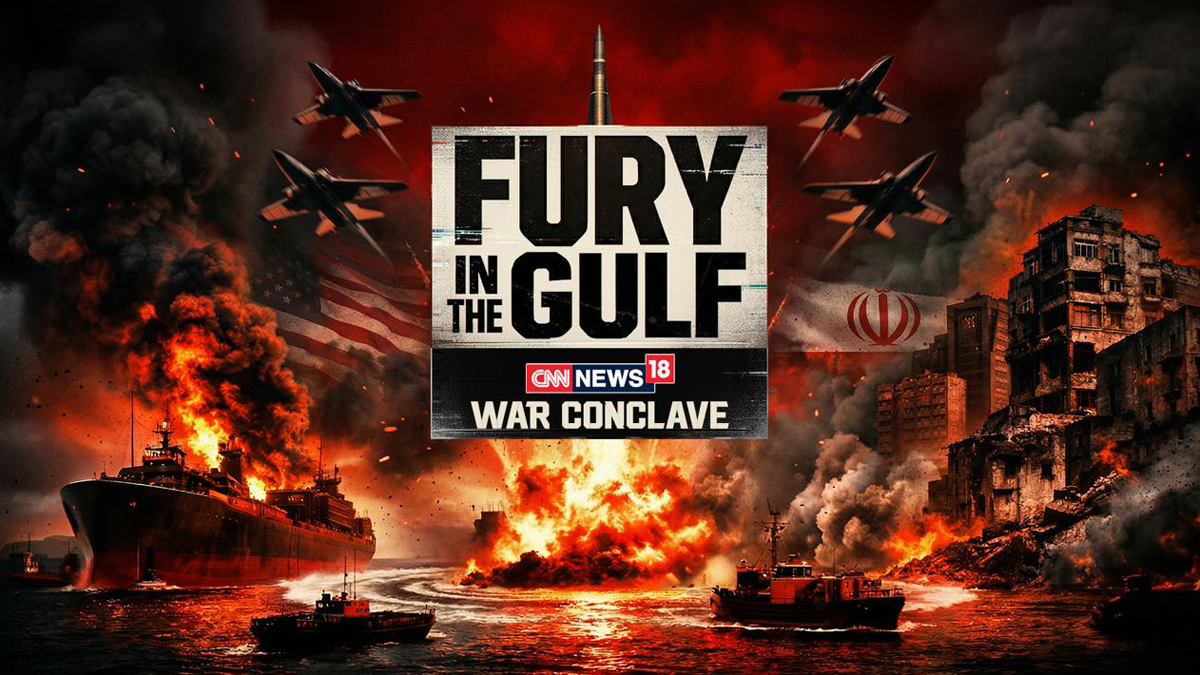
MUMBAI: CNN-News18 is set to host a special three-hour broadcast, Fury in the Gulf – War Conclave, on April 7, aiming to decode the escalating West Asia crisis and its far-reaching implications for India.
Scheduled from 4:00 PM to 7:00 PM, the conclave comes at a time when tensions between Iran and the United States are reshaping global geopolitics and triggering economic uncertainty. With India’s deep energy ties, trade links and large diaspora in the Gulf, the developments carry significant domestic relevance.
Built around the theme ‘Conflict, Consequences, and The Future,’ the programme will feature six curated sessions combining one-on-one interviews and panel discussions. The focus is to cut through the clutter and offer viewers a clearer understanding of the fast-evolving situation.
Key sessions include ‘Diplomacy in Times of War’ featuring Shashi Tharoor, and ‘World After the Iran Conflict’ with voices such as Ram Madhav, Reuven Azar, representatives from the European Union and the Iranian Deputy Envoy. Another session titled ‘Another Dunkirk?’ will bring together K. J. S. Dhillon and Jitin Prasada among others.
CNN-News18 editorial affairs director Rahul Shivshankar said, “In times of war, clarity becomes the most powerful tool. Fury in the Gulf – War Conclave brings together credible voices to address the questions and confusion that arise amid an overwhelming influx of information.”
He added that the initiative is aimed at delivering “facts, perspective, and insight” at a time when misinformation can easily cloud public understanding.
Echoing the sentiment, CNN-News18 CEO– English and business news Smriti Mehra said the conflict marks a defining global moment, with consequences that extend well beyond the region. She noted that the conclave seeks to present the crisis with “depth, nuance and responsibility” so audiences can better grasp its real-world impact.
As geopolitical tensions continue to dominate headlines, the conclave positions itself as an attempt to bring order to the noise, offering viewers a structured, insight-led look at a complex and rapidly shifting global situation.






