Hindi
National Film Museum to finally open next week in Mumbai

NEW DELHI: The long-in-the-making National Museum of Indian Cinema (NMIC) showcasing India’s rich film heritage over the past 100 years will finally open in Mumbai next week to coincide with the Mumbai International Film Festival for shorts, documentaries and animation films.
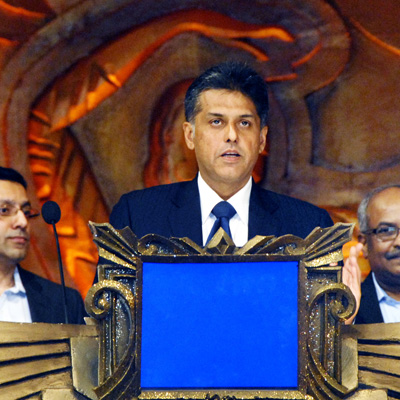
Information and Broadcasting (I&B) Minister Manish Tewari will be the chief guest at the opening of the Festival on 3 February.

“As the Indian cinema enters a new century, the national museum of Indian cinema coming up in Mumbai is a small tribute of the Ministry to the great film heritage of India. We have also launched a Rs-600 crore National Film Heritage Mission to digitise best of Indian cinematic works and archive them for the benefit of future generations,” said Tewari recently while outlining various steps taken by the government to promote cinema in India.
The Minister also reviewed the preparations for the museum’s inauguration with Films Division officials and experts. The inauguration will coincide with the Mumbai International Film Festival for short, documentary and animation films that commences on 3 February.
The National Museum of Indian Cinema is situated in the 6,000 square-foot Gulshan Mahal – a heritage building on Pedder Road in South Mumbai. Gulshan Mahal’s interiors have been refurbished to house an interactive walkthrough down cinema’s memory lane. It is part of a larger complex of 50,000 sqft that will come up in phases.
The museum will be a ready-reckoner of the history of Indian cinema showcasing technological aspects of production and screening of films, as well as its social aspects during the past 100 years. Through its interactive galleries, it will trace the evolution of celluloid from the Lumiere Brothers, Raja Harishchandra onwards, and showcase Indian cinema in three stages – silent era, golden era and the modern era. It will portray the footsteps taken by Indian cinema, from the period of silent films to the studio period, and then recreate the times when stars and mega stars dominated the silver screen.
An Advisory Committee headed by renowned filmmaker Shyam Benegal has guided the Films Division in establishing the museum.
Visitors can also watch clips of old classics on a number of monitors or listen to rare film music from the past. There is also an interesting collection of posters of landmark movies from across India. A section on regional cinema is also on display.
Many famous studios of yesteryears like Mehboob Studios, RK Studios and Prasad Studios have donated equipment to the museum. Some private collectors too have come forward to donate items. The Films Division, which was set up in 1941, to produce short films to disseminate information during war time, has also displayed old Eymo and Mitchel cameras, recording equipment etc. Also of interest are some older instruments that created an illusion of movement, which were precursor to the movie camera.
NMIC has been curated by the National Council of Science Museums, Kolkata, under the Ministry of Culture, which manages 55 various kinds of museums in the country.





Hindi
Zee5 and Applause Entertainment team up for whodunnit ‘Everybody Loves Sohrab Handa’
Rajat Kapoor directs star-studded murder mystery streaming from 10 April.
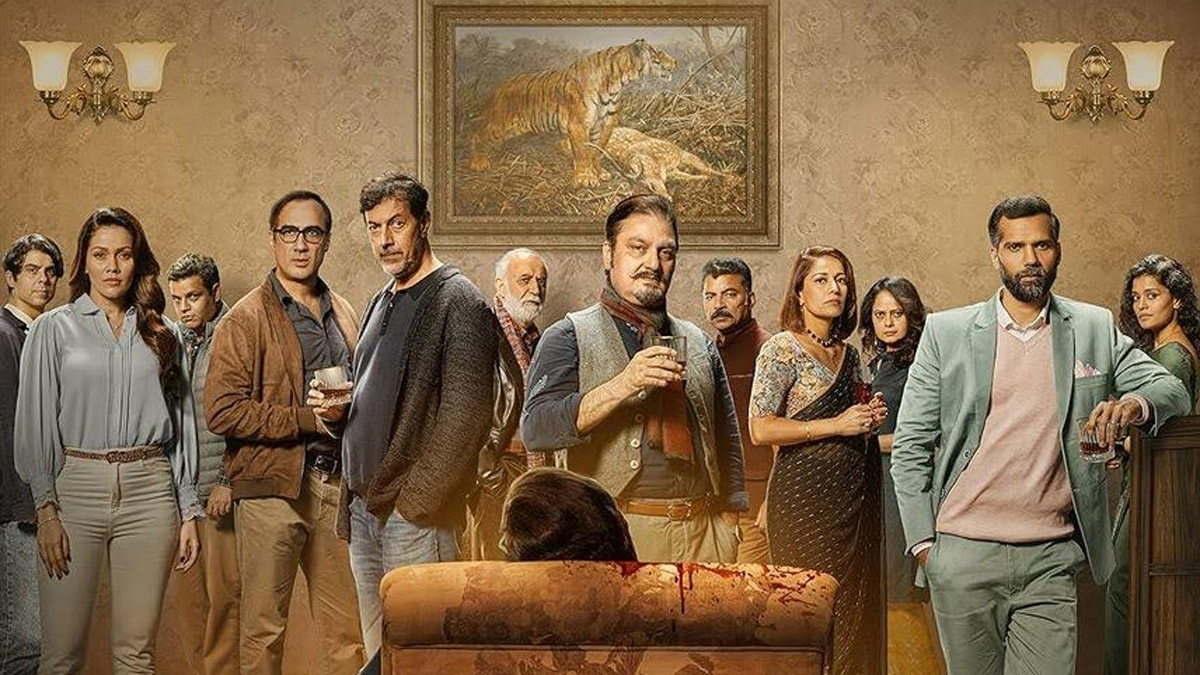
MUMBAI: Zee5 is serving up another killer collaboration and this time, the murder mystery comes with a generous side of dark humour and family dysfunction. The streaming platform has partnered with Applause Entertainment and Mithya Talkies to bring Everybody Loves Sohrab Handa, a fresh, twisted whodunnit written and directed by acclaimed filmmaker and actor Rajat Kapoor. The film will stream exclusively on Hindi Zee5 from 10 April.
The movie reimagines the classic murder mystery genre with a contemporary, darkly comic edge. It revolves around a group of friends and family who smile, drink, and celebrate together until the silence snaps and long-buried secrets spill out. The stellar ensemble cast includes Vinay Pathak, Ranvir Shorey, Waluscha De Sousa, Saurabh Shukla, Chandrachoor Rai, Neil Bhoopalam, Koel Purie, Palomi Ghosh, and Rajat Kapoor himself.
This latest offering continues the successful partnership between Zee5 and Applause Entertainment, which has previously delivered diverse hits such as Mithya, Bloody Brothers, and Jab Khuli Kitaab.
&TV Business Head of hindi Zee5 and chief channel officer Kaveri Das said, “Our collaboration with Applause Entertainment has consistently delivered distinct, high-impact storytelling. Everybody Loves Sohrab Handa is a natural progression, reinforcing our focus on genre-led content with a compelling whodunnit premise and a strong ensemble cast.”
Applause Entertainment business head for movies Sunil Chainani added, “This film adds yet another compelling layer to our slate with Rajat Kapoor’s unmistakable voice.”
Rajat Kapoor shared, “What interested me was not just the mechanics of a whodunnit, but the emotional violence that precedes physical violence. These are people who smile at each other, but there’s so much that is not said.”
The film promises razor-sharp writing, layered performances, and simmering tension, inviting viewers not just to solve the crime but to unravel the complex relationships at its heart.
If you love a good murder mystery served with wit and emotional depth, Everybody Loves Sohrab Handa looks set to be your next addictive watch. Mark your calendars, the whodunnit drops on Hindi Zee5 from 10 April.







