News Broadcasting
NatGeo showcases Miditech’s ‘Leopards of Bollywood’

MUMBAI: Leopards of Bollywood. Armed with a apt title, the documentary produced by Miditech couldn’t have come in a better time.
Scheduled to air on Thursday 7 July at 9 pm with repeat telecasts on 9 July and 15 July 2004 National Geographic channel, the documentary tells the terrifying story of leopards that have stuck terror in the commercial and film hub of India- Bollywood.
An hour-long special, Leopard of Bollywood follows Chief Conservator Forests, Pune Prakash Thorse on his mission to minimise the leopard menace in Junnar, Maharastra in India.

With a voice over given by the producer and former print and TV journalist Niret Alva and a pacy “Godfather-isque” sound track, the racy thriller set against the backdrop of Bollywood.
Touted as a story of fear, manipulation, retaliation and revenge and the fight against odds, the story about tracking the leopards down is interestingly juxtaposed with the shooting happening around the film city.
While the special give’s enough weightage to both the views of the conservationists, who argue that leopards are not creating the problem, and to the misinformed approach the locals, one wishes it should have talked about the means to protect oneself from the attacks.
“Leopards of Bollywood is another example of compelling programming from the National Geographic Channel. It is our constant endeavour to not only provide credible programming to our viewers but also make it relevant and relatable”, offered National Geographic Channel senior VP content and communication Dilshad Master.
Shot for over a period of one year, the show has been the second after Miditech’s Operation Hot Pursuit, which was aired last year.
A three man team led by director Animitra Chakravarty, camped inside the Sanjay Gandhi National Park, for long stretches, over a period of one year to shoot the special. During the shoot, the crew encountered some gruesome leopard attacks on humans. One of the poignant point of the narrative is the live action captured after on one of the leopard attacks, the spine chilling effects have to be seen to be believed.


News Broadcasting
News18 India launches Command Centre war explainer with Arya
New show shifts from debates to decoding global conflicts and impacts
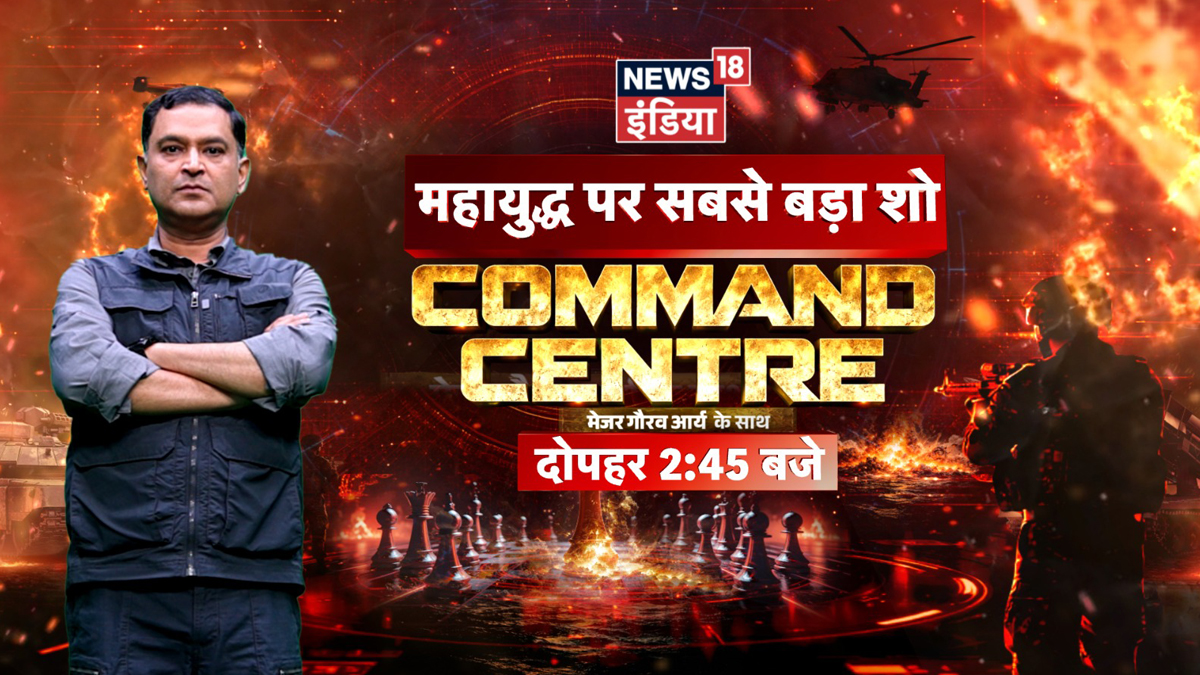
MUMBAI: News18 India has rolled out a new war-focused programme, Command Centre, featuring Gaurav Arya, as it looks to offer viewers a sharper, more grounded take on global conflicts amid rising tensions in West Asia.
Positioned as an “insider war room”, the show moves away from conventional panel debates and instead focuses on explaining military developments, decoding strategy and connecting global events to their everyday impact, from fuel prices to economic shifts.
The format leans heavily on visuals and data. The studio has been designed like a command hub, complete with large LED war maps, real-time graphics and an alert system to track developments as they unfold.
At the centre of it all is Arya, who brings his military background to simplify complex war strategies for viewers. His signature line, “Seedhi baat samjhiye”, anchors the show’s promise of clarity over noise.
News18 India managing editor Jyoti Kamal said, “Command Centre, featuring Major Gaurav Arya is designed to deliver accurate insights and a clear perspective on how evolving conflicts impact everyday life, from household budgets to national security. With expert voices analysing every development in real time, the show goes beyond headlines to decode what’s happening now, what it means, and what could come next.”
Echoing the intent, Gaurav Arya added, “In times of war, confusion is the biggest threat. With News18 India’s Command Centre, we are bringing viewers inside the war room, decoding strategies, tracking every escalation, and explaining, in the simplest terms, what it means for India and for every household. Seedhi baat samjhiye, this is where you understand not just what is happening, but what happens next.”
The weekday show will air in the afternoon slot and will also feature Gaurav Shukla, adding to its editorial depth.
With its mix of analysis, visuals and a clear focus on impact, the show reflects a broader shift in news consumption. Viewers are no longer just watching events unfold, they are looking to understand what those events mean for them.







