News Headline
Nat Geo film library to have local presence in Asia-Pacific

WASHINGTON/CANNES: National Geographic has signed the Asia-Pacific Broadcasting Union (ABU) to represent its interests in the Asia-Pacific region, as was announced yesterday by Film Library for National Geographic Television & Film (NGT&F) vice president Matthew White.
The arrangement seeks to expand the potential customer base of National Geographic’s extensive archive of film footage by leveraging ABU’s existing client base and creating a local presence within India, Japan, Korea, China and southeast Asia.
“Over the past few years, we’ve seen a great deal of interest in our film library rising from the Asia-Pacific marketplace,” said White. “We felt it was important to have someone representing our interests there locally, to provide customers greater access to our material and to increase awareness of our capabilities within Japan and its neighbouring countries.”
In addition to nearly 40 years of footage from NGT&F, the Film Library also represents and/or manages the film libraries of the Australian Broadcasting Corporation in the UK and the World Bank worldwide. Footage will be marketed for educational and commercial use in news and commercial productions, corporate marketing, broadcast and new media programming, digital presentations or consumer promotions.
National Geographic’s ABU representative will be based in Kuala Lumpur, where he will liaise with National Geographic Film Library headquarters in Washington to obtain footage and fulfill orders.
In addition to relying on on-site representatives to interact with clients, the Film Library has recently upgraded its business-to-business website at www.ngtlibrary.com to create better functionality for its users. The new website now allows customers to search by streaming video and metadata-a process that increases the library’s searchable archives from 1000,000 clips to nearly 2000,000.
Customers can continue to review streaming video selections online or request online or videocassette clips of metadata files. National Geographic has also launched the Idea Gallery, featuring some of National Geographic’s most compelling footage. Clips are displayed by categories and subcategories that range from people and culture to oddities and curiosities, and are designed to inspire producers and encourage creative use of National Geographic footage. Finally, National Geographic has created a “My Projects” area, which allows users to save clips to project bins, enabling them to share their ideas with colleagues, save searches they can return to at a later date and initiate the rights clearance process.
National Geographic’s Film Library functions as an archive and repository for all NGT&F-produced film and videotape material. The Library catalogues and sells stock footage from NGT&F’s Specials, Explorer series, educational films, and other National Geographic Channel and NGT&F productions. Headquartered in Washington, DC, the Film Library supplies material to a satellite office in London and representatives across the globe. Its fully catalogued database, available online at www.ngtlibrary.com, allows clients to search footage based on subject, location or production criteria.






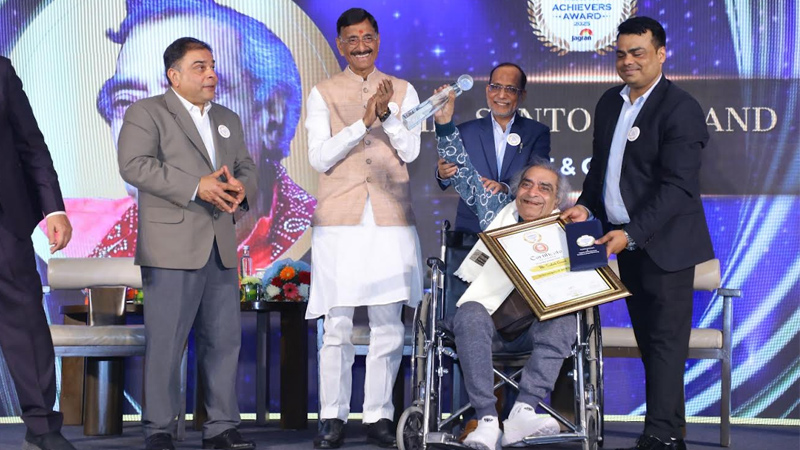
NEW DELHI: Hamdard Laboratories gathered a cross-section of India’s achievers in New Delhi on Friday, handing out the Hakeem Abdul Hameed Excellence Awards to figures who have left their mark across healthcare, education, sport, public service and the arts.
The ceremony, attended by minister of state for defence Sanjay Seth and senior officials from the ministry of Ayush, celebrated individuals whose work blends professional success with a sense of public purpose. It was as much a roll call of achievement as it was a reminder that influence is not measured only in profits or podiums, but in people reached and lives improved.
Among the headline awardees was Alakh Pandey, founder and chief executive of PhysicsWallah, recognised for turning affordable digital learning into a mass movement. On the sporting front, Arjuna Awardee and kabaddi player Sakshi Puniya was honoured for her contribution to the game and for pushing women’s participation onto bigger stages.

The cultural spotlight fell on veteran lyricist and poet Santosh Anand, whose songs have echoed across generations of Hindi cinema. At 97, Anand accepted the honour with characteristic humility, reflecting on a life shaped by perseverance and hope.
Healthcare honours spanned both modern and traditional systems. Manoj N. Nesari was recognised for strengthening Ayurveda’s place in national and global health frameworks. Padma shri Mohammed Abdul Waheed was honoured for his research-backed work in Unani medicine, while padma shri Mohsin Wali received recognition for his long-standing contribution to patient-centred care.
Education and social development also featured prominently. Padma shri Zahir Ishaq Kazi was honoured for decades of work in education, while former Meghalaya superintendent of Police T. C. Chacko was recognised for public service. Goonj founder Anshu Gupta received an award for his dignity-centred rural development initiatives, and the Hunar Shakti Foundation was honoured for empowering women and young girls through skill development.
The Lifetime Achievement Award went to former IAS officer Shailaja Chandra for her long career in public healthcare and governance, particularly in the traditional systems under Ayush.
Speaking at the event, Hamdard chairman Abdul Majeed said the awards were a tribute to those who combine excellence with empathy. “These awardees reflect Hakeem Sahib’s belief that healthcare, education and public service must ultimately serve humanity,” he said.
Minister Seth struck a forward-looking note, saying India’s young population gives the country a unique opportunity to become a global destination for learning, health and wellness by 2047.
The ceremony also featured the trailer launch of Unani Ki Kahaani, an upcoming documentary starring actor Jim Sarbh, set to premiere on Discovery on 11 February.
Instituted in memory of Unani scholar and educationist Hakeem Abdul Hameed, the awards have grown into a national platform that celebrates those building a more inclusive and resilient India. For one evening at least, the spotlight was not just on success, but on service with substance.