Applications
Nasscom Foundation takes on non-profit champion Jyoti Sharma as CEO

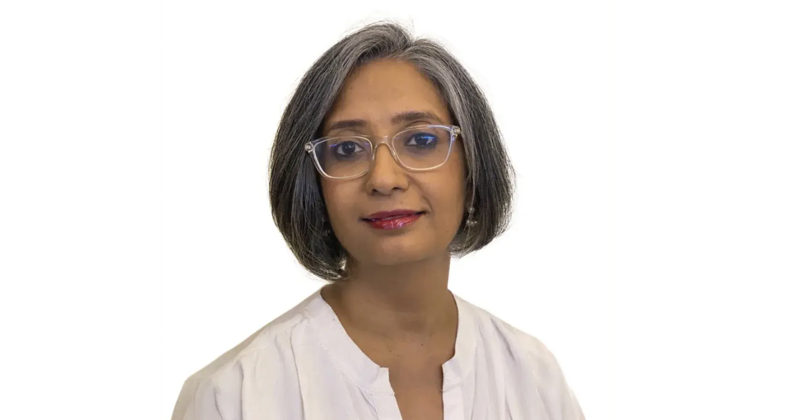
MUMBAI: The National Association of Software & Service Companies (Nasscom) Foundation has appointed Organic Cotton Accelerator country director, India Jyoti Sharma as its CEO starting the new calendar year.
The Nasscom Foundation is a non-profit organisation representing the Indian IT industry in the Nasscom ecosystem. Its core philosophy is TechForGood, through which it strives to unleash the power of technology by providing access and opportunity to those in need. It uses technology to assist people and institutions in transforming the way they address social and economic concerns.
With about 24 years’ experience, Jyoti has been driving social impact across diverse sectors, including gender equality, education, climate change, regenerative agriculture, child rights and disaster management. She has been instrumental in shaping various organisations’ strategic vision and driving their growth.

Among them: Practical Action Consulting (India representative, March 2020-December 2021), World Resources Institute (director, institutional development, December 2018 to March 2020), Magic Bus Foundation (regional director-north, November 2015-November 2018, Save the Children India (head-institutional partnerships, April 2011-October 2015), Oxfam (regional coordinator Program fund raising South Asia, November 2008 to March 2011), DG European Commission Humanitarian Aid Office – ECHO (programme officer – south Asia, October 2005-October 2008), and Action Aid UK (program officer, June 2001-September 2005).
The BA from the Maharishi Dayanand Saraswati University completed her masters in social work from the Tata Institute of Social Sciences Tiss (Mumbai) in 2001.
Jyoti was quite exhilarated about taking on the challenge of driving the Nasscom Foundation in the new era of AI and ML. “My first day was nothing short of inspiring. It’s clear that this team shares a passion for creating meaningful change—something I am eager to champion in the times ahead. As we dive into 2025, I look forward to building a future where hashtag#TechForGood continues to transform lives, empower communities, and create opportunities for all,”said Jyoti on Linkedin on 2 January the day she joined the Nasscom Foundation .

Applications
With 57 per cent single new users, Ashley Madison rebrands as discreet dating platform
Platform says majority of new members now identify as single
INDIA: Ashley Madison is shedding the “married-dating” label that defined it for two decades, repositioning itself as a platform for discreet dating in what it calls the post-social media age.
The rebrand, unveiled in India on 27 February, 2026, marks a structural shift in business model and identity. Once synonymous with married dating, the company now describes itself as the “premier destination for discreet dating” under a new tagline: Where Desire Meets Discretion.
The pivot is data-driven. Internal figures show that 57 per cent of global sign-ups between 1 January and 31 December, 2025 identified as single: a notable departure from the platform’s married core. The company argues that its community has already evolved beyond its original positioning.
“In an age where our lives have been constantly put on public display, privacy has become the new luxury,” said Ashley Madison chief strategy officer Paul Keable. He framed the platform’s offering as “ethical discretion” for singles, separated, divorced and non-monogamous users seeking private connections.
The shift also taps into wider digital fatigue. A global survey conducted by YouGov for Ashley Madison, covering 13,071 adults across Australia, Brazil, Canada, Germany, India, Italy, Mexico, Spain, Switzerland, the UK and the US, found mounting discomfort with hyper-public online lives.
Among dating app users, 30 per cent cited constant swiping and messaging as a source of fatigue, while 24 per cent pointed to pressure to curate public-facing profiles and early personal disclosure. Some 27 per cent said fears of screenshots or information being shared contributed to exhaustion; an equal share cited unwanted attention.
The retreat from oversharing appears broader. According to the survey, 46 per cent of adults actively try to keep most aspects of their life private online. Only 8 per cent feel comfortable sharing most aspects publicly, while 35 per cent say they are becoming more selective about what they disclose.
Ashley Madison is betting that this cultural recalibration towards controlled visibility can be monetised. By doubling down on privacy infrastructure and reframing itself around discretion rather than infidelity, the company is attempting to convert reputational baggage into a premium proposition.







