News Headline
‘Must provide’ ruling expected in a few days

NEW DELHI: The Indian government expects that the broadcast and cable regulator would submit a favourable recommendation within “a few days” on making available TV channels by content providers to all platforms on a non-discriminatory basis.
Pointing out that this particular issue of `must provide’ was specifically referred to the Telecom Regulatory Authority of India (Trai) by information and broadcasting minister Jaipal Reddy recently, a senior ministry official said, “The government is also likely to accept Trai’s recommendations.”
What is interesting to see is that the government stand on the must-provide clause is gaining stridency as the launch of Indian pubcaster Doordarshan’s KU-band DTH television service draws nearer.

As of today, only 16 private sector channels have agreed to join the DD platform with most mass-based Hindi entertainment channels keeping off.
The official’s statement also gains importance in the light of the fact that the government expects Trai to recommend that all TV channels must be made available to all platforms, including DTH, on a non-discriminatory basis.
This issue had been hanging fire with the industry vertically split on the matter. A pay broadcaster would not like to make available all its channels to a rival’s platform, while most broadcasters would also not like to be on a DTH platform that is free like DD’s — something that would cost a subscriber nothing to access.
When asked whether the government would wait till this must-provide clause is sorted out before handing out more licences for DTH services in the country, the ministry official said, “Not necessarily. But all DTH service providers in the country would have to abide by it.”
Tata-Star’s application for a DTH licence is still pending with the I&B ministry. The venture is estimated to be worth Rs 1.6 billion.
Queried further whether the must-provide clause could lead to loss of exclusivity for a DTH platform, the official said, “In the name of exclusivity, lack of competition cannot be allowed.”
However, global trends show that in the case of DTH, unlike cable or any other platform, monopoly or duopoly works best. Even in developed markets like the US and the UK, DTH services sell on the basis of providing exclusive and premium fare to subscribers.
Meanwhile, Doordarshan today said that it has increased its target of providing free DTH kits from 10,000 to 15,000. These would be distributed primarily in eight states, including some in the north-eastern regions, which are below the national average in terms of coverage by the national broadcaster.
Speaking to journalists, Prasar Bharati CEO KS Sarma said that the private channels that have agreed to come on to DD’s 40-channel DTH platform include BBC World, Zee News, Alpha Bangla, ETC Punjabi, Star Utsav, MH1, Aaj Tak and Headlines Today, apart from some South Indian channels.






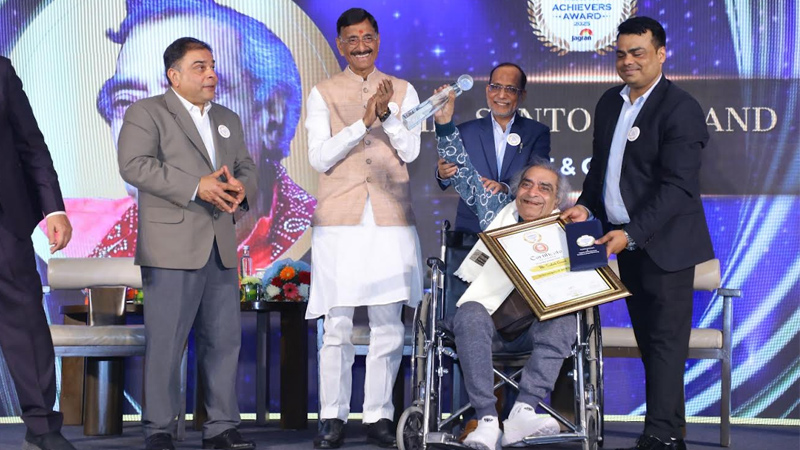
NEW DELHI: Hamdard Laboratories gathered a cross-section of India’s achievers in New Delhi on Friday, handing out the Hakeem Abdul Hameed Excellence Awards to figures who have left their mark across healthcare, education, sport, public service and the arts.
The ceremony, attended by minister of state for defence Sanjay Seth and senior officials from the ministry of Ayush, celebrated individuals whose work blends professional success with a sense of public purpose. It was as much a roll call of achievement as it was a reminder that influence is not measured only in profits or podiums, but in people reached and lives improved.
Among the headline awardees was Alakh Pandey, founder and chief executive of PhysicsWallah, recognised for turning affordable digital learning into a mass movement. On the sporting front, Arjuna Awardee and kabaddi player Sakshi Puniya was honoured for her contribution to the game and for pushing women’s participation onto bigger stages.
The cultural spotlight fell on veteran lyricist and poet Santosh Anand, whose songs have echoed across generations of Hindi cinema. At 97, Anand accepted the honour with characteristic humility, reflecting on a life shaped by perseverance and hope.
Healthcare honours spanned both modern and traditional systems. Manoj N. Nesari was recognised for strengthening Ayurveda’s place in national and global health frameworks. Padma shri Mohammed Abdul Waheed was honoured for his research-backed work in Unani medicine, while padma shri Mohsin Wali received recognition for his long-standing contribution to patient-centred care.
Education and social development also featured prominently. Padma shri Zahir Ishaq Kazi was honoured for decades of work in education, while former Meghalaya superintendent of Police T. C. Chacko was recognised for public service. Goonj founder Anshu Gupta received an award for his dignity-centred rural development initiatives, and the Hunar Shakti Foundation was honoured for empowering women and young girls through skill development.
The Lifetime Achievement Award went to former IAS officer Shailaja Chandra for her long career in public healthcare and governance, particularly in the traditional systems under Ayush.
Speaking at the event, Hamdard chairman Abdul Majeed said the awards were a tribute to those who combine excellence with empathy. “These awardees reflect Hakeem Sahib’s belief that healthcare, education and public service must ultimately serve humanity,” he said.
Minister Seth struck a forward-looking note, saying India’s young population gives the country a unique opportunity to become a global destination for learning, health and wellness by 2047.
The ceremony also featured the trailer launch of Unani Ki Kahaani, an upcoming documentary starring actor Jim Sarbh, set to premiere on Discovery on 11 February.
Instituted in memory of Unani scholar and educationist Hakeem Abdul Hameed, the awards have grown into a national platform that celebrates those building a more inclusive and resilient India. For one evening at least, the spotlight was not just on success, but on service with substance.






