Hindi
Mumbai film fest to screen films from Afghanistan


NEW DELHI: A 13-film special package from Afghanistan is one of the key attractions of the ongoing Mumbai International Film Festival for Documentary, Short and Animation films.
Short filmmaker Reena Mohan who has curated the package said: “Afghanistan is the most reported but least understood region in the world.”
The war in that country had ensured a heavy international media presence in that country, but the coverage and depiction is often ‘narrow and limited‘, with emphasis on conflict, opium and feuding tribes. A number of other documentaries made by non-Afghans show topics like cricket in Afghanistan or women playing football.

Mohan said her main aim of putting together the Afghanistan package was to show to the world the depiction of the ‘real Afghanistan’ through the eyes of Afghan filmmakers. The package aims to trace the differences in their way of representing and seeing their own country. It also explores the challenges faced by artistes in expressing their thoughts amidst growing opposition to creative freedom.
Films include Addicted to Afghanistan by Jawed Taiman on the issue of opium and drug’s devastating effect on the children of Afghanistan; Death to the Camera by Sayed Qasem Hossaini examines the delicate gender issue; Shabana by Mohammad Haroon Hamdard is an insight into the life of a girl child in Afghanistan; and Hameed Alizadeh’s Checkpoint looks into the life and work of 15 border policemen.
Half Value Life is the story of Marya Bashir, the first woman public prosecutor in Afghanistan. Other films are A letter to light, House No111, Joys of Fervency, Playing the Taar, You Don’t belong to this country, and animation films Hope, Shelter and Death to Freedom.
Cinema entered Afghanistan at the beginning of the 20th century. The political changes in Afghanistan have not allowed cinema to flourish, but several Pashto and Dari film makers, both inside and outside Afghanistan, have been producing films.
Amir Habibullah (1901–1919) introduced film to Afghanistan, but in the royal court only. Pahgam was the first silent film shown to public in 1924. In 1968 Afghan Film, a state-run film production company, was formed and it began producing documentaries and news films highlighting official meetings and conferences of the government which were shown before the screening of feature films, which were mostly Hindi films from India. After the civil wars of the 1990s which forced people to migrate to Iran or Pakistan, the cinema of Afghanistan has slowly started to emerge from a lengthy period of silence.



Hindi
Remembering Gyan Sahay, the lens behind film, television and advertising
From a puppet rabbit selling poppadums to Hindi cinema, he framed it all.
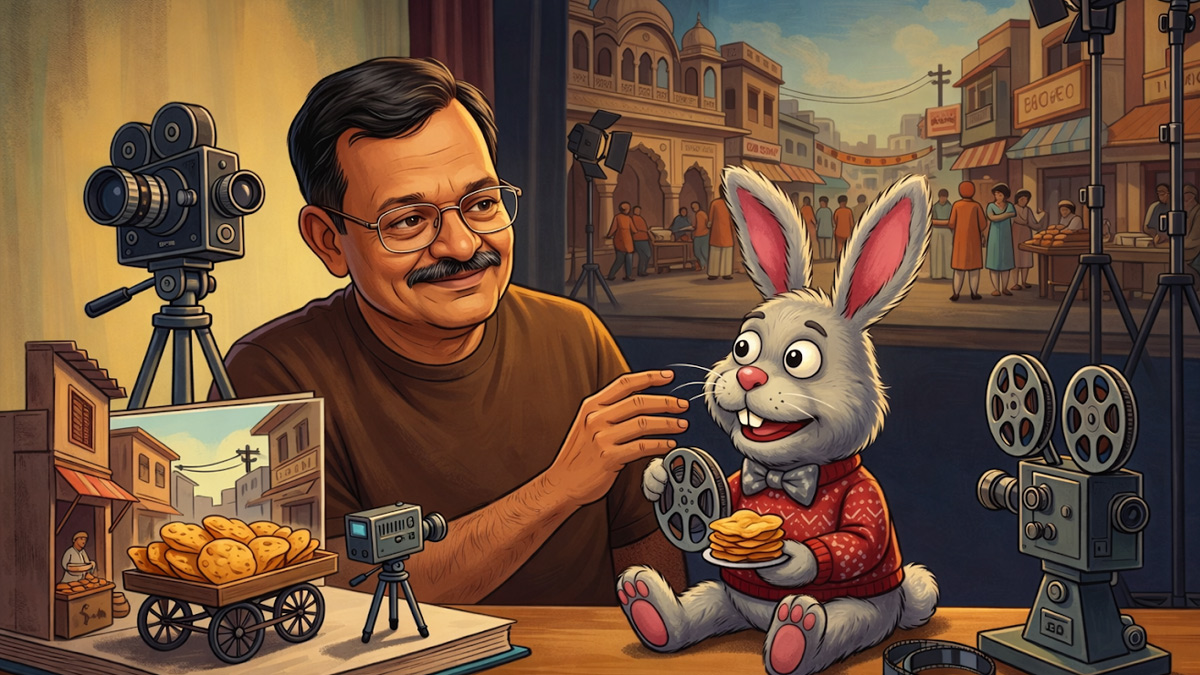
MUMBAI: There are careers, and then there are canvases. Gyan Sahay, the veteran cinematographer, director, and producer who passed away on 10 March 2026 in Mumbai, had one of the latter. Over several decades in the Indian film and television industry, he turned lenses, lights, and the occasional puppet rabbit into something approaching art.
A graduate of the Film and Television Institute of India (FTII) in Pune, Sahay built his reputation as a director of photography across a career that stretched from the early 1970s all the way to the digital age. He was the kind of craftsman who understood that a well-composed shot is not merely a technical achievement but a quiet act of storytelling.
For most Indians of a certain age, however, Sahay will forever be the man behind the rabbit. His direction of the iconic long-running television commercial for Lijjat Papad, featuring its now-legendary puppet bunny, gave the country one of its most cheerfully persistent advertising images. It was the sort of work that sneaks into the national subconscious and takes up permanent residence.
His big-screen credits as cinematographer include Anokhi Pehchan (1972), Pagli (1974), Pas de Deux (1981), and Hum Farishte Nahin (1988). In 1999, he stepped behind a different kind of camera altogether, making his directorial debut with Sar Ankhon Par, a drama that featured Vikas Bhalla and Shruti Ulfat, with a cameo by Shah Rukh Khan for good measure.
On television, Sahay was particularly prized for his command of multi-camera production setups, a skill that made him a go-to technician for large-scale shows and reality programmes. In an industry that has never been especially patient with complexity, he was the calm hand on the rig.
In later life, Sahay turned teacher. He participated regularly in masterclasses and Digi-Talks, often hosted by organisations such as Bharatiya Chitra Sadhna, sharing hard-won wisdom on cinematography, the comedy of timing in a shot, and the sweeping changes brought by the shift from celluloid to digital. He was also said to have been involved in a project concerning a biographical film on Infosys co-founder N.R. Narayana Murthy.
Tributes from the film industry poured in following the news of his passing, with colleagues remembering him as a senior cameraman who served as a rare bridge between two entirely different eras of Indian cinema. That is, perhaps, the finest thing one can say of any craftsman: he kept up, and he brought others along with him.







