Hindi
Multiplex Association of India expresses displeasure over decision to keep cinemas, multiplexes shut in Unlock 2.0

MUMBAI: On 1 June the government of India entered into unlocking by phases. As per Unlock 2.0 guidelines, offices, high streets, markets and shopping malls, airlines are opened but there is no relief for multiplexes. It continues to be included in the prohibited activities list.
Today, Multiplex Association of India (MAI), under the aegis of Federation of Indian Chambers of Commerce and Industry (FICCI) issued an official statement expressing their disappointment over central government’s decision to keep cinemas and multiplexes shut even when the other business is opened up.
“At a time when a significant part of the economy is being opened up, including domestic travel, offices, high street, markets, shopping complexes, etc., the Multiplex Association of India (MAI) feels dismayed that cinemas and multiplexes continue to remain in the list of prohibited activities under the central government’s Unlock 2.0 guidelines. The association finds it highly demotivating and disheartening when in fact, cinemas and multiplexes can become an example of how social distancing guidelines and crowd control can be best exercised in a safe and planned manner. As compared to the unorganised retail and shops that have been opened up, multiplexes and cinema are part of the organised sector, playing hosts to ‘revenue paying’ customers only and hence, in a better position to limit crowds unlike marketplaces and deploy all the mechanisms and guidelines for crowd control and social distancing,” MAI states in the note.

The body highlighted that the multiplex industry in India employs more than 200,000 people directly. It also points out that it is the backbone of the Indian film industry accounting nearly 60 per cent of revenues of film business. And directly providing livelihoods to more than a million people – right from the spot boys to makeup artists, musicians, designers, technicians and engineers to cinema employees to directors and actors.
The body also said that the lockdown has brought the entire industry to a standstill with losses mounting every passing day. It mentions that an early decision to allow cinemas to open up will only help the mobilisation of resources in the film industry’s ecosystem and would lead to gradual resurrection.
It said that even after opening up, they anticipate at least three to six months before things return anywhere close to normal.
It further read, “On one hand where programming of new content will take some time to kick in; movie buffs on the other hand are expected to take a cautious approach before returning to cinemas. These are real challenges that the industry will have to overcome and we believe together, with the support of the government, we will be able to overcome them.”
Globally, countries like France, Italy, Spain, Netherlands, Austria, Hong Kong, UAE, US, etc. and more recently Belgium and Malaysia have opened cinemas.
To which the MAI said, “Many countries around the globe have opened up cinema halls and multiplexes to the public with implementation of the highest degree of safety protocols and have seen a warm response by audiences. In effect, more than 20 major cinema markets around the world have started operating. MAI is of the firm belief that, there must be a start and the unlocking of cinemas in non-containment zones across India should be done post haste – there must be a beginning and an opportunity must be given to us, just like some of the other sectors.”







Hindi
Zee5 and Applause Entertainment team up for whodunnit ‘Everybody Loves Sohrab Handa’
Rajat Kapoor directs star-studded murder mystery streaming from 10 April.
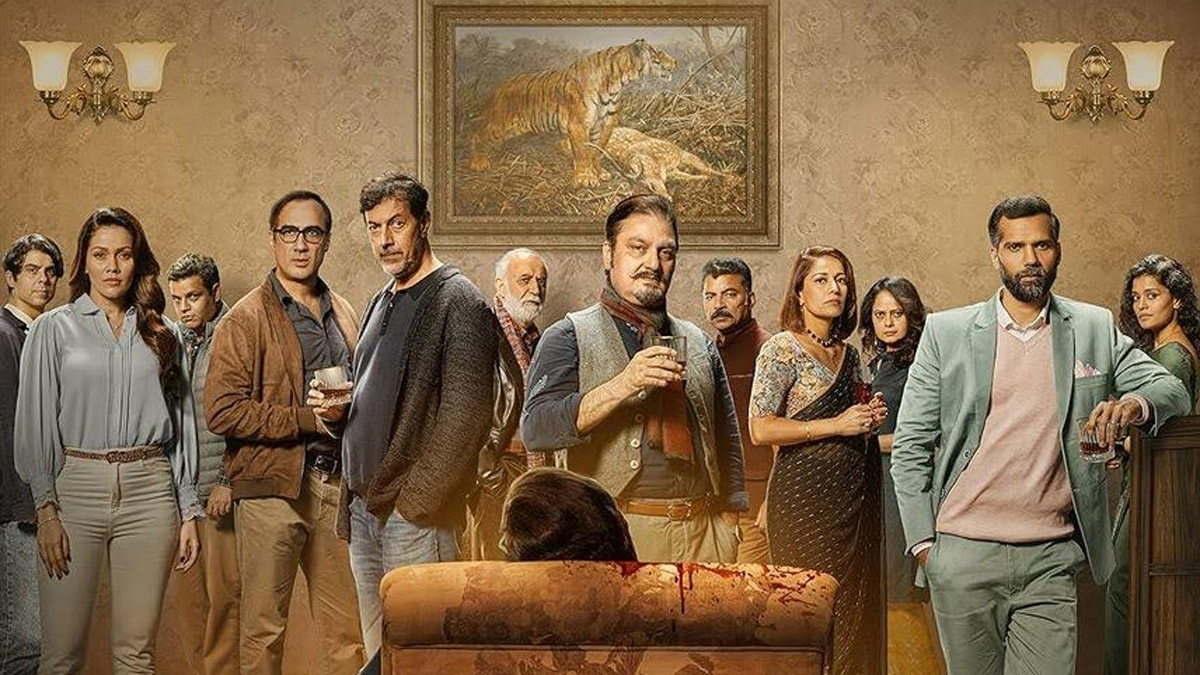
MUMBAI: Zee5 is serving up another killer collaboration and this time, the murder mystery comes with a generous side of dark humour and family dysfunction. The streaming platform has partnered with Applause Entertainment and Mithya Talkies to bring Everybody Loves Sohrab Handa, a fresh, twisted whodunnit written and directed by acclaimed filmmaker and actor Rajat Kapoor. The film will stream exclusively on Hindi Zee5 from 10 April.
The movie reimagines the classic murder mystery genre with a contemporary, darkly comic edge. It revolves around a group of friends and family who smile, drink, and celebrate together until the silence snaps and long-buried secrets spill out. The stellar ensemble cast includes Vinay Pathak, Ranvir Shorey, Waluscha De Sousa, Saurabh Shukla, Chandrachoor Rai, Neil Bhoopalam, Koel Purie, Palomi Ghosh, and Rajat Kapoor himself.
This latest offering continues the successful partnership between Zee5 and Applause Entertainment, which has previously delivered diverse hits such as Mithya, Bloody Brothers, and Jab Khuli Kitaab.
&TV Business Head of hindi Zee5 and chief channel officer Kaveri Das said, “Our collaboration with Applause Entertainment has consistently delivered distinct, high-impact storytelling. Everybody Loves Sohrab Handa is a natural progression, reinforcing our focus on genre-led content with a compelling whodunnit premise and a strong ensemble cast.”
Applause Entertainment business head for movies Sunil Chainani added, “This film adds yet another compelling layer to our slate with Rajat Kapoor’s unmistakable voice.”
Rajat Kapoor shared, “What interested me was not just the mechanics of a whodunnit, but the emotional violence that precedes physical violence. These are people who smile at each other, but there’s so much that is not said.”
The film promises razor-sharp writing, layered performances, and simmering tension, inviting viewers not just to solve the crime but to unravel the complex relationships at its heart.
If you love a good murder mystery served with wit and emotional depth, Everybody Loves Sohrab Handa looks set to be your next addictive watch. Mark your calendars, the whodunnit drops on Hindi Zee5 from 10 April.






