News Broadcasting
MTV to debut first worldwide multimedia visual image campaign from 1 May


In what it claims is a first for any television channel, MTV will be premiering its first multimedia visual image campaign, MTV Coordinates, from 1 May in Asia, Australia, Europe, Latin America, North America and Russia.
The innovative campaign was produced in 20 regions around the world with content reflecting the individuality and diversity of the company’s network of award-winning localised TV channels and web sites, says an official release. The campaign will be unveiled at the Wolfsonian-FIU in Miami Beach, Florida 22-25 April during the annual MTV Networks International Creative Conference.
MTV Coordinates evolved out of an initial idea by Melissa Silverman of the MTV US On-air Promotions department based on a souvenir book from the MTV Video Music Awards called “Common” that celebrated diversity and anti discrimination attitudes among youth. Following the attacks that took place on 11 September, MTV networks around the world expressed a desire to produce local image spots that celebrate the common bonds as well as diverse perspectives of young people worldwide. MTV Coordinates developed organically over a seven-month period with input from various MTV Creative Directors across the globe.

The campaign features a series of spots, each highlighting special keywords chosen by individual channels, such as rhythm, community, identity, sex, chaos, laughter and beauty. The keywords are interpreted by a series of original still images taken by photographers commissioned by MTV in local markets. Set to a vibrant and eclectic music soundtrack, the 30-second spots are linked together by complementary graphics conceptualised by Fernando Lazzari of MTV Latin America and featuring the exact latitude and longitude coordinates for cities worldwide that are represented in the still images, resulting in a campaign that is universally appealing but also locally inspired. Each participating MTV produced one promo but will share the entire series of spots among channels and websites around the world.
“MTV Coordinates reflects the diverse creativity and vision that has been such a vital component of our success in operating localised TV channels and websites around the world,” commented Lisa Hackett, senior vice-president of programming, marketing and operations, MTV Networks International. “We’re especially delighted to launch our new multimedia visual image campaign at The Wolfsonian-FIU, a museum and research center dedicated o the study of visual culture and its ability to persuade and influence.”
Said Cyrus Oshidar, vice-president, Creative, MTV India: “It’s a first for any television channel and it is great to be a part of a truly global initiative.”
MTV website elements for the campaign include streaming of all the spots on individual websites and a flipbook of the extensive series of photographic images. In addition, selected websites will feature locally produced elements such as electronic greeting cards and other announced soon.
MTV channels and websites participating in MTV Coordinates include Australia, Brasil, Canada, Espana, European, France, Germany, India, Italia, Japan, Korea, Latin America (North, Central and South), Mandarin, The Netherlands, Nordic, Polska, Russia, Southeast Asia, UK, & Ireland, and US.
The music featured in the spots includes acclaimed acts such as Iceland’s Sigur Ros and Poland’s Andrzej Smolik. In addition, several spots include original music produced specifically for this campaign.







News Broadcasting
News18 India launches Command Centre war explainer with Arya
New show shifts from debates to decoding global conflicts and impacts
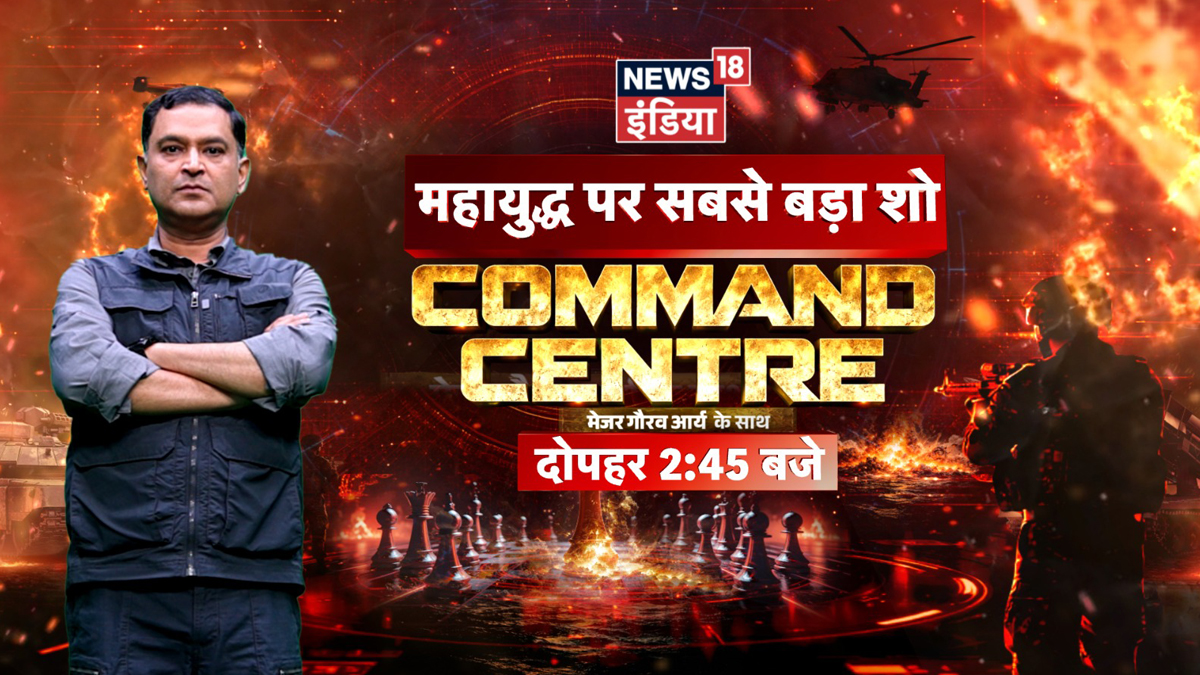
MUMBAI: News18 India has rolled out a new war-focused programme, Command Centre, featuring Gaurav Arya, as it looks to offer viewers a sharper, more grounded take on global conflicts amid rising tensions in West Asia.
Positioned as an “insider war room”, the show moves away from conventional panel debates and instead focuses on explaining military developments, decoding strategy and connecting global events to their everyday impact, from fuel prices to economic shifts.
The format leans heavily on visuals and data. The studio has been designed like a command hub, complete with large LED war maps, real-time graphics and an alert system to track developments as they unfold.
At the centre of it all is Arya, who brings his military background to simplify complex war strategies for viewers. His signature line, “Seedhi baat samjhiye”, anchors the show’s promise of clarity over noise.
News18 India managing editor Jyoti Kamal said, “Command Centre, featuring Major Gaurav Arya is designed to deliver accurate insights and a clear perspective on how evolving conflicts impact everyday life, from household budgets to national security. With expert voices analysing every development in real time, the show goes beyond headlines to decode what’s happening now, what it means, and what could come next.”
Echoing the intent, Gaurav Arya added, “In times of war, confusion is the biggest threat. With News18 India’s Command Centre, we are bringing viewers inside the war room, decoding strategies, tracking every escalation, and explaining, in the simplest terms, what it means for India and for every household. Seedhi baat samjhiye, this is where you understand not just what is happening, but what happens next.”
The weekday show will air in the afternoon slot and will also feature Gaurav Shukla, adding to its editorial depth.
With its mix of analysis, visuals and a clear focus on impact, the show reflects a broader shift in news consumption. Viewers are no longer just watching events unfold, they are looking to understand what those events mean for them.







