News Broadcasting
MTV Germany to continue broadcasting ‘Popetown’


MUMBAI: MTV Germany has decided to broadcast the cartoon series Popetown in its entirety. Following the broadcast of the first episode last Wednesday, the remaining nine episodes will be broadcast from today – 10 May.
A couple of years ago the BBC had pulled the plug on the show due to pressure from the Catholic community. The show is set in a fictional Vatican.
MTV Germany programming director Elmar Giglinger says, “We have decided to broadcast all episodes of Popetown. Our decision is based on the reaction of the viewers, who were clearly in favour of the programme’s broadcast, as well as the FSF’s assessment that the submitted episodes of Popetown are legally unobjectionable.”

Internet users were asked their opinion on Popetown in a recent poll, conducted by market research institute PhoneResearch on 3 and 4 May 2006. More than 94 per cent of those asked said that this type of series should be broadcast.
Comments from ‘MTV News Mag Special – Popetown’, the live discussion programme which took place on 3 May, were also taken into account in the decision-making process. During the discussion, representatives from the Federation of German Catholic Youth, the FSF, the Junge Liberale (Young Liberals Organisation), the Frankfurter Allgemeine Zeitung newspaper, Cologne Conference (international film and television festival) and members of the music and entertainment communities voiced their opinions on Popetown, with nobody calling for a ban of the show.
Viewers were also invited to take part in the live discussion both online and by telephone. The response was enormous. During the show, the Berlin MTV Studio switchboards were jammed and over 15,000 comments were submitted to the online forum at www.mtv.de/popetown, with the overwhelming majority of people supporting the broadcast of Popetown.
In the run-up to the broadcast of MTV News Mag Special – Popetown, a random representative household sample of 1,004 people between the ages of 14 and 39 were asked their opinion on Popetown by PhoneResearch. Asked whether this type of series should be allowed to be shown on German television, 78 per cent answered “yes”, 16 per cent “no” and the rest were undecided. Ninety one per cent of those asked found the televised discussion and the network’s handling of criticism generally good.



News Broadcasting
CNN-News18 to host Fury in the Gulf conclave on West Asia crisis
Three-hour summit to unpack geopolitical fallout and impact on India
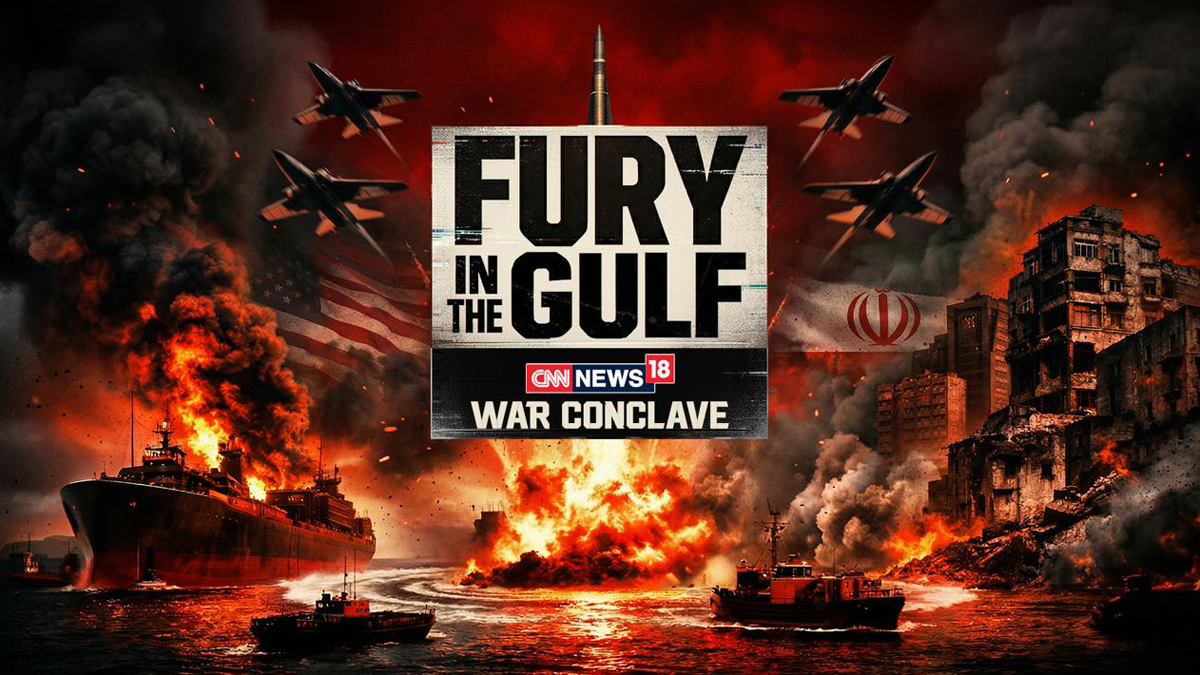
MUMBAI: CNN-News18 is set to host a special three-hour broadcast, Fury in the Gulf – War Conclave, on April 7, aiming to decode the escalating West Asia crisis and its far-reaching implications for India.
Scheduled from 4:00 PM to 7:00 PM, the conclave comes at a time when tensions between Iran and the United States are reshaping global geopolitics and triggering economic uncertainty. With India’s deep energy ties, trade links and large diaspora in the Gulf, the developments carry significant domestic relevance.
Built around the theme ‘Conflict, Consequences, and The Future,’ the programme will feature six curated sessions combining one-on-one interviews and panel discussions. The focus is to cut through the clutter and offer viewers a clearer understanding of the fast-evolving situation.
Key sessions include ‘Diplomacy in Times of War’ featuring Shashi Tharoor, and ‘World After the Iran Conflict’ with voices such as Ram Madhav, Reuven Azar, representatives from the European Union and the Iranian Deputy Envoy. Another session titled ‘Another Dunkirk?’ will bring together K. J. S. Dhillon and Jitin Prasada among others.
CNN-News18 editorial affairs director Rahul Shivshankar said, “In times of war, clarity becomes the most powerful tool. Fury in the Gulf – War Conclave brings together credible voices to address the questions and confusion that arise amid an overwhelming influx of information.”
He added that the initiative is aimed at delivering “facts, perspective, and insight” at a time when misinformation can easily cloud public understanding.
Echoing the sentiment, CNN-News18 CEO– English and business news Smriti Mehra said the conflict marks a defining global moment, with consequences that extend well beyond the region. She noted that the conclave seeks to present the crisis with “depth, nuance and responsibility” so audiences can better grasp its real-world impact.
As geopolitical tensions continue to dominate headlines, the conclave positions itself as an attempt to bring order to the noise, offering viewers a structured, insight-led look at a complex and rapidly shifting global situation.






