Cable TV
MSOs moot Re 1 a day rent scheme on STBs


MUMBAI: The digital set-top box (STB) that will sit in consumer homes to receive pay channels will come cheap. Facing the threat of competition from direct-to-home (DTH) service providers, cable TV operators are preparing to enter the conditional access system (CAS) regime with an aggressive price plan.
Multi-system operator Hathway Cable & Datacom has decided to introduce a rental scheme on its STBs with a fee as low as Re 1 a day. Incablenet is likely to follow suit but will be finalising its pricing on Monday, sources say.
“We will be charging a rent of Re 1 per day on our boxes. Consumers will have to pay upfront Rs 999 as a refundable deposit,” Hathway Cable & Datacom CEO K Jayaraman tells Indiantelevision.com. Currently, the boxes are available for purchase at Rs 3,000 with no rental schemes.

Even in Kolkata, Manthan Cable Network is considering a rental scheme of Rs 50 per month on an initial deposit of Rs 800-1,000. Competition can further drag down prices. “We are planning to charge a rent of Rs 50 per month on our STBs,” says Manthan director Gurmeet Singh.
Cablecomm Services Pvt Ltd, another big operator in Kolkata, is also planning to structure its tariff plans for the CAS era.
Siticable, which is the only MSO that has operations in the three metros of Delhi, Mumbai and Kolkata where CAS is going to be initially launched, could not be contacted for its comments. Chennai is the other city where CAS is already in place, but has seen slow uptake in demand.
While broadcasters have expressed concern on the supply of boxes to seed the market at such short notice, cable networks have dismissed such fears as “being fictitious.” A phase-wise rollout of CAS in the three metros and an existing stockpile of STBs will make the transition smooth, operators say.
“The industry has a stockpile of 800,000 boxes while estimates put the number of cable TV households in the notified areas of south Delhi and Mumbai for the first phase of rollout at over 600,000. Based on the demand, the boxes can be quickly replenished to keep the supply line flowing. It will take around one month to import the boxes,” says Jayaraman.
Kolkata, where Hathway has no operations, has an estimated total of around 250,000 cable TV homes to be covered in the first zone CAS rollout. “We have a stock of 100,000 boxes and are offering 195 TV channels on our digital cable,” says Indian Cable Net CEO Amit Nag. Last year, Siticable acquired Indian Cable Net from the RPG Group to become the dominant MSO in Kolkata.
Manthan, the largest operator in south Kolkata, has installed a digital headend and is in the process of putting its encryption system in place. “Kolkata Metropolitan Development Authority has around 1.8 million cable TV homes. The logistic cycles will be worked out,” says Singh.
Mumbai and Delhi together have around seven million cable homes. “With CAS, we expect to give healthy competition to DTH. The ground will also get more organised and volumes, as they pick up, will drive down the cost of boxes,” says Atul Saraf, one of the founder-promoters of 7 Star.







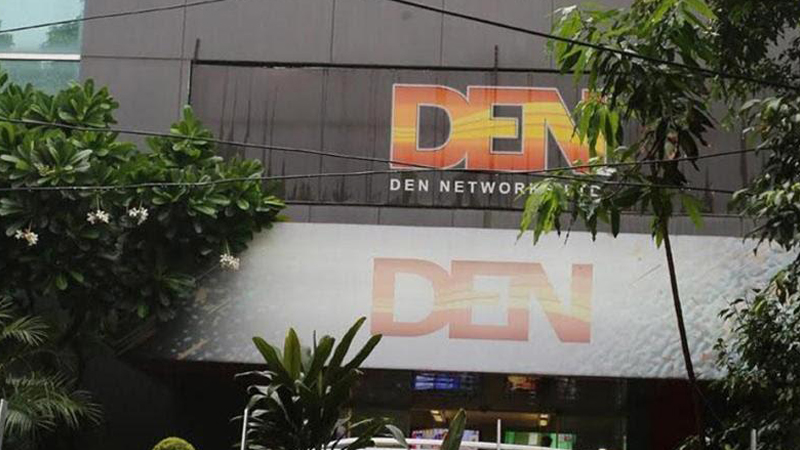
MUMBAI: When margins wobble, liquidity talks and in Q3 FY25-26, cash did most of the talking. Den Networks Limited closed the December quarter with consolidated revenue of Rs.251 crore, marginally higher than the previous quarter but down 4 per cent year-on-year, even as profitability stayed resilient on the back of strong cash reserves and disciplined cost control.
Subscription income softened to Rs.98 crore, slipping 3 per cent sequentially and 14 per cent from last year, while placement and marketing income offered some cheer, rising 15 per cent quarter-on-quarter to Rs.148 crore. Total costs climbed faster than revenue, up 7 per cent QoQ to Rs.238 crore, driven largely by higher content costs and operating expenses. As a result, EBITDA dropped sharply to Rs.13 crore from Rs.19 crore in Q2 and Rs.28 crore a year ago, pulling margins down to 5 per cent.
Yet, the bottom line refused to blink. Profit after tax stood at Rs.40 crore, up 15 per cent sequentially and only marginally lower than last year’s Rs.42 crore. A healthy Rs.57 crore in other income helped cushion operating pressure, keeping profit before tax at Rs.48 crore, broadly stable quarter-on-quarter despite the tougher cost environment.
The real headline-grabber, however, sits on the balance sheet. The company remains debt-free, with cash and cash equivalents swelling to Rs.3,279 crore as of December 31, 2025. Net worth rose to Rs.3,748 crore, while online collections accounted for 97 per cent of total receipts, underscoring strong cash discipline across operations, including subsidiaries.
In short, while Q3 showed signs of operating strain, the financial backbone remains solid. With zero gross debt, steady profits and a formidable cash war chest, the company enters the next quarter with flexibility firmly on its side proving that in uncertain markets, balance sheet strength can be the best growth strategy.








