Cable TV
MSO protests against Maharashtra cable TV tax


The Hinduja-run MSO InCableNet has raised a voice of protest against the Maharashtra state government’s move to double the entertainment tax levied on cable operators. The state finance minister announced the hike in the budget that was presented to the assembly for 2000-2001 yesterday.
In a press release , InCableNet has stated that the impost will “financially cripple an already burdened cable industry. The need of the hour is to implement the existing entertainment tax system rather than increase tax burdens.”
Says IndusInd Media – the company that runs InCableNet – CEO Ram T. Hingorani: “The increase will result in a substantial financial burden on MSOs like In CableNet and cable operators who declare 100 per cent connectivity.”

Last year the cable TV industry had hailed the-then government’s decision to levy a flat rate of Rs 15, Rs 10 and Rs 5 for each urban, semi-urban and rural cable TV homes respectively. This replaced the earlier system of charging a percentage of subscription fees.
InCableNet says that the governments contention that entertainment tax targets were not being met by it on account of underdeclaration by cable TV operators (hence it was forced to hike rates) was unfair.
“The system needs correction not a 100% hike to supplement the lacunae in the entertainment tax levy system” points out Hingorani. “The cable TV subscriber is no mood to pay an increased subscription, particularly in view of the burden of rising prices of day-to-day commodities and the new hikes in kerosene and LPG prices. The current budget has also increased the professional tax which is bound to affect the common man in the state. This additional burden that the Cable TV industry will have to bear will stunt its growth further as the Government is doing nothing to promote it.”
Hingorani also complained about the varying rates of entertainment tax levied by various state governments on cable TV operators. “All the states have approximately the the number of channels with common pay channels,” he says. “Yet each of the governments imposes varying taxes.”
He would like the government to tax pay TV channels instead of cable TV operators. “Pay TV channels earn huge sums by way of subscription and ad revenues. The government should examine whether levying a 5 to 10 per cent tax on the channel managements is more feasible. Th tax can be collected at source and evasion will be eliminated in a structure where the onus for paying the tax is absolutely clear,” he says.
Hingorani suggests that the government should work on schemes such as voluntary disclosure to encourage declaration of larger subscriber bases by cable TV operators.





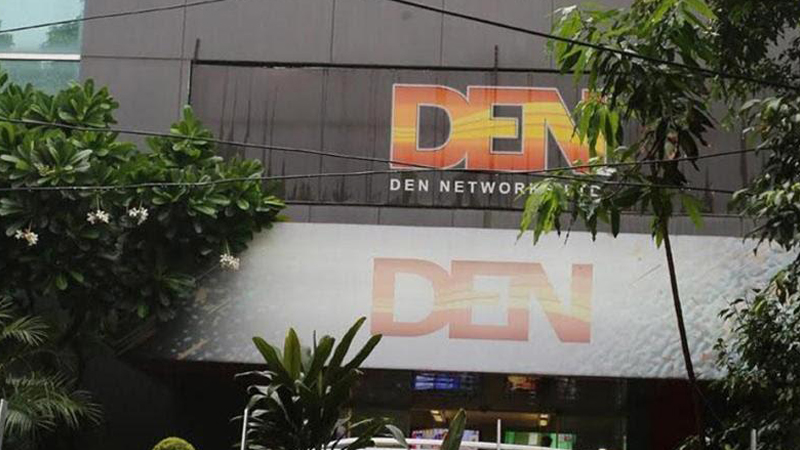
MUMBAI: When margins wobble, liquidity talks and in Q3 FY25-26, cash did most of the talking. Den Networks Limited closed the December quarter with consolidated revenue of Rs.251 crore, marginally higher than the previous quarter but down 4 per cent year-on-year, even as profitability stayed resilient on the back of strong cash reserves and disciplined cost control.
Subscription income softened to Rs.98 crore, slipping 3 per cent sequentially and 14 per cent from last year, while placement and marketing income offered some cheer, rising 15 per cent quarter-on-quarter to Rs.148 crore. Total costs climbed faster than revenue, up 7 per cent QoQ to Rs.238 crore, driven largely by higher content costs and operating expenses. As a result, EBITDA dropped sharply to Rs.13 crore from Rs.19 crore in Q2 and Rs.28 crore a year ago, pulling margins down to 5 per cent.
Yet, the bottom line refused to blink. Profit after tax stood at Rs.40 crore, up 15 per cent sequentially and only marginally lower than last year’s Rs.42 crore. A healthy Rs.57 crore in other income helped cushion operating pressure, keeping profit before tax at Rs.48 crore, broadly stable quarter-on-quarter despite the tougher cost environment.
The real headline-grabber, however, sits on the balance sheet. The company remains debt-free, with cash and cash equivalents swelling to Rs.3,279 crore as of December 31, 2025. Net worth rose to Rs.3,748 crore, while online collections accounted for 97 per cent of total receipts, underscoring strong cash discipline across operations, including subsidiaries.
In short, while Q3 showed signs of operating strain, the financial backbone remains solid. With zero gross debt, steady profits and a formidable cash war chest, the company enters the next quarter with flexibility firmly on its side proving that in uncertain markets, balance sheet strength can be the best growth strategy.






