News Headline
MRUC plans improvements in IRS

NEW DELHI: Media Research Users Council (MRUC), which conducts the Indian Readership Survey, is in the process of initiating several improvements in the whole on-going survey.
According to Roda Mehta, chairman of the technical committee of the MRUC, the improvements in research design include IRS sampling districts (ISDs), sub metro sampling and SEC resizing (in Mumbai and Delhi).
The improvements in reporting include edition-wise readership, sub-metro profile, DUE unit (Delhi and Urban Environs)and increasing the sample towns to 62 (it was 48 in IRS 2003-04 Round 1). The improvements are due to the fact that MRUC would prefer, as Mehta pointed out in a detailed presentation (click here for the presentation) yesterday in Delhi, that the IRS would not want its figures to be contested.
“At times we do 100 per cent back checking, if we feel that the data being collected is being influenced (by interested parties like media houses),” she said.

What is an ISD ? The IRS Sampling District is a clutch of ‘geographically contiguous districts’ within an SCR (as defined way back in 1954) and catered by a ‘single edition’ of major dailies.
Pointing out that sampling by ISDs are tighter than done by SCR-wise, Mehta said, it would mean wider spread, better representation of urban/rural universe and insights at the “micro level.”
Speaking on the resizing of the SECs, she said that it was felt that large sample surveys under-estimate and under-report SECs (A1 & A2 ) due to inability to access, unavailability and not being listed in the electoral rolls — something that comes out of an n apathy towards politics and politicians.
Mehta also said that MRUC, along with the Hansa Research Group, has further taken the numbers through some number crunching to come up with SPARR (sections, pullouts & attitudinal readership research).
Unveiling the Delhi-specific figures, Mehta said, “SPARR is a new offering to the market to empower better decisions guided by psychographic definitions right down to a sub-city level.” The future roadmap for this tool, at the moment done in Delhi and Mumbai, is another six cities, including Bangalore, Chennai and Ahmedabad, over a short period of time.
So, compared to the main newspapers, lifestyle and entertainment pages or sections occupy a higher share of readership ranging between 40-81 per cent. The corresponding figures for investments, property and business was 34-41 per cent, general news was 43-60 per cent and city-specific specials 42-57 per cent.
In TOI, a whopping 60 per cent read the Delhi Times section, while almost 55 per cent HT readers read HT city.
The front page is read by most readers (80-95 per cent), but as the progressions happens to inside pages the readership of individual pages starts dipping. City news has between 70-85 per cent readership in newspapers, while the national news readership goes down to 53-69 per cent. International news readership further slips to 39-54 per cent and sports ranges between 25-42 per cent.


NEW DELHI: Hamdard Laboratories gathered a cross-section of India’s achievers in New Delhi on Friday, handing out the Hakeem Abdul Hameed Excellence Awards to figures who have left their mark across healthcare, education, sport, public service and the arts.
The ceremony, attended by minister of state for defence Sanjay Seth and senior officials from the ministry of Ayush, celebrated individuals whose work blends professional success with a sense of public purpose. It was as much a roll call of achievement as it was a reminder that influence is not measured only in profits or podiums, but in people reached and lives improved.
Among the headline awardees was Alakh Pandey, founder and chief executive of PhysicsWallah, recognised for turning affordable digital learning into a mass movement. On the sporting front, Arjuna Awardee and kabaddi player Sakshi Puniya was honoured for her contribution to the game and for pushing women’s participation onto bigger stages.
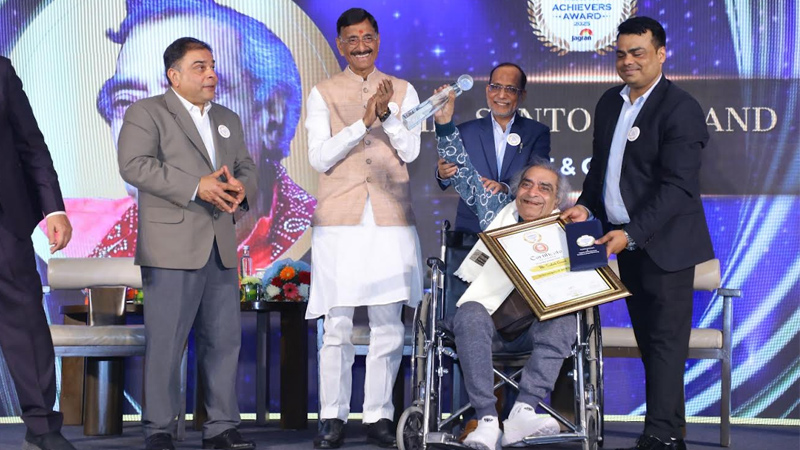
The cultural spotlight fell on veteran lyricist and poet Santosh Anand, whose songs have echoed across generations of Hindi cinema. At 97, Anand accepted the honour with characteristic humility, reflecting on a life shaped by perseverance and hope.
Healthcare honours spanned both modern and traditional systems. Manoj N. Nesari was recognised for strengthening Ayurveda’s place in national and global health frameworks. Padma shri Mohammed Abdul Waheed was honoured for his research-backed work in Unani medicine, while padma shri Mohsin Wali received recognition for his long-standing contribution to patient-centred care.
Education and social development also featured prominently. Padma shri Zahir Ishaq Kazi was honoured for decades of work in education, while former Meghalaya superintendent of Police T. C. Chacko was recognised for public service. Goonj founder Anshu Gupta received an award for his dignity-centred rural development initiatives, and the Hunar Shakti Foundation was honoured for empowering women and young girls through skill development.
The Lifetime Achievement Award went to former IAS officer Shailaja Chandra for her long career in public healthcare and governance, particularly in the traditional systems under Ayush.
Speaking at the event, Hamdard chairman Abdul Majeed said the awards were a tribute to those who combine excellence with empathy. “These awardees reflect Hakeem Sahib’s belief that healthcare, education and public service must ultimately serve humanity,” he said.
Minister Seth struck a forward-looking note, saying India’s young population gives the country a unique opportunity to become a global destination for learning, health and wellness by 2047.
The ceremony also featured the trailer launch of Unani Ki Kahaani, an upcoming documentary starring actor Jim Sarbh, set to premiere on Discovery on 11 February.
Instituted in memory of Unani scholar and educationist Hakeem Abdul Hameed, the awards have grown into a national platform that celebrates those building a more inclusive and resilient India. For one evening at least, the spotlight was not just on success, but on service with substance.






