Box Populi
MovieMe study reveals regional films’ impact on Indian cinema

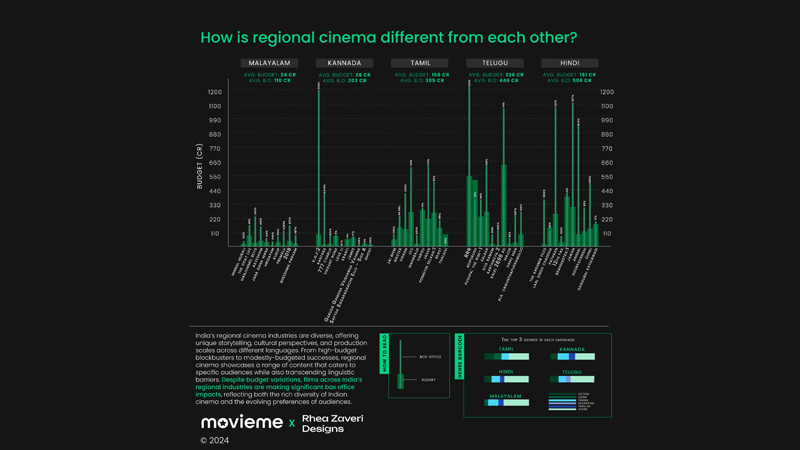
Mumbai: India’s regional cinema landscape is vast and diverse, with each industry offering unique narratives, cultural contexts, and filmmaking styles. To better understand regional cinema success and growth, MovieMe- a cutting-edge entertainment tech and content discovery platform did a detailed study where they compared five key regional film industries—Malayalam, Kannada, Tamil, Telugu, and Hindi—and their 10 most popular releases post-COVID (2020-2024). MovieMe looked at film budgets, box office (BO) earnings, and genres to get a sense of what makes each regional cinema industry in India unique.
The study by MovieMe reflects that, despite the significant average budget and average BO earning differences, each industry is contributing significantly to the Indian cinematic experience, delivering a variety of content that caters to both local and national audiences. For instance, while Malayalam and Kannada cinema appear to deliver compelling narratives at relatively lower budgets, Telugu and Tamil films appear to be bigger-budget blockbusters that garner massive box office success across India.
Hindi cinema, often regarded as mainstream, continues to dominate national box offices, but regional industries like Kannada and Telugu are catching up with high-grossing films like KGF 2, RRR, and Kalki 2898 AD. Certain genre preferences also stood out from these movies, with action flicks and family dramas dominant across most industries.

MovieMe’s data shows that Indian regional cinema is thriving, transcending linguistic barriers and appealing to diverse audiences across the country. Especially in Tamil and Kannada industries with increasing competition amongst titles to capture attention at the box office, regional movies are set to get a growing share of the market in the coming years.
Moreover, as audience preferences shift towards authenticity, complex characters, and culturally significant narratives, regional cinema is well-positioned to establish fresh trends and explore artistic limits.



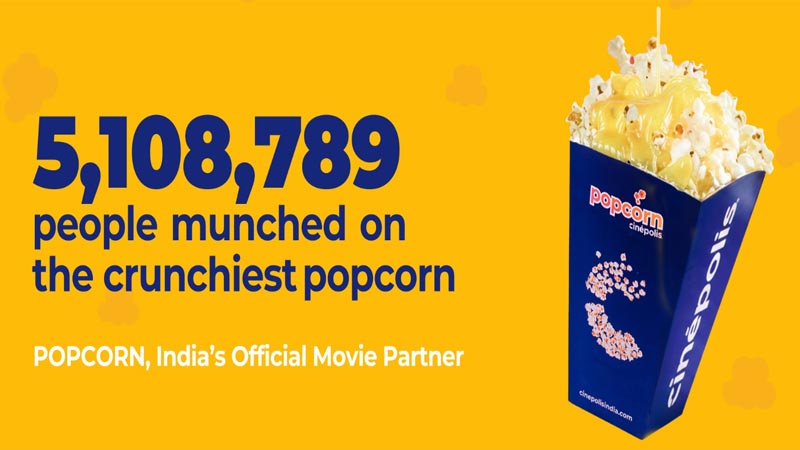
MUMBAI:If there is a soundtrack to cinema-going, it is the crackle of popcorn and in 2025, audiences at Cinépolis India clearly couldn’t get enough of it. The multiplex chain has revealed its annual popcorn consumption data, showing that moviegoers across its network devoured close to five million tubs of popcorn last year. Broken down, that works out to around 570 tubs every hour, or roughly 10 tubs disappearing every single minute, enough to keep the kernels popping almost non-stop.
In sheer volume terms, Cinépolis sold around 12,000 tonnes of popcorn during the year, underlining just how central the snack has become to the big-screen ritual. Long after the opening credits roll and before the end credits fade, popcorn remains the constant companion.
To celebrate National Popcorn Day on January 19, 2026, the cinema chain is now turning the spotlight on the snack itself. From January 20 to January 31, Cinépolis will run a nationwide “Popcorn Happy Hour”, offering a buy one get one free deal on popcorn across its locations. The limited-period promotion is designed to add a little extra crunch to the moviegoing experience, without adding to the bill.
“Popcorn is the official movie partner, and at Cinépolis, it is the sensory anchor of the cinema experience,” said Cinépolis India managing director Devang Sampat. “With the Popcorn Happy Hour offer, we are making it easier for audiences to add that to their visit, without compromising on quality.”
Sampat added that the consumption data is more than just a fun statistic. Tracking what patrons buy and when they buy it helps the chain refine its food and beverage offerings and shape the overall in-cinema experience. “Our 2025 data helps us understand what patrons are choosing, so we can keep improving the menu and the experience,” he said.
The popcorn push sits within Cinépolis India’s broader Foovies framework, an in-house strategy that treats food and beverages as a core part of cinema-going rather than a side order. The approach focuses on curated menus, value-led campaigns and data-driven decisions, using consumer behaviour to guide what lands at the concession counter.
As theatres continue to compete not just with streaming platforms but with every other leisure option vying for attention, the numbers suggest one thing remains rock-solid: when the lights dim, popcorn still rules the aisle. And with millions of tubs already behind it, Cinépolis is betting that the humble kernel will keep audiences coming back for another bite and another show.






