News Headline
Morgan Stanley’s latest CAS report emphasises addressability benefits

NEW DELHI: Current uncertainty over conditional access system notwithstanding, all stakeholders of the game, barring the local cable operators (LCOs), will financially benefit (details later in the story) from addressability being introduced in India. The data is contained in the latest report on CAS prepared by Morgan Stanley.
The report states “We believe that CAS implementation will likely increase the pay revenues of broadcasters by three times to Rs 28 billion, MSOs by 8 times to Rs10 billion, and taxes to the government by 9 times to Rs. 26 billion over the next five years. We have assumed set-top box (STB) penetration rate of 32.4 per cent to 23 million households by financial year 2008.”
Dwelling on the distribution margin issue, the report says that pay broadcasters and MSOs must arrive at a consensus on distribution margins for the pay channels the report says, “While the former is offering 25-30 per cent (distribution margin), the latter is demanding 60-75 per cent. We believe the margin will settle around 40-45 per cent,”
Pointing out that phased rollout of CAS should ease logistics of implementation and permit focused penetration and seeding of set-top boxes (STBs), the report explains, “The main positive we see for the pay broadcasters is a limited decrease in connectivity and, therefore, less impact on their advertising revenues in the transition phase.”
According to Morgan Stanley report, the key issues to track are the pricing of pay channels (super bouquets, etc), availability and the rate of penetration of the boxes and government guidelines on implementation. ” The main concern is that pay broadcasters might be forced to remain free to air (read waiver of subscription revenue during the transition phase) for an extended period” the reports states.
Financial Impact Of CAS On Stakeholders:
Though the Morgan Stanley report CAS= Chaos And Stress was prepared earlier this month presuming the rollout would be effected from 14 July (an additional update accompanies the report now), the projections are unlikely to change much. Unless, of course, CAS is junked totally due to political reasons, which is increasingly becoming one of the biggest hurdles. (One CAS deadline gone, will the next go the
same way?)
Broadcasters· Subscription revenue for broadcasters is likely to increase 3.1 times to Rs. 27.6 billion by financial year 2008; implying a 25.1 per cent compounded annual growth rate (CAGR) over the next five years. Significant decline in profitability of pay channels, if they decide to convert to free to air (FTA). Profits may decline 30 – 50 per cent or even become loss making.
Loss of ad revenues of pay channels in near or short term due to fall in connectivity and ad revenues may decline by 15 – 20 per cent during the transition period depending on the STB penetration. Some FTA channels may gain from shift in ad revenue from pay channels. Doordarshan should be the biggest beneficiary because of its `must-carry’ status.
FTA channels may have to pay carriage fees to the local cable operators (LCOs) as the latter ha no compulsion to show more than 30 FTA channels.
MSOs· Subscription revenue for MSOs is likely to increase by 8.4 times to Rs. 10.3 billion by FY 2008; implying a 52.9 pr cent CAGR over the next five years. Front-ended and high investment in infrastructure such as CAS, subscriber management system (SMS) and initial funding of the STBs. Increase in market share of MSOs as the fragmented LCOs will likely align with the former because of lack of funds to invest in systems. The MSOs are likely be able to offer value-added services such as broadband Internet and pay-per-view to consumers, which will boost their revenues in the long term.
LCOs- Significant decline in revenues as they are likely receive only Rs. 72 (exclusive of taxes) for the FTA bouquet and a distribution margin from the MSOs and pay broadcasters. There will also be a significant decline in bargaining power of the LCOs against the MSOs and pay broadcasters as the STB households should be controlled by MSOs. LCOs are likely become mere collection agents and connection providers of the MSOs.. The MSOs may charge carriage fees from weak FTA channels to increase their revenues the report indicates.
Government – There will be a significant upside in revenues on a sustained basis if the implementation is smooth, consumer-friendly, and takes place in a realistic time frame. It will regulate the industry and introduce transparency in the cable TV broadcasting and distribution business. It can offer choice to the consumer and save the consumer from frequent and arbitrary price hikes. In addition it can take credit for reducing the monthly cable bill of the consumers if the pay channels convert to free to air.
Revenue distribution post-CAS – The Indian subscription revenue market is estimated at Rs. 83 billion in FY 2003 and has grown at over 40 per cent CAGR over the past decade. The huge subscription revenue collected from consumers was mainly retained by the LCOs and Morgan Stanley estimates the latter’s share currently at 84.3 per cent of the total market.
At present, the broadcasters share is approximately 10.8 per cent, while the share of the MSOs and government is around 1.5 per cent and 3.4 per cent of the total subscription revenue market, according to the report. Post-CAS implementation, Morgan Stanley believes that the distribution of subscription revenues will change significantly. The key assumptions are as follows:
– The rollout of CAS on an all-India basis will be over a
3-4 year time frame.
– There is likely to be complete transparency and 100 per cent declaration of cable TV households.
– Total TV households (HH) will rise from 85.1 million by the end of the FY2003 to 113.9 million towards the end of FY 2008.
– Total cable TV HH will rise from 44.1 million in FY2003 to 71.0 million in F2008.
– Total MSO HH coverage will rise from 16.3 million at the end of the FY 2003 to 28.6 million in by the end of FY2008.
– The STB HH penetration will rise from 25 per cent (1.5 million HH) by the end of FY 2004 to 32.4 per cent (23.0 million HH) by the end of FY2008.
– The FTA bouquet price (including government taxes) has been estimated at Rs100 per month.
– The aggregate price of all pay channel bouquets has
been estimated at Rs. 200 per month
– Distribution margins of pay channels are estimated at 50 per cent with MSOs receiving 20 pr cent and LCOs receiving 30 per cent.
“Based on the above-mentioned key assumptions, the size of the Indian subscription revenue market will likely be around Rs 140 billion in FY 2008,” the Morgan Stanley reports states. More importantly, the revenue distribution pattern too will change with the LCOs being the biggest losers with their share declining to 54.8 per cent in FY 2008. The shares of broadcasters and MSOs are likely to increase to 19.7 per cent and 7.3 per cent, respectively in FY 2008. “The government is likely be the biggest beneficiary with its share rising to 18.2 per cent in FY 2008,” the report concludes.

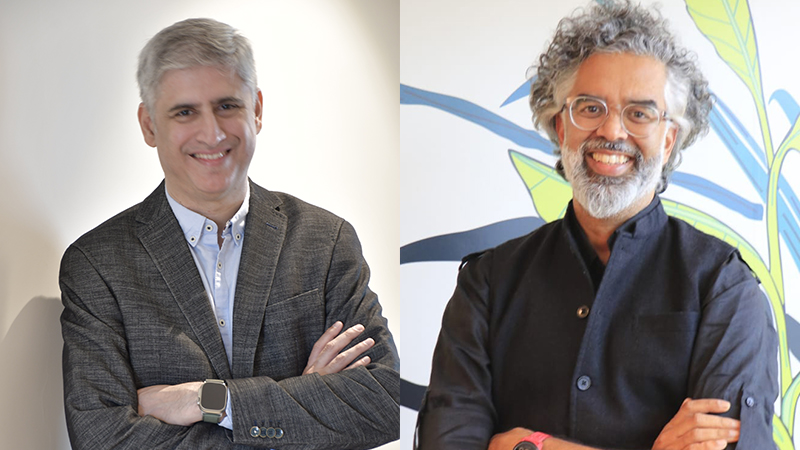
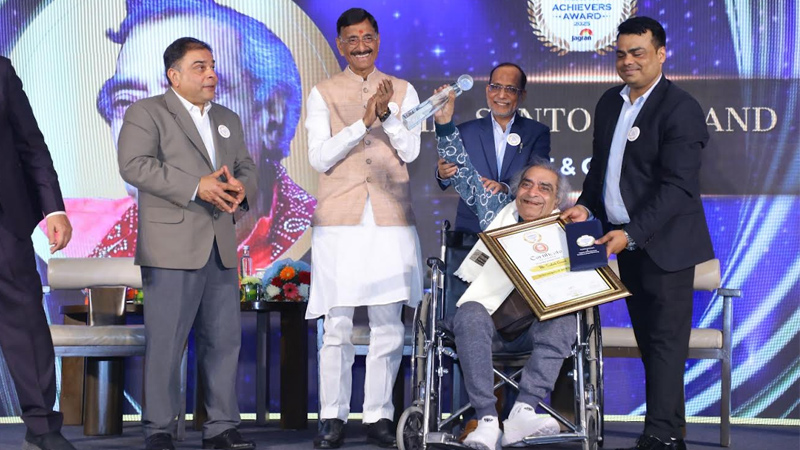
NEW DELHI: Hamdard Laboratories gathered a cross-section of India’s achievers in New Delhi on Friday, handing out the Hakeem Abdul Hameed Excellence Awards to figures who have left their mark across healthcare, education, sport, public service and the arts.
The ceremony, attended by minister of state for defence Sanjay Seth and senior officials from the ministry of Ayush, celebrated individuals whose work blends professional success with a sense of public purpose. It was as much a roll call of achievement as it was a reminder that influence is not measured only in profits or podiums, but in people reached and lives improved.
Among the headline awardees was Alakh Pandey, founder and chief executive of PhysicsWallah, recognised for turning affordable digital learning into a mass movement. On the sporting front, Arjuna Awardee and kabaddi player Sakshi Puniya was honoured for her contribution to the game and for pushing women’s participation onto bigger stages.

The cultural spotlight fell on veteran lyricist and poet Santosh Anand, whose songs have echoed across generations of Hindi cinema. At 97, Anand accepted the honour with characteristic humility, reflecting on a life shaped by perseverance and hope.
Healthcare honours spanned both modern and traditional systems. Manoj N. Nesari was recognised for strengthening Ayurveda’s place in national and global health frameworks. Padma shri Mohammed Abdul Waheed was honoured for his research-backed work in Unani medicine, while padma shri Mohsin Wali received recognition for his long-standing contribution to patient-centred care.
Education and social development also featured prominently. Padma shri Zahir Ishaq Kazi was honoured for decades of work in education, while former Meghalaya superintendent of Police T. C. Chacko was recognised for public service. Goonj founder Anshu Gupta received an award for his dignity-centred rural development initiatives, and the Hunar Shakti Foundation was honoured for empowering women and young girls through skill development.
The Lifetime Achievement Award went to former IAS officer Shailaja Chandra for her long career in public healthcare and governance, particularly in the traditional systems under Ayush.
Speaking at the event, Hamdard chairman Abdul Majeed said the awards were a tribute to those who combine excellence with empathy. “These awardees reflect Hakeem Sahib’s belief that healthcare, education and public service must ultimately serve humanity,” he said.
Minister Seth struck a forward-looking note, saying India’s young population gives the country a unique opportunity to become a global destination for learning, health and wellness by 2047.
The ceremony also featured the trailer launch of Unani Ki Kahaani, an upcoming documentary starring actor Jim Sarbh, set to premiere on Discovery on 11 February.
Instituted in memory of Unani scholar and educationist Hakeem Abdul Hameed, the awards have grown into a national platform that celebrates those building a more inclusive and resilient India. For one evening at least, the spotlight was not just on success, but on service with substance.