iWorld
Money9 Survey unveils India’s dreams persist amidst economic struggles

Mumbai: Startling revelations from the Money9 Mega Annual Personal Finance Pulse survey shed light on the financial landscape of India. More than 22 per cent of Indians have been forced to deplete their lifetime savings due to unexpected medical emergencies. Despite signs of economic recovery, a daunting 56 per cent of Indian households live in constant fear of job loss.
However amidst these challenges, India continues to dream. The survey indicates that 3 per cent of families plan to purchase a two-wheeler or car in the next six months, while over 10 per cent have their sights set on acquiring a smartphone within the same period.
This groundbreaking data comes from Money9’s annual Personal Finance Pulse survey, the most extensive and comprehensive examination of Indian households’ income, expenditures, standard of living, savings, investments, and future aspirations. Money9, India’s multi-media and multi-language Personal Finance platform, is also a super app, and it is part of the TV9 Network, India’s premier news network.

The 2023 edition of the survey has covered more than 35,000 households across 20 states, spanning 1,170 locations and 115 districts in India. It represents a diverse cross-section of age groups, income levels, and geographical locations, encompassing both urban and rural populations. Special attention has been given to urban and suburban households.
This survey was conducted in collaboration with Research Triangle Institute (RTI) International. RTI International has a proven track record of conducting research studies for various clients, including esteemed organizations such as the World Bank, International Finance Corporation, and the World Health Organization.
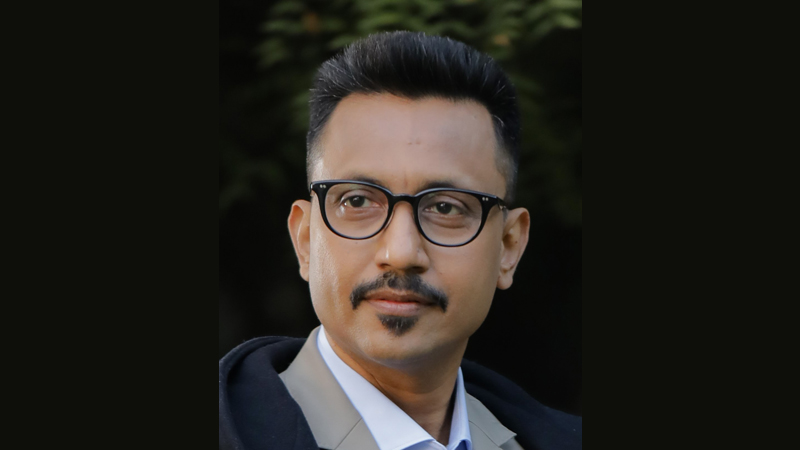
TV9 Network MD CEO, Barun Das said, “Amidst the financial challenges revealed by the Money9 Mega Annual Personal Finance Pulse survey, the resilient spirit of India shines through. The data puts a spotlight on both the struggles and dreams of our people. As the MD and CEO of TV9 Network, India’s No.1 News Network, I see a nation unyielding in its aspirations, adapting to change, and crafting unmeasurable layers that define the complexity and richness of India’s financial landscape.”
Money9 Editor Anshuman Tiwari said, “Navigating the intricate threads of India’s financial narrative, I find inspiration in the resilience of our people. The Money 9 Mega Annual Personal Finance Pulse survey unravels the stories of challenges and aspirations, painting a vivid picture of our economic landscape. Through these revelations, we empower individuals with knowledge, fostering a community that dreams, adapts, and charts its course towards financial well-being,”
Post Covid recovery and risks:
The survey reveals that the return of migrant labourers post-Covid has contributed to an increase in the income of India’s urban households in 2023. The average monthly income has surged by over 12 per cent to reach Rs 25,910, up from Rs 23,000 the previous year. However, a staggering 77 per cent of Indians still earn less than Rs 35,000 per month. The Money 9 personal finance survey’s financial security index categorizes 65 per cent of Indian households as financially vulnerable. Alarmingly, only 30 per cent of households reported an improvement in their financial situation in the last five years, while over 70 per cent experienced a decline or stagnation during the same period.
Big upset in state’s ranking:
In a surprising turn of events, Karnataka has surpassed Maharashtra to claim the top spot in terms of average monthly household income. Karnataka now boasts an impressive figure of Rs 35,411, dethroning Maharashtra, which held the title in the 2022 survey.
Insurance penetration grows:
Despite the changing financial landscape, the affinity of Indians for gold and traditional bank deposits remains unwavering. Approximately 77 per cent of Indians prefer to safeguard their hard-earned money through bank deposits, while 21 per cent choose to invest in gold. Encouragingly, the survey indicates a positive trend in insurance penetration, with over 27 per cent of households holding life insurance policies in 2023, up from 19 per cent in the 2022 survey. However, a concerning 53 per cent of households still lack health insurance coverage.
Stocks and Mutual Funds shine:
India’s burgeoning stock market is gradually making its way into the pockets of investors, with the percentage of stock market investors surging from a mere 3 per cent to 9 per cent compared to the previous year. Additionally, 10 per cent of Indian families have now embraced mutual fund investments, up from 6 per cent in 2022.
Not Just India, it is about your city:
Regional variations persist, with southern Indian cities such as Bengaluru (69%) and Thiruvananthapuram (66 per cent) leading in gold savings. In terms of insurance penetration, Madurai (84 per cent) claims the top spot, followed closely by Amravati (79 per cent) and Aurangabad (76 per cent).






iWorld
JioHotstar enters micro-drama space with 100 shows under Tadka banner
Short-form push targets 300M users as content meets commerce in new format

MUMBAI: JioStar has made a bold play in India’s fast-growing micro-drama space, rolling out over 100 short-form shows under its new Tadka banner on JioHotstar, timed with the massive viewership surge of the Indian Premier League 2026.
The scale of the launch signals clear intent. Rather than testing the waters, the company has dived in headfirst, releasing a wide slate of content on day one. Each show is designed for quick consumption, with episodes running 60 to 90 seconds in a vertical format tailored for mobile-first audiences.
The move comes as India’s micro-drama market, currently valued at around $300 million, is projected to grow tenfold to over $3 billion by 2030. Globally, the format has already proven its mettle, with China’s micro-drama sector recording explosive growth in recent years.
What sets this rollout apart is its built-in monetisation strategy. The shows are free to watch and ad-supported, with brand integrations woven directly into storylines from the outset. It reflects a broader shift where content and commerce are increasingly intertwined, rather than operating in silos.
The timing is equally strategic. With more than 300 million users already tuning in for IPL action, JioHotstar is effectively turning cricket’s biggest stage into a discovery engine for its new format.
The company is not entering an empty arena. Early movers like Kuku TV, MX Player and platforms backed by Zee Entertainment Enterprises have already laid the groundwork, building audiences and validating demand for snackable storytelling.
Now, with scale, distribution and advertiser interest aligning, the big players are stepping in. For JioStar, Tadka may well serve as a proving ground for the next evolution of digital entertainment, where every minute counts and every second sells.
If the bet pays off, India’s next big content wave might just arrive in under 90 seconds.






