e-commerce
“Modern Trade and E-commerce platforms definitely bring us closer to consumers”: Kunal Sharma

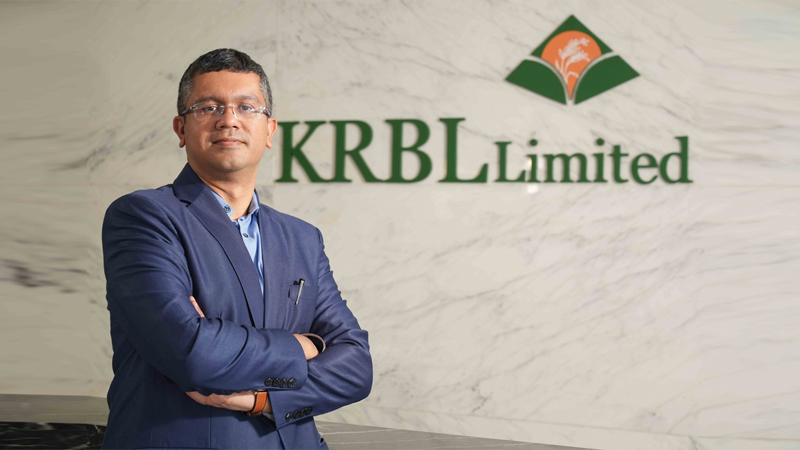
Mumbai: Basmati is incredibly special to KRBL. It’s a grain that’s grown just once a year in the Indo-Gangetic Plain, nestled beneath the Himalayan sub-ranges. The unique qualities of basmati, shaped by the fertile soil, fresh air, and pure water from the mountains, make it a truly cherished and distinctive grain.
KRBL Ltd has been in the rice business for over a century now. Today, the company is recognized as a major player in the Indian rice industry and the first company in India to handle every aspect of rice production, from cultivation to sales. Their focus is on crafting high-quality rice products, and their success stems from their commitment to responsibility, efficiency in operations, innovation in manufacturing, and seizing new opportunities.
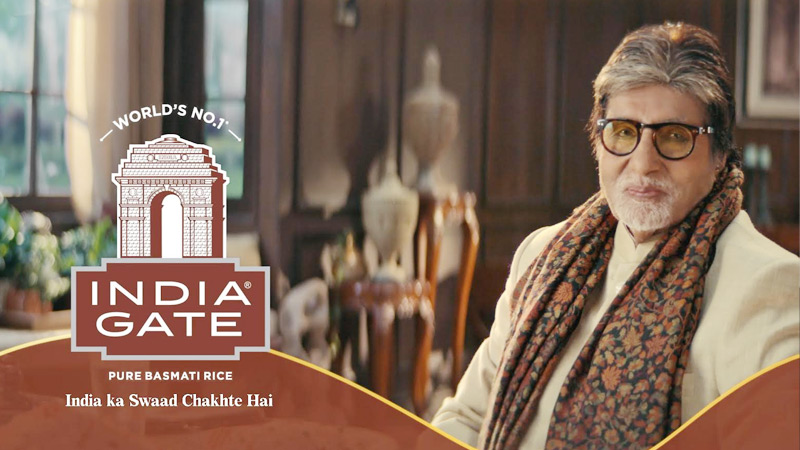
Indiantelevision.com reached out KRBL Ltd head of marketing & business head (modern trade & ecommerce) Kunal Sharma, where he shared insights on India Gate’s success, their marketing strategies and more…

Edited excerpts
On some of the key factors that have contributed to India Gate’s success in the rice market over the years
A couple of factors have been critical to the success of India Gate over the years. In the rice industry, delivering quality consistently is of paramount importance and India Gate has remained steadfastly focussed on this. India Gate also had a first mover advantage in terms of identifying the huge opportunity of tapping the loose rice market in India and providing quality packaged Basmati to consumers in India. Thirdly, a brand with pan India consumer mindshare and shelf share has been a cornerstone of the success of India Gate.
On the marketing strategies you employed to stay ahead in the market and appeal to consumers
Many Indians reside in our nation and as a food staple category, it was important for us to take a regional approach. We have recently changed our marketing strategy which now focuses on aligning our marketing initiatives with the company’s business objectives. The company no longer sees India as one market but an amalgamation of different regions. Our business objective for each region is different. Which makes our marketing objective for each region different. E.g., we talk about Khulla vs Packaged Basmati in HSM while for South (where packaged Basmati is already adopted) we talk about Experiments with Basmati.
On leveraging modern trade and e-commerce channels to reach a wider audience and drive sales
Modern Trade and E-commerce platforms definitely bring us closer to consumers. This is why it holds as much importance as general trade for us. In fact, recent data from December 2023 reports a market share of 37 percent in general trade for India Gate while 40 percent in Modern Trade channels. Our aim is to bring higher engagement to the shoppers directly via these channels. We recently set-up VR enabled experience zones in a modern retail format across 5 cities- Delhi, Gurugram, Mumbai, Bengaluru and Lucknow.
On discussing any innovative initiatives that you have implemented to adapt to the market trends
Basmati has been a relatively low involvement category in Foods. As a brand, we have been trying to improve this to drive brand salience and preference be it through our communication approach or through the choice of media.
In the recent past, we have worked on innovative on-ground campaigns like a partnership with PVR to take our Experiments with Basmati campaign in South to new-age consumers.
We are also adapting in terms of Point of Sale experience to give consumers a virtual tour of the Farm to Fork journey of Basmati through Virtual Reality set-up.
All firsts in a relatively low involvement categories.
On India projected to expand at 19 percent, reaching $400 billion by 2030 according to Publicis Commerce & MMA India’s recent report “The D2C Advantage X Toolkit: Guide to Maximise ROI of eCommerce Investments”
While we do not have any immediate D2C plans, we do see Ecommerce scaling up quite rapidly for us. It’s been the fastest growing channel for us and we see good growths coming both in Q-Commerce and Grocery. We are investing on the platforms to drive growths aggressively and also taking a lot of new launches first into these channels to test and improvise the right mix.
On some of the upcoming plans or developments for India Gate Foods in terms of product offerings and market expansion?
There are three levers of product offerings expansion that India Gate Foods is working on.
First, we are looking at newer categories to expand our kitchen share within staples and a foray into Health Oils is something that will happen in the coming financial year.
Secondly, we are actively looking at adjacencies to extend our core equity in Rice. Our newly launched range of Biryani Masalas under the India Gate Classic brand promising a classic experience to consumers is the first foray in this space.
Thirdly, we are looking at extending our health range beyond Brown Rice into newer innovative and new-age consumer formats.
Along with this, we are aggressively scaling up our regional rice play through Kolam, Sona Masoori, and Gobindobhog. To support this growth, we plan to launch vernacular advertising campaigns and raise awareness, particularly in southern markets.



e-commerce
Flipkart rolls out 105 per cent bonus for 20,000 employees
Strong FY25 performance drives payouts even as layoffs and shifts unfold.

MUMBAI: In a year where belts were tightened and rewards loosened, Flipkart seems to be playing both offence and defence trimming roles on one hand while handing out a generous 105 per cent bonus on the other. The Walmart owned e commerce major has rolled out a 105 per cent bonus payout for 2025, covering nearly 20,000 employees, signalling a year of steady operational momentum even as the company navigates restructuring pressures. The payout, communicated internally by chief human resources officer Seema Nair, is tied to performance across key metrics including growth, operational efficiency, financial outcomes and people indicators, a combination that suggests the company is inching closer to its long stated goal of sustainable profitability.
Employees at SD level and below are set to receive their bonuses in March, while payouts for senior leadership, including vice presidents and senior vice presidents, will follow after the close of the performance cycle. The elevated 105 per cent multiplier stands out in a sector where cautious payouts have increasingly become the norm, pointing to what appears to be a relatively strong internal scorecard for FY25.
Yet, the announcement arrives with a noticeable contrast. Earlier this year, Flipkart reduced its workforce by around 300 roles as part of its annual performance review process. While officially framed as performance driven, the juxtaposition of layoffs alongside above target bonuses reflects a more nuanced balancing act, one that prioritises cost discipline while continuing to reward and retain high performing talent.
This dual approach is becoming increasingly common across the technology and e commerce landscape, where companies are navigating an uneven hiring environment while under pressure to deliver profitability. Rewarding top contributors, even amid selective workforce reductions, allows firms to maintain morale and retain critical talent without losing sight of financial prudence.
At the same time, Flipkart is also undergoing leadership shifts that hint at a broader strategic recalibration. Nishant Verman has been appointed senior vice president for corporate development and partnerships, while group chief financial officer Sriram Venkataraman is set to step down. Ravi Iyer will take on expanded responsibilities within the finance function, marking a reshuffle at the top as the company gears up for its next phase.
These changes come amid reports that Flipkart is planning to shift its holding structure back to India, a move widely interpreted as groundwork for a potential public listing. While timelines remain fluid, the combination of stronger financial discipline, leadership restructuring and employee incentivisation suggests a company preparing itself for greater scrutiny and scale.
For employees, the 105 per cent payout offers a welcome boost in what has otherwise been a period of adjustment. For Flipkart, it is a signal that even as it cuts where necessary, it is willing to spend where it counts. In the high stakes game of growth versus profitability, the company appears to be hedging its bets carefully, rewarding performance while reshaping itself for what could be its most defining chapter yet.






