News Broadcasting
Mobile phone entertainment is about making dead time alive: Sandip Das

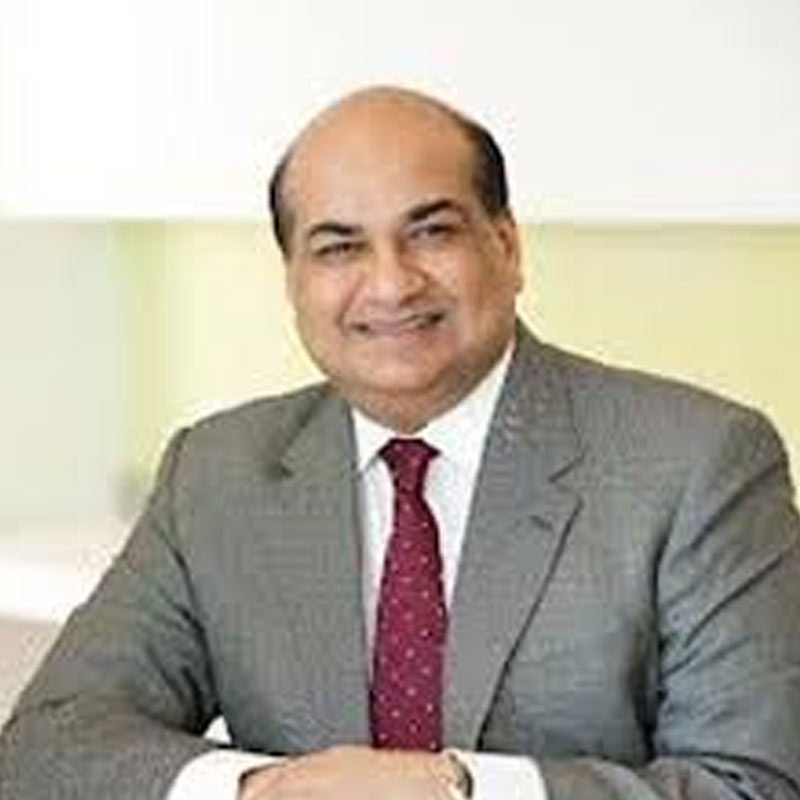
MUMBAI: One of the special addresses on the final day of Frames – The convention for the business of entertainment was made by Hutchison Essar MD Sandip Das.
He pointed out that the mobile is an effective entertainment tool as it makes dead time alive. It could be while one is travelling in a bus, car or sitting on a beach watching the waves.
“The mobile does not compete nor threaten other media.

It complements them. Its portability and unobtrusiveness provide opportunities for engagement. At the same time it cannot match the scale of Imax. Yet, one cannot carry an Imax or a movie theatre as one does a mobile.”
He praised Ericsson’s 0,1,2,3 phase of developing the mobile. 0 means that no user manual is needed. It is self explanatory. One means one button to remove the complications of different controls. Two refers to the two seconds it takes for a screen to appear. Three refers to getting to an online destination within three clicks. “It is important that the mobile service providers think in this manner. The mobile is all about customised and personalised entertainment. The more mass it becomes the more important it is for mobile operators to provide distinctive services.”
He said that for content providers looking to tap the mobile it is important to think of the mobile first and not see it as an appendage. “Unique content needs to be created for the mobile that does not involve merely shortening the length of a film. Mobisodes are a step in the right direction. The good news is that data is getting compressed into smaller formats.”
He stressed that no other media had as much user capability as the mobile. Location based services will help make the mobile more timely. He quoted Bill Gates who once said that knowledge was more profound than information. The reason why some channels consistently get excellent viewership even though there are more choices available is because those few channels understand their viewers.
He went on to state that the jury is out on the mobile entertainment eco system. There is land grabbing going on. For instance Apple is selling music, Sony has bought a bank, HP sells TVs. There are also challenges that the mobile entertainment industry is facing. “The first is that we need more data friendly mobile phones. There is no point in buying a Ferrari if you drive it on pot holed roads. More bandwith is necessary for the mobile. It is important for more spectrum to be freed up. There also needs to be a change in terms of how our filmmakers and television serial makers view the mobile. Their antennas go up when the word mobile is mentioned.
“M Night Shyamalan for one has said that he would not like to make a film which can be viewed by someone in a toilet who has a mobile. I think that with our stories there is scope to make great content for the mobile.”
He noted that open source software is enabling collaboration and content is increasingly being created by users in the form of blogs and communities. It is becoming less and less the privilege of technology geeks. He mentioned that revenue sharing is one area that needs to be sorted out. That is why Digital Video Broadcast Handheld (DVB-H) is facing a problem. It is not that the technology is not upto speed. He praised Nokia who through the N Series has revolutionised MP3 and e-mail among other functions.
The consumer experience is key. If one develops services but does not allow the experience to be as good as it should, then one is doomed. In mobile as in other media, content is king. There are four sectors – video, imagery, gaming and music. While music has 70 per cent revenue share this will change in the coming years.
“The challenge for providers of mobile entertainment will be to bridge the gap between the early adopters who saw the potential in the medium and the huge mainstream market that wants to enjoy its benefits but does not want to get caught up in the gory technological details.
“Seamlessness in mobile technology will enable us to move seamlessly from one media to another. For instance, you watch a football match at home. In the middle of the match you have to leave for the office.
When you leave home, the mobile picks up the signal and the match gets switched on the mobile. When you reach the office, the PC has the match on. I got a demonstration of this from Motorola yesterday.”


News Broadcasting
CNN-News18 to host Fury in the Gulf conclave on West Asia crisis
Three-hour summit to unpack geopolitical fallout and impact on India

MUMBAI: CNN-News18 is set to host a special three-hour broadcast, Fury in the Gulf – War Conclave, on April 7, aiming to decode the escalating West Asia crisis and its far-reaching implications for India.
Scheduled from 4:00 PM to 7:00 PM, the conclave comes at a time when tensions between Iran and the United States are reshaping global geopolitics and triggering economic uncertainty. With India’s deep energy ties, trade links and large diaspora in the Gulf, the developments carry significant domestic relevance.
Built around the theme ‘Conflict, Consequences, and The Future,’ the programme will feature six curated sessions combining one-on-one interviews and panel discussions. The focus is to cut through the clutter and offer viewers a clearer understanding of the fast-evolving situation.
Key sessions include ‘Diplomacy in Times of War’ featuring Shashi Tharoor, and ‘World After the Iran Conflict’ with voices such as Ram Madhav, Reuven Azar, representatives from the European Union and the Iranian Deputy Envoy. Another session titled ‘Another Dunkirk?’ will bring together K. J. S. Dhillon and Jitin Prasada among others.
CNN-News18 editorial affairs director Rahul Shivshankar said, “In times of war, clarity becomes the most powerful tool. Fury in the Gulf – War Conclave brings together credible voices to address the questions and confusion that arise amid an overwhelming influx of information.”
He added that the initiative is aimed at delivering “facts, perspective, and insight” at a time when misinformation can easily cloud public understanding.
Echoing the sentiment, CNN-News18 CEO– English and business news Smriti Mehra said the conflict marks a defining global moment, with consequences that extend well beyond the region. She noted that the conclave seeks to present the crisis with “depth, nuance and responsibility” so audiences can better grasp its real-world impact.
As geopolitical tensions continue to dominate headlines, the conclave positions itself as an attempt to bring order to the noise, offering viewers a structured, insight-led look at a complex and rapidly shifting global situation.






