iWorld
Mobile internet revenues in India growing at 40 per cent annually: Study


MUMBAI: Mobile internet revenues in India are growing at a whopping 40 per cent a year as compared to countries like China and Brazil, where the growth is pegged at 25 per cent annually.
Even in most mature mobile markets, such as Japan and South Korea, mobile Internet revenues are growing at 10 per cent a year, much faster than overall GDP.

In 13 countries that represent about 70 per cent of global GDP, the mobile Internet is already generating some $700 billion in revenues annually, the equivalent of $780 per adult, and has created employment for about three million people. Mobile Internet revenues will have grown to $1.55 trillion across these countries by 2017, an annual increase of 23 per cent.
The 13 countries surveyed are Australia, Brazil, Canada, China, France, Germany, India, Italy, Japan, South Korea, Spain, the United Kingdom, and the United States. The single largest contributor to mobile Internet revenue growth in the next several years will be the apps, content, and services component of the ecosystem, driven by the rapid expansion of mobile shopping and advertising.
Revenues are growing especially quickly in developing markets, according to a report released today by The Boston Consulting Group (BCG), The Growth of the Global Mobile Internet Economy, fueled by competition among the various mobile Internet ecosystems. The resulting innovation and choice are leading to better devices and falling prices for consumers.
The new BCG report, which was commissioned by Google, examines the economic impact of the digital economy related mobile devices (such as smartphones, tablets, and wearables) and excludes economic activity generated by the broader mobile technology industry, such as revenues generated by phone calls, SMS “texting,” the manufacturing of non-Internet-enabled devices (feature phones, for example), and capital expenditures for non-digital data activities on mobile networks.
Consumers are by far the biggest beneficiaries of the mobile Internet. On a per capita basis in the 13-country sample, the average consumer surplus — the perceived value that consumers themselves believe they receive over and above what they pay for devices, applications, services, and access — is about $4,000 a year, or seven times what consumers pay for devices and access. The mobile Internet’s consumer surplus across the 13 countries is approximately $3.5 trillion a year. The largest aggregate consumer surplus is in the US ($827 billion), followed by China ($680 billion). On a per capita basis, consumers in Japan, Germany, France, and Australia all enjoy mobile Internet surpluses of more than $6,000 per year.
“Competition throughout the mobile Internet ecosystem is driving innovation, growth, jobs, and a continually improving experience for consumers and businesses. Increasing mobile access everywhere is leading to new uses of the Internet — in fields from banking to education and from health care to the delivery of public services — further propelling growth. Policy makers can help keep the mobile Internet economy moving by pursuing proven policy goals that encourage continued improvement in these areas, as well as innovation, value creation, and consumer welfare and choice,” said BCG partner and coauthor of the report Dominic Field.
Competition occurs at every layer of the mobile ecosystem — among service providers, enablement platforms, and companies providing apps, content, and services. Competition is particularly intense — and evolution especially fast paced — among device manufacturers and operating system companies. As recently as 2010, the BlackBerry and Symbian platforms accounted for more than half of all smartphone sales in the 13-country sample; they now represent less than five per cent. Today, Apple’s iOS, Google’s Android OS, and Microsoft’s Windows Phone OS are fighting for market share while keeping an eye on newer entrants, such as Amazon’s Fire OS, Nokia’s X platform, Xiaomi MIUI, Firefox OS, and Tizen, which are further augmenting user choice and competition. All of this leads to faster innovation, more capable devices, and lower prices.
A big part of the mobile Internet success story is the flourishing app economy. There have been more than 200 billion cumulative downloads from the various app stores since the first app was developed in 2008. More than 100 billion downloads took place in 2013 alone. Leading app-store operators paid developers more than $15 billion between June 2013 and July 2014.
“The growth of the mobile Internet economy is propelled by increasing affordability and accessibility, as well as by advances in technology and infrastructure. The rapid advent of more affordable phones — those costing $100 or less — will drive both greater penetration and new uses,” said BCG partner and coauthor of the report Paul Zwillenberg.
Zwillenberg also noted that while only about 20 per cent of smartphone shipments in 2013 comprised devices priced below $100, a fast-growing array of global, local, and new-entrant manufacturers are now making affordable smartphones.
Large majorities of consumers in the 13-country sample would forgo most offline media (the one exception is TV) before losing their mobile Internet access. Two-thirds or more would give up chocolate and alcohol. More than half are willing to forgo coffee and movies. A third are willing to give up their cars, and more than a quarter would abstain from sex.



Gaming
MTG gaming chief Benninghoff joins NODWIN board as esports firm primes for IPO
The Gurugram-based esports firm is pursuing a public listing, has returned to profitability and is growing revenues by 42 per cent
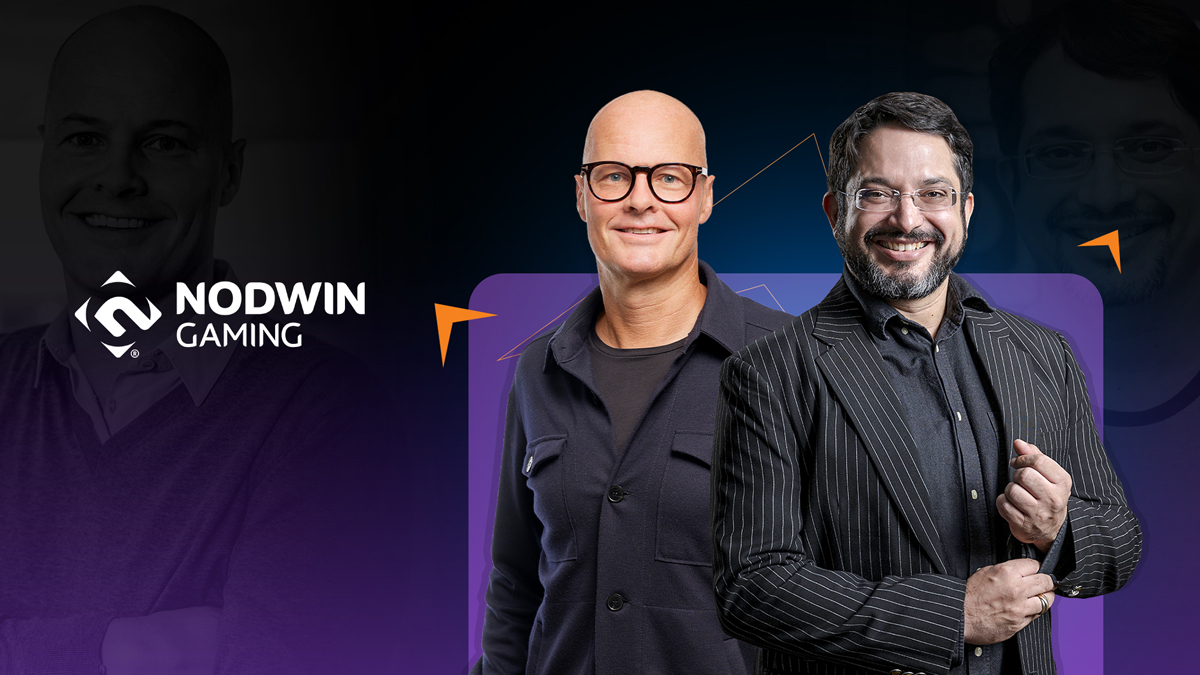
GURUGRAM: NODWIN Gaming is moving fast. The Gurugram-based gaming and esports company has launched a pre-IPO fundraising round, appointed UBS as lead adviser for both the round and a subsequent public listing, and landed a heavyweight board director, all in one go.
The new board member is Arnd Benninghoff, executive vice president of gaming at Stockholm-listed Modern Times Group (MTG), who has overseen the group’s strategic investments and portfolio growth since 2014. He is no stranger to building things: Benninghoff has founded and built fifteen companies, served as chief digital officer at ProSiebenSat.1 Media AG, managing director of SevenVentures, and chief executive of Holtzbrinck eLAB. He began his career as a journalist at Deutsche Presse Agentur and various TV networks, holds a Diplom-Kaufmann in business and administration from the University of Münster, and previously sat on the board of Edgeware AB.
The numbers back the ambition
NODWIN is not pitching a story without substance. The company has returned to EBITDA profitability and posted a 42 per cent year-on-year revenue surge, reaching $58.5m in the first nine months of FY2026. The pre-IPO round will combine a primary issuance to fund global expansion through organic growth and acquisitions, alongside a secondary sale to give existing shareholders some liquidity.
Akshat Rathee, co-founder and managing director of NODWIN Gaming, said Benninghoff understands “the entire lifecycle of the gaming and media ecosystem, from the boots-on-the-ground reality of building startups to the strategic complexity of managing multi-billion dollar global portfolios.”
Benninghoff, for his part, said the company “sits at the intersection of sports, entertainment, and technology, making it one of the most exciting players in the global gaming landscape today.”
A portfolio built for the global south
Founded in 2014 by Rathee and Gautam Virk, NODWIN has quietly assembled one of the more compelling esports portfolios outside the Western hemisphere. Its properties include DreamHack India and Comic Con India, and it recently acquired StarLadder, the Ukraine-based tournament organiser behind premier events in CS:GO and Dota 2. The company also serves as a long-term strategic marketing partner for the Evolution Championship Series (EVO), the world’s most prominent fighting game tournament, helping push it into new geographies.
Its geographic focus spans South Asia, Central Asia, Southeast Asia, the Middle East and Africa. Backers include Nazara Technologies, KRAFTON, Sony Group Corporation, JetSynthesys, and the founders’ investment vehicle Good Game Investments.
What comes next
With UBS running the books, a board freshly reinforced with European media and gaming expertise, and revenue heading in the right direction, NODWIN is laying the groundwork deliberately. The esports industry has burned investors before with big promises and thin margins. NODWIN’s return to profitability, combined with a real portfolio of owned intellectual properties across gaming, music and youth culture, gives it a more credible runway than most. The IPO clock is now ticking.