Hindi
Mira Nair to speak at Kashish 2021 panel

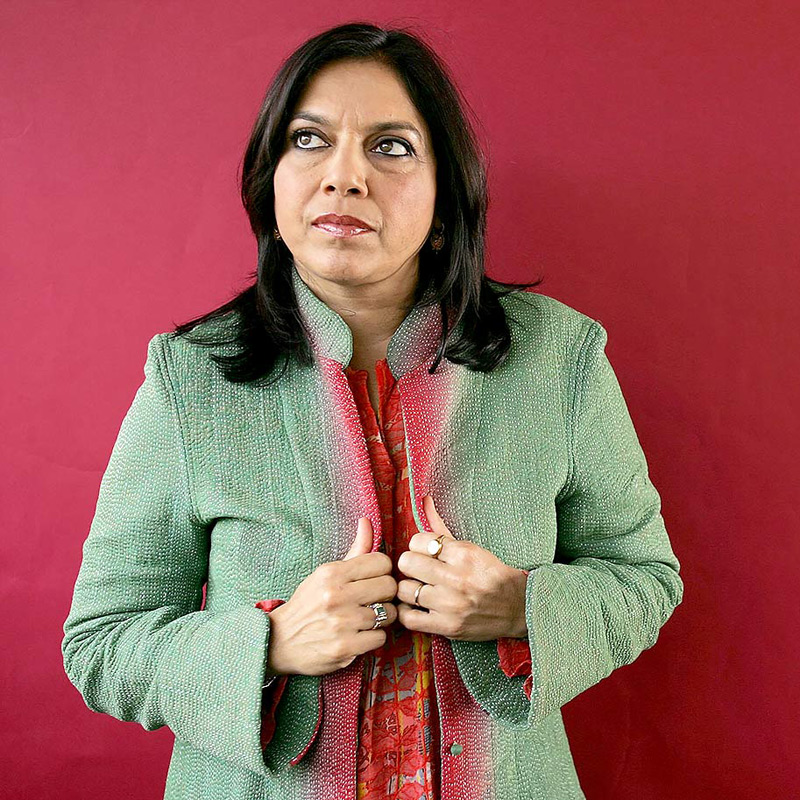
Mumbai: The Academy-Award nominated director Mira Nair will be a speaker at a panel discussion titled ‘Books To Screen – Lost & Found in Translation’, being organised as part of the 12th edition of Kashish Mumbai International Queer Film Festival, South Asia’s one of the biggest LGBTQIA+ film festival. The panel will be streamed on the Kashish YouTube channel on 24 August at 6 p.m.
This impactful panel that discusses how books are adapted into feature films or web series, will also feature well-known Swedish author & director Jonas Gardell (Don’t Ever Wipe Tears Without Gloves), Sahitya Akedemi winning playwright Mahesh Dattani (Mango Souffle, Morning Raga), and transgender actor & author Living Smile Vidya (I Am Vidya), and will be moderated by author Raga D’Silva (Untold Lies).
“While the pandemic put the brakes on Kashish being held on-ground physically at a theater in Mumbai, the benefits of a digital festival has opened new doors,” said festival director Sridhar Rangayan. “We have been able to invite some extraordinary speakers at the panel discussion and also filmmakers from across the world at the filmmaker Q&As. We are blessed to have such eminent personalities as Nair and Gardell speak at our panels. Virtual is the new normal.”

Speaking about her recent mini-series “A Suitable Boy” based on Vikram Seth’s epic novel of the same name, Nair shared, “I think Vikram Seth deeply understands and wrote in A Suitable Boy, the depth of this unconditional love, the friendship between Maan (Ishaan Khattar) & Firoz (Shubham Saraf). For me, it encompassed all kinds of love. We had to do a lot in very little time, but I think you feel this extraordinary drama of their friendship and the jealousies, and also how the fathers eventually bring the sons back together. It’s a beautiful quartet that Vikram wrote and I wanted to do that justice. Life is about all sorts of love, but it is love. There’s nothing to put it in a box about.”
Gardell said, “I’m 58 years old now and I have been out and proud since I was 15, so that’s almost 40 years. When my first novel came out in 1985, the critics actually wrote that they almost vomited when they read it since it was a gay love story. Time has passed and now when I write my novels, they are mainstream, they are bestsellers in Sweden.”
Speaking about the need for greater representation of queer narratives, Mahesh Dattani said, “We need more LGBTQIA+ people involved in the arts, in storytelling. We need stories that concern the LGBTQIA+. We need LGBTQIA+ characters in films that are not talking about LGBTQIA+… I think it is hugely important that we also have characters that are there because they are part of a bigger story, and it doesn’t always have to be a personal story. “
Living Smile Vidya spoke about her book ‘I Am Vidya’ that has been turned into a feature film “Naanu Avanalla Avalu” which won two National Awards, but her main passion is theater. “I wanted to be in the cinema, but as I grew up, I saw theatre has more space and more acceptance and I found my place. Being on the stage is where I feel like one giant tree where I get all the power in the best possible way,” she said.
This panel discussion is being supported by the Consulate General of Sweden, who is also supporting the screening of two documentary features “Prince of Dreams” and “Always Amber”.
While the film festival is screening 221 films from 53 countries over the 12 days of online screenings spread across three weekends, Kashish 2021 will continue to engage audiences during weekdays with 10 panel discussions and 42 filmmaker Q&As streamed on their YouTube channel.
On 23 August at 6 p.m, panel discussion ‘Teach Them Young! – Qualitative Queer Narratives emerging from Indian Film Schools’ is being streamed featuring speakers from leading film and media institutions like Film & Television Institute of India (FTII), Sophia SCM, Pearl Academy, Satyajit Ray Film & Television Institute (SRFTI) and Whistling Woods International, which is also supporting this panel discussion.
Rounding off the first week of panel discussions, on 25 August at 6 p.m, the festival will host the first-ever chat with siblings of queer persons. Titled ‘Unlocking Acceptance With Siblings’ the panel features gay, bisexual, and transgender persons along with their sisters and brothers.



Hindi
India’s telecom subscribers cross 1.32 billion in February 2026
Broadband base swells past 1.06 billion as Jio and Airtel tighten grip on the market.
MUMBAI: India’s telecom sector is ringing in steady growth once again adding millions of new connections every month while the race for broadband supremacy continues to heat up like a fiercely contested cricket match. According to the latest data released by the Telecom Regulatory Authority of India (TRAI) on 1 April 2026, the total telephone subscriber base in the country reached 1,321.31 million at the end of February 2026. This marked a net addition of 7.31 million subscribers during the month, translating into a monthly growth rate of 0.56 per cent.
Wireless subscribers (including mobile and Fixed Wireless Access) stood at 1,273.31 million, registering a net addition of 6.97 million and a growth rate of 0.55 per cent. Within this, urban wireless connections grew to 730.75 million (growth 0.70 per cent), while rural wireless subscribers reached 542.56 million (growth 0.35 per cent).
Wireline subscribers, though much smaller in scale, showed slightly faster growth. The total wireline base increased to 47.99 million, with a net addition of 0.34 million and a monthly growth rate of 0.70 per cent. Urban areas continued to dominate wireline connections with a share of 89.41 per cent.
Overall tele-density in India improved to 92.66 per cent. Urban tele-density stood at 150.68 per cent, while rural tele-density edged up to 60.02 per cent.
The broadband subscriber base crossed a significant milestone, reaching 1,059.05 million at the end of February 2026. This reflected a healthy net addition of 6.33 million subscribers and a monthly growth rate of 0.60 per cent from January’s figure of 1,052.72 million.
Segment-wise, mobile wireless access continued to drive the majority of growth with 996.52 million subscribers. Fixed Wireless Access (including 5G FWA) added 16.51 million, while wired broadband stood at 46.02 million.
Reliance Jio Infocomm Ltd. maintained its commanding lead with 519.64 million broadband subscribers. Bharti Airtel Ltd. followed with 364.14 million, Vodafone Idea Ltd. with 129.36 million, Bharat Sanchar Nigam Ltd. with 28.70 million, and Atria Convergence Technologies Ltd. with 2.38 million.
Together, these top five players command a massive 98.60 per cent share of the total broadband market.
In the wireless (mobile) segment, private operators continued to dominate with 92.59 per cent market share, leaving public sector undertakings (BSNL and MTNL) with just 7.41 per cent.
Out of the total 1,257.29 million wireless (mobile) subscribers, 1,177.60 million were active on the peak Visitor Location Register (VLR) date, representing an impressive 93.66 per cent activity rate. Bharti Airtel led in this metric with 99.42 per cent of its subscribers active.
Meanwhile, 14.47 million subscribers submitted requests for Mobile Number Portability (MNP) in February, indicating healthy competition and customer churn across zones.
While urban areas still lead in absolute numbers, rural connectivity is slowly catching up. Rural wireless tele-density stood at 59.46 per cent, compared with the much higher urban figure of 142.32 per cent.
Fixed Wireless Access using 5G technology also showed promising traction, growing to 11.93 million subscribers. Reliance Jio and Bharti Airtel are the primary players driving this segment.
The data paints a picture of a maturing yet still rapidly expanding telecom ecosystem. With total telephone subscribers now well past the 1.32 billion mark and broadband users comfortably above 1.06 billion, India continues to solidify its position as one of the world’s largest and most dynamic digital markets.
From bustling city streets to remote villages, more Indians are staying connected than ever before proving that when it comes to telecom, the country’s appetite for growth shows no signs of hanging up anytime soon.






