Hindi
MIFF 2014 concludes amid much fanfare


NEW DELHI: Are you listening by Kamar Ahmed Simon won the Golden Conch Award for best documentary film while Nishtha Jain with her Gulabi Gang was named best director at the recently concluded 13th Mumbai International Film Festival (MIFF) for Documentary, short and animation films.
Eminent filmmakers Adoor Gopalakrishnan and Shyam Benegal presented the awards as the curtains came down to the seven-day festival.

Jury 1 comprised filmmaker Anand Patwardhan, film curator Angela Haardt from Germany, Director of the Yamagata Documentary Film Festival – Fujioka Asako of Japan, Slovenian film scholar Jurij Meden, and noted animator from Mumbai Shilpa Ranade. Jury II comprised Canadian filmmaker Mark Achbar, film director and editor Amitabh Chakrabarty, film maker from Kerala M R Rajan, noted cinematographer Piyush Shah, and Netherlands based film scholar Rada Sesic.
The 90-minute documentary by Simon won the award in the above 60-minutes category. It gets the Golden Conch trophy and Rs 500,000 cash prize (Rs 300,000 for the Director and Rs 200,000 for the producer – Sara Afreen). Set in the coastal belt of Bangladesh, the film is a powerful and beautifully photographed film that reveals the alarming effects of climate change and deftly captures the fighting spirit of a community and their will to survive. The global issue of climate change is experienced in microcosm in Simon’s film, as he observes the families of Sutarkhali.
The Golden Conch for Best Documentary Film up to 60 minutes went to Maria Stodtmeier’s (Germany) In Between : Isang Yun in North and South Korea. This documentary explores whether music can overcome the boundaries of a divided country. It examines the worlds of North and South Korean music, taking the viewer along on an exciting journey through two political systems. It got the Golden Conch trophy and Rs 500,000 cash prize (Rs 300,000 for the Director and Rs 200,000 for the producer – Paul Smaczny).
Black Rock directed by Vikrant Janardhan Pawar and produced by the Film and Television Institute of India was adjudged the Best Short Fiction film in International Competition. It got the Golden Conch trophy and Rs 500,000 cash prize (Rs 300,000 for the Director and Rs 200,000 for the producer – FTII).
The Golden Conch Best Animation Film award went to True Love Story by Gitanjali Rao. This 18-minute animation set in the streets of Mumbai explores what happens when the ultimate Bollywood fantasy is applied in reality. It gives a glimpse into the influence of Bollywood on real life in Mumbai, told through puppet animation. The award carried a Golden Conch and Rs 500,000 cash prize.
The film on Right to Information, Chakravyuh, by National Film award-winner Dhvani Desai was voted the most popular film, a new award chosen through voting by festival delegates. Chakravyuh through the struggles of four characters from different regions of India throws light on how the RTI can be used to fight corruption. The film produced by Films Division was first shown on 12 October 2013 on the occasion of the eighth anniversary of RTI in Mumbai.
Nishtha Jain received Rs 100,000 cash award and a certificate got the Best Director Award in the International Competition section. Gulabi Gang tells the story of Sampat Pal and her group of women vigilantes and activists from Bundelkhand, who fight for women’s rights and their empowerment. Armed with a lathi (stick) the Gulabis visit abusive husbands and beat them up unless they stop abusing their wives. The film has won several other awards, and there are plans to release it in theatres on 21 February as part of PVR Director’s Rare initiative. Jain, an alumnus of FTII, is based in Mumbai.
The Dadasaheb Phalke Chitranagari Award went to Mumbai based filmmaker Dylan Mohan Gray’s film Fire in the Blood for Best Debut Film of a Director. The 84-minute film tells the story of how Western pharmaceutical companies and governments blocked access to low-cost AIDS drugs for the countries of the global south in the years after 1996 – causing ten million or more unnecessary deaths – and the improbable group of people who decided to fight back. This award carrying a cash prize of Rs 100,000 and a Trophy has been instituted by the Maharashtra Film Development Corporation, Mumbai
The Indian Documentary Producers Association Award for the best student film went to Sonyacha Amba (Golden Mango) directed by Govind Raju and produced by FTII, Pune. This film had participated in the Berlin and Beijing festivals as well. The Rs 100,000 cash and Trophy is given by the IDPA.
The Pramod Pati Award for most Innovative film, carrying a cash prize of Rs 100,000 and a trophy went to Pushpa Rawat’s 57-minute documentary Nirnay (Decision). The film explores the lives of women in a lower middle class colony in Ghaziabad, who are young and educated, but feel bound and helpless when it comes to major decisions about their lives, be it career or marriage.
The Kashmiri film Tamaash (The Puppets) got the Golden Conch for the best Short Fiction Film up to 45 minutes in the National Competition. Tamaash is the first film by directors Satyanshu and Devanshu Singh, who also wrote, edited, and produced it, along with Tulsea Pictures. The film insists on the power of goodness and the importance of preserving the innocence of children. It had won the Golden Elephant Award at the International Children’s Film Festival held in Hyderabad during November 2013. Along with the Golden Conch, the filmmakers also get Rs 250,000 cash award.
In the National Competition section, Seven Hundred Zero Zero Seven by Altaf Mazid got the Golden Conch for Best Documentary (upto 40 minutes), while Have You Seen the Arana by Sunanda Bhat and Invoking Justice by well-known Deepa Dhanraj shared the Best Documentary Awards in above 40 minutes category.






Hindi
Dhurandhar 2 hit by YouTube leak amid record box office run
Cam-rip surfaces online but blockbuster streak continues at record pace
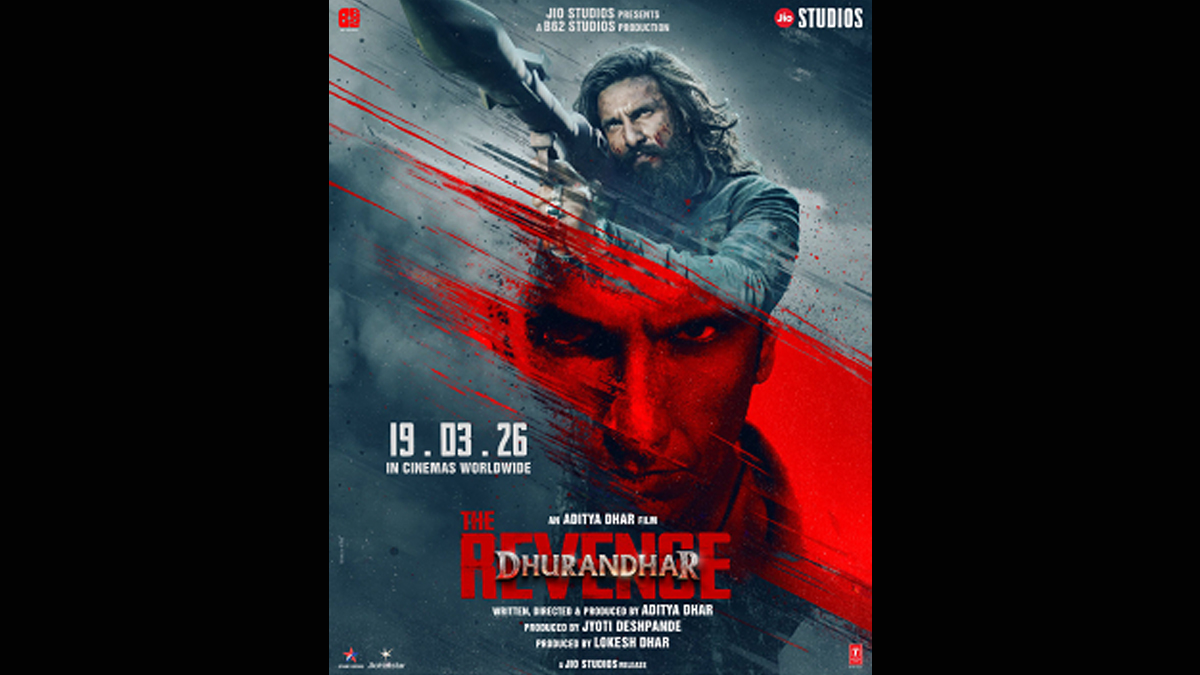
MUMBAI: It has been a dramatic week for Dhurandhar: The Revenge. Even as the espionage thriller smashes box office records, a piracy scare briefly threatened to steal its thunder after a full-length version surfaced on YouTube.
The leak emerged on March 30 via a channel titled “A2z movie”, which uploaded what appeared to be a cam-recorded print of the film. Clocking in at nearly three hours and 49 minutes, the footage was reportedly blurry but complete enough to spark spoilers and fan outrage online.
Soon after, users on X began flagging the issue, explicitly naming the “A2z movie” channel in their posts while tagging the film’s makers and urging swift legal action. Fans of director Aditya Dhar and lead star Ranveer Singh were particularly vocal, helping the issue gain rapid traction.
Within hours, the video was taken down, likely through a mix of platform detection systems and intervention by producers Jio Studios and B62 Studios.
Despite the leak, the film’s theatrical run remains virtually unshaken. As of March 31, the sequel has raked in an estimated Rs 872.17 crore net in India, with worldwide collections soaring to Rs 1,392.23 crore. Its Hindi opening day alone brought in Rs 102.55 crore, setting a new benchmark.
In a notable milestone, the film has matched Pushpa 2 as the fastest Indian release to cross the Rs 1,000 crore mark globally, achieving the feat in just seven days.
Interestingly, the version leaked online is believed to be an earlier cut. Midway through its theatrical run, the makers issued revised prints after eagle-eyed viewers spotted a fleeting editing error involving a cameraman’s reflection. The corrected version now plays across cinemas, adding an unusual twist to the film’s release journey.
Directed by Aditya Dhar, the high-stakes sequel stars Ranveer Singh alongside Sanjay Dutt, R. Madhavan, Arjun Rampal and Sara Arjun. The film has drawn praise for its scale and action sequences, though some critics have pointed to its intense violence and layered political themes.
For now, piracy may have made noise, but it has not slowed the juggernaut. If anything, the episode underlines the film’s cultural grip, proving that even a leak cannot derail a box office storm already in full force.