I&B Ministry
MIB, TRAI allay industry fears on sat capacity leasing & content regulations


MACAU: Indian government officials on Tuesday used an international platform of CASBAA Convention 2017 here to allay some of the industry fears on regulatory challenges involving satellite capacity leasing on foreign satellites and possible content regulations, while stating the country strives to be vibrant, living up to PM Modi’s stated policy of ease of doing business.
“The improvement in India’s ease of doing business global ranking to 100 is not just eyewash. It represents real changes,” Ministry of Information and Broadcasting (MIB) secretary NK Sinha said here, adding that though general talks with the department of space and Indian space agency ISRO were continuing to ease policy restrictions for Indian customers to lease capacity on foreign satellites, a meeting on some specific issues were yet to take place.
“Prime Minister Narendra Modi’s mantra is perform, reform, transform,” Sinha said stressing on the message that efforts were on to remove bottlenecks to doing business in India’s thriving broadcast and cable sectors and that technology was critical for both communications and content.

Telecom Regulatory Authority of India (TRAI) chairman RS Sharma chipped in to state the regulatory body had recommended to the government to adopt an open sky policy. “These (ISRO issues) are not issues of principle, but of operation,” he added.
“The issue also affects broadband provision. To ensure affordable broadband in rural areas, India will need to use satellites to provide this (service),” Sharma elaborated, adding that TRAI was presently studying stakeholders’ comments on its consultation paper on ease of doing business in the broadcast sector “to resolve the matters raised” by the industry.
The two top Indian regulatory officials involved in matters of broadcast and media were responding to a question from the audience on whether they were aware that it was increasingly becoming challenging for Indian customers (like broadcasters, Vsat and teleport operators, for example) to lease capacity on foreign satellites in the wake of a maze of clearances and paperwork sought by ISRO.
It must be clarified here that though TRAI has been repeatedly suggesting an open sky policy related to satellite capacities (both C and KU bands), the nodal ministry governing ISRO was yet to take an official stand on the regulatory body’s recommendations.

In what would — or could — bring smiles on the faces of many in the Indian broadcast and content business, the top MIB official also batted for self-regulation as a way forward, hinting that irresponsible behavior from stakeholders, however, would not be tolerated.
“Happy with (present) self /co-regulation. Future will be self-regulation. The volume of content is going to explode exponentially. It will not be possible to pre-check each bit of data (but) citizens must be responsive and responsible,” Sinha said responding to another audience query on whether the government proposed to bring in a content regulatory body.
At present, both the News Broadcasters Association and Indian Broadcasting Foundation have frameworks for self-regulation governing their member-companies. However, there are many out of the 800+ licensed TV channels that are not members of these industry organisations.
He further pointed out that there needs to be a mechanism to ensure self-regulation comes back on track if it “strays”, though “pre-certification” didn’t look to be the future.
Earlier speaking at a session themed `View From India’ on Tuesday, both Sinha and Sharma gave a snapshot of the Indian broadcast and media industry to a primarily international and Indian audience at the ongoing three-day CASBAA Convention 2017 here. They highlighted that India thrives as the second largest TV market with 183 million TVHH, 900 TV channels, 310 FM radio stations, 60,000 LCOs, 1,500 MSOs, 360 broadcasters, expanding reach of Doordarshan’s FTA DTH service, multiple DTH platforms, one HITS and several IPTV platforms, apart from OTT services.
The chief of TRAI, which regulates the carriage and tariff segments of the broadcast sector and delivery platforms, in his address said the industry had grown at the rate of 15 per cent CAGR for the last five years and is projected to grow a shade less at 14 per cent for the next five years.
While skirting a direct reference to TRAI’s new tariff regime for the broadcast and cable sectors being legally challenged by some industry players and presently being debated in Indian courts, Sharma mentioned the regulatory body had announced a framework that was “fair, transparent and non-discriminatory”.
“Centralised distribution audits will ensure all broadcasters get audit information. This will reduce the burden on distributors and broadcasters,” he highlighted as an example of its regulatory fairness vis-a-vis multiple audits of customers being presently done draining human and financial resources of stakeholders.
Dwelling on the ambitious multi-million Indian rupee national fibre optic network project or Bharat Net, Sharma said it was now a public-private venture not only for broadband, but also for delivering TV services. “Come, analyse and invest in the Indian broadcast sector,” he exhorted the global investment and media community.
ALSO READ:
MIB reverts to earlier norms of seeking nod from ISRO on uplink/downlink of TV channels
MIB secy Sinha, Viacom18 CEO Vats to speak at CASBAA convention in Nov




I&B Ministry
Digital radio, D2M tech set to reshape broadcasting and public messaging
Govt pushes next-gen delivery while TRAI tightens grip on spam ecosystem
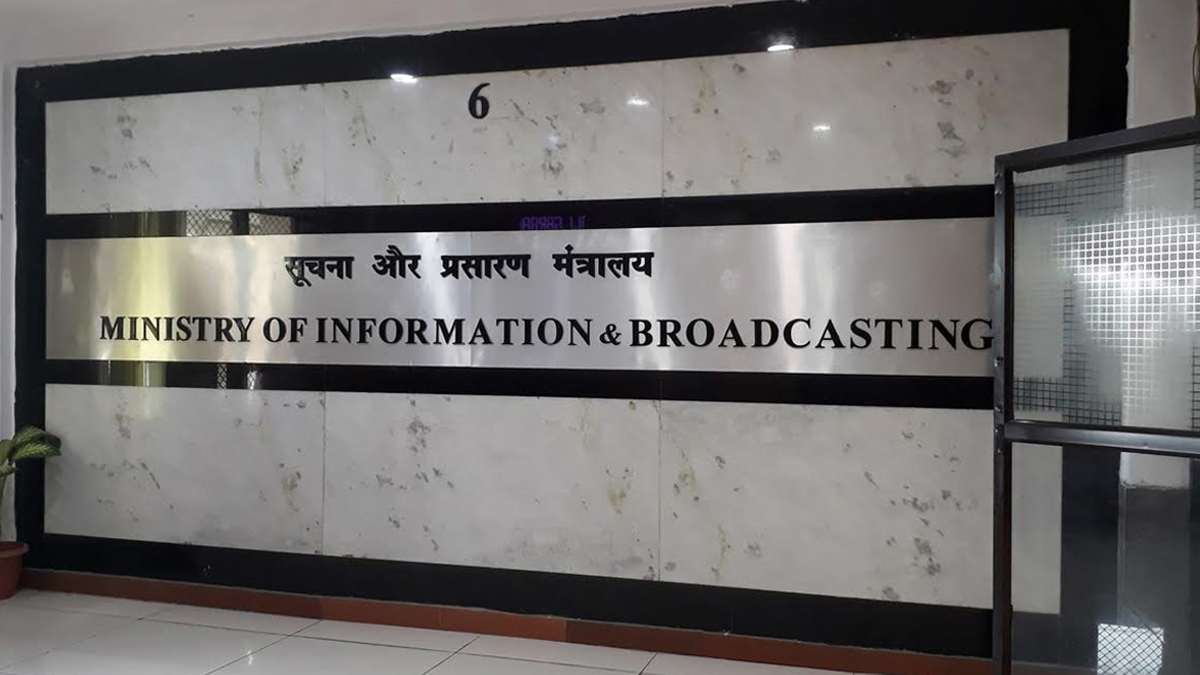
NEW DELHI: India’s broadcasting and telecom landscape is undergoing a quiet but significant upgrade, with digital radio and Direct-to-Mobile (D2M) technologies emerging as powerful tools for mass communication, while regulators step up efforts to tackle spam calls.
According to the Ministry of Information and Broadcasting, digital radio and D2M are poised to transform how content reaches audiences by making more efficient use of spectrum. In simple terms, multiple channels can now be delivered over a single frequency, opening the door to a wider range of free-to-air content.
D2M technology takes this a step further by enabling video, audio and data to be broadcast directly to mobile handsets without relying on SIM cards or mobile data. The result is a resilient and cost-effective data pipe that can deliver everything from entertainment and education to critical emergency alerts, even in low-connectivity scenarios.
At the same time, the Telecom Regulatory Authority of India is tightening its grip on unsolicited commercial communication, better known as spam calls. The regulator has deployed a distributed ledger technology platform to bring transparency and accountability into the system.
Through this blockchain-based setup, consumers can register their preferences on receiving promotional messages, while businesses and telemarketers must also sign up and operate within defined rules. The platform also includes a complaint mechanism that allows users to report spam, with complaints shared across telecom operators for coordinated action.
The government’s broader push is being supported by infrastructure upgrades under the Broadcasting Infrastructure and Network Development scheme. Implemented through Prasar Bharati, the initiative focuses on modernising networks such as Akashvani and Doordarshan, including digitisation and adoption of next-generation broadcast equipment.
In a written reply in the Lok Sabha, Ministry of Information and Broadcasting minister of state for information and broadcasting L. Murugan said these steps are part of a larger effort to promote emerging technologies and strengthen the country’s broadcasting backbone. The response came to a query raised by member of Parliament Rao Rajendra Singh.
Together, these developments point to a dual-track strategy: expanding access to reliable, low-cost content while cleaning up the communication ecosystem. As digital pipes get smarter and spam filters sharper, India’s airwaves may soon feel a lot less noisy and far more useful.






