I&B Ministry
MIB to initiate online registration process for LCOs — Economic Times report

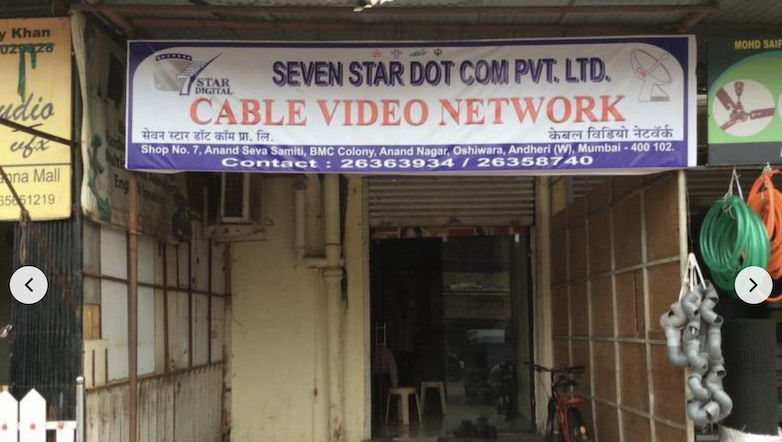
MUMBAI: Is cable TV about to get even more organised and given the respect that is due to it?
If a report appearing in The Economic Times on on 16 January is to be believed it looks like it is. The newspaper reported that the ministry of information & broadcasting (MIB) is set to launch a centralised online registration system for local cable operators (LCOs), extending registration validity from one year to five. This initiative aims to enhance the ease of business in the cable TV sector.
Sources indicated to The Economic Times that the MIB plans to amend the Cable Television Networks (CTN) Rules, 1994 and the regulations act making registration through the Broadcast Seva portal mandatory for LCOs. This is something that every broadcaster has to do.

Once implemented, the MIB will serve as the primary registering authority for LCOs, replacing the current requirement to register at local head post offices. As of January 2022, there were 81,706 LCOs operating nationwide.
A government official, speaking on condition of anonymity to The Economic Times noted, “The ministry is likely to notify the new online registration system this week. It has been a long-standing demand of the industry.”
The current offline registration process hinders the MIB from maintaining a centralised database, limiting its ability to address violations effectively. LCOs currently pay a one-time processing fee of Rs 500 for registration or renewal.
Under Rule 5 of the CTN Rules, LCOs are responsible for providing last-mile connectivity by retransmitting signals from multi-system operators (MSOs) to subscribers through their own infrastructure.
The All India Digital Cable Federation (AIDCF), which represents national MSOs, informed the parliamentary committee on communications & information technology that around 300,000 employees have lost their jobs over the past four years, with another 300,000 at risk, attributed to a significant decline in the cable TV subscriber base.
According to a FICCI-EY report, the number of cable TV subscribers has dropped from 72 million in 2020 to 62 million in 2023. Yhe latest report which comes out later in 2025 is likely to reveal that this number has dropped by an additional five million in the least.
Traditional linear pay TV has been under tremendous pressure with the arrival of streaming services, cheap data plans being provided by telecom players, ISPs, MSOs and even the LCOs, and the flooding of cheap connected TV sets in the country. India is also a mobile first country where a majority of the youth is consuming content on their handsets.
Recognising this, and to acquire customers quickly, global streaming service have been offering their streaming services at very low subscription rates to Indian customers. There has been an explosion in the amount of consumption of video on YouTube too which in many cases has become the secondary entertainment medium, after DD FreeDish, the free direct to home service provided by pubcaster Doordarshan.
Additionally, many of the second generation family members of the local cable TV operators have simply not followed in their fathers profession and have chosen other fields or they have transitioned to providing broadband internet service that has higher average revenue per customer and hence is more profitable. Video delivery has become a secondary business which is being continued as it is without any goal to expand individual cable TV networks.







I&B Ministry
AIDCF moves TDSAT over Waves plan to stream linear TV channels
Industry body flags regulatory gap as OTT push sparks broadcast turf war
NEW DELHI: The battle between traditional television distributors and digital platforms has found its way to the courts, with the All India Digital Cable Federation (AIDCF) moving the Telecom Disputes Settlement and Appellate Tribunal (TDSAT) against Prasar Bharati’s latest OTT play.
At the heart of the dispute is Waves, Prasar Bharati’s OTT platform, which has invited applications to onboard linear satellite TV channels. Aidcf, which represents multi-system operators (msos), argues that this move sidesteps existing broadcasting rules and risks tilting the playing field in favour of digital platforms.
The federation’s petition hinges on a key provision in the Uplinking and Downlinking Guidelines, 2022. Clause 11(3)(f) allows broadcasters to downlink channels only if they provide signal decoders to recognised distribution platforms such as MSOS, DTH operators, hits operators and iptv platforms. OTT platforms, aidcf points out, do not feature on that list.
In simple terms, AIDCF’s argument is this: if OTT platforms are not officially recognised distributors, they should not be receiving broadcast signals in the first place. By inviting channels onto Waves, the federation claims, Prasar Bharati is opening a backdoor that lets broadcasters bypass long-standing rules.
The concern goes beyond legal interpretation. Aidcf says OTT platforms currently operate without a clear regulatory framework, allowing them to expand into traditional broadcasting territory without the compliance burden that cable and satellite operators must carry. That, it argues, creates an uneven contest.
There is also a warning for broadcasters. If they provide signal decoders to an OTT platform like Waves, they could risk breaching the very conditions under which their downlinking permissions were granted.
For its part, Prasar Bharati’s Waves initiative is positioned as a step towards wider access and digital reach, bringing linear television into the streaming era. But critics say the move blurs the line between regulated broadcasting and largely unregulated streaming.
The matter is expected to come up before tdsat next week. The outcome could do more than settle a single dispute. It may help define how India regulates the fast-merging worlds of television and OTT, where the lines are getting fuzzier by the day and the stakes, sharper than ever.