News Headline
MIB reboots TV ratings policy with tougher rules and wider audience lens

MUMBAI: The Ministry of Information and Broadcasting (MIB) has turned the spotlight back on television ratings and this time, it’s rewriting the rulebook. In a move that could reshape the country’s broadcast measurement landscape, the government has released a new draft of its Policy Guidelines for Television Rating Agencies in India, introducing the sharpest set of reforms since the framework was first notified in 2014.
In a notice dated 6 November 2025, the ministry invited public comments on the proposed amendments until 5 December 2025. Eleven years after the original guidelines and a year after a limited 2024 revision,, the latest draft signals a decisive shift towards greater transparency, accountability, and inclusivity in how India measures what its 800-million-plus television audience watches.
The 2025 draft makes it clear that the government wants to raise the bar on both credibility and fairness. At the top of the list is a tightened eligibility criteria only companies registered under the Companies Act, 2013 can apply for registration as a rating agency. This ensures stricter oversight and legal accountability, closing loopholes that allowed loosely structured entities to operate in the past.

The draft also raises the minimum net worth requirement from Rs 3 crore to Rs 5 crore, to be verified by a statutory auditor. The higher capital threshold aims to bring financial discipline and deter smaller, unstable firms from entering the highly sensitive ratings ecosystem, where even minor discrepancies can have major commercial implications.
Perhaps the most impactful change is in the area of ownership and cross-holdings long seen as the Achilles heel of India’s TV measurement structure. The new draft enforces a 20 per cent cap on equity holding between broadcasters and rating agencies, extending the restriction to individuals, promoters, and associated entities. In simpler terms, no one player can own significant stakes on both sides of the table.
This is a substantial tightening compared to earlier versions, which allowed partial overlaps subject to disclosure. The ministry’s reasoning is straightforward measurement credibility can’t coexist with commercial entanglement. In a crucial clarification, the 2025 draft exempts self-regulatory industry bodies such as BARC, recognising that such collective models function under different governance mechanisms.
Another standout update is the focus on panel expansion. To make television measurement more representative of India’s diverse demographic and linguistic spread, the MIB has mandated a minimum panel size of 80,000 homes within six months of notification, with an increment of 10,000 homes annually until the sample reaches 1.2 lakh households. Agencies may exceed this number if their operational or business needs demand.
This is a major leap from the 2024 proposal, which had suggested a modest 50,000–70,000 range. The expansion aims to reduce sampling bias, especially in smaller towns and rural areas where television habits differ significantly from metros.
The policy also explicitly prohibits the inclusion of any employee, officer, or affiliate of the rating agency in the viewership panel, a new compliance safeguard designed to eliminate even the faintest hint of internal manipulation.
In a nod to the shifting patterns of media consumption, the 2025 draft directs that all audience measurement systems must now be technology-neutral. That means ratings must include data from connected TVs, smart devices, and other digital viewing platforms, reflecting the hybrid nature of modern Indian households where linear and OTT viewing coexist seamlessly.
The guidelines acknowledge that audience measurement today is no longer about a single screen in a living room but about a dynamic, multi-device reality, a clear move to keep pace with how India actually consumes content.
In what could be a major relief for advertisers and rival broadcasters, the MIB has finally closed the landing page loophole. For years, channels have been accused of artificially boosting ratings by auto-playing content on viewers’ TV sets through default landing page placements.
The new clause explicitly states that viewership from landing pages shall not be counted in official ratings, although broadcasters may continue to use such pages for marketing or promotional purposes. This measure brings India’s practices in line with international rating standards and reinforces the ministry’s commitment to clean, authentic data.
The 2025 draft also lays down retrospective applicability, meaning that even existing agencies will have to align with the new norms once the policy is finalised. This is a departure from the 2024 version, which had proposed a transition period. The message is clear: compliance cannot wait.
The government has also stressed that while the policy sets minimum conditions, industry bodies can adopt higher self-regulatory standards. The intention is not to micromanage, but to create a robust baseline that ensures fairness, accuracy, and accountability across all stakeholders.
According to ministry officials, the reforms aim to make the Indian television rating system credible enough to withstand both global scrutiny and domestic scepticism. With advertising spends on TV and digital now exceeding ₹90,000 crore annually, the stakes are higher than ever.
While the final policy is still under review, early responses from industry watchers suggest cautious optimism. Broadcasters and advertisers have welcomed the technology-neutral approach and expanded panel mandate, noting that these changes will help restore faith in ratings data after years of contention. However, smaller agencies have raised concerns about the steep jump in capital requirements, arguing that it could limit competition.
In essence, the 2025 draft represents India’s effort to future-proof its audience measurement infrastructure. From traditional broadcast homes to connected screens, the government’s focus is on fairness, transparency, and scalability.
When the final policy is notified, it will not only determine how ratings are gathered and reported, it will also influence how advertising money flows, how content is valued, and how credibility is built in a market where every rating point can swing millions of rupees.
Because in today’s media economy, where screens may have multiplied but attention has shrunk, one truth remains constant: numbers tell stories and the story is only as strong as the trust behind it.







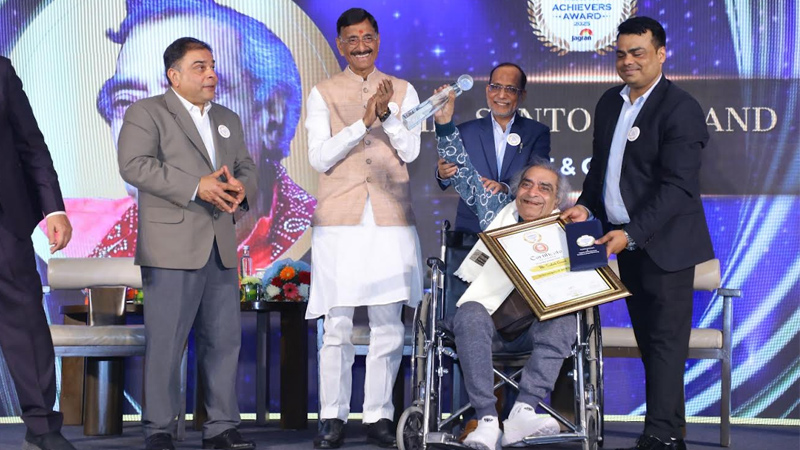
NEW DELHI: Hamdard Laboratories gathered a cross-section of India’s achievers in New Delhi on Friday, handing out the Hakeem Abdul Hameed Excellence Awards to figures who have left their mark across healthcare, education, sport, public service and the arts.
The ceremony, attended by minister of state for defence Sanjay Seth and senior officials from the ministry of Ayush, celebrated individuals whose work blends professional success with a sense of public purpose. It was as much a roll call of achievement as it was a reminder that influence is not measured only in profits or podiums, but in people reached and lives improved.
Among the headline awardees was Alakh Pandey, founder and chief executive of PhysicsWallah, recognised for turning affordable digital learning into a mass movement. On the sporting front, Arjuna Awardee and kabaddi player Sakshi Puniya was honoured for her contribution to the game and for pushing women’s participation onto bigger stages.
The cultural spotlight fell on veteran lyricist and poet Santosh Anand, whose songs have echoed across generations of Hindi cinema. At 97, Anand accepted the honour with characteristic humility, reflecting on a life shaped by perseverance and hope.
Healthcare honours spanned both modern and traditional systems. Manoj N. Nesari was recognised for strengthening Ayurveda’s place in national and global health frameworks. Padma shri Mohammed Abdul Waheed was honoured for his research-backed work in Unani medicine, while padma shri Mohsin Wali received recognition for his long-standing contribution to patient-centred care.
Education and social development also featured prominently. Padma shri Zahir Ishaq Kazi was honoured for decades of work in education, while former Meghalaya superintendent of Police T. C. Chacko was recognised for public service. Goonj founder Anshu Gupta received an award for his dignity-centred rural development initiatives, and the Hunar Shakti Foundation was honoured for empowering women and young girls through skill development.
The Lifetime Achievement Award went to former IAS officer Shailaja Chandra for her long career in public healthcare and governance, particularly in the traditional systems under Ayush.
Speaking at the event, Hamdard chairman Abdul Majeed said the awards were a tribute to those who combine excellence with empathy. “These awardees reflect Hakeem Sahib’s belief that healthcare, education and public service must ultimately serve humanity,” he said.
Minister Seth struck a forward-looking note, saying India’s young population gives the country a unique opportunity to become a global destination for learning, health and wellness by 2047.
The ceremony also featured the trailer launch of Unani Ki Kahaani, an upcoming documentary starring actor Jim Sarbh, set to premiere on Discovery on 11 February.
Instituted in memory of Unani scholar and educationist Hakeem Abdul Hameed, the awards have grown into a national platform that celebrates those building a more inclusive and resilient India. For one evening at least, the spotlight was not just on success, but on service with substance.







