I&B Ministry
MIB has no data on OTTs; not under regulation: Minister

NEW DELHI: The government on Thursday while admitting it has no official data relating to OTT industry, including number of players and subscribers, said the Ministry of Information and Broadcasting (MIB) doesn’t regulate internet-based video services.
“MIB does not regulate paid streaming and video-on-demand services provided over the internet. However, there are enough safeguards available under the Information Technology Act, 2000, which is administered by Ministry of Electronics and Information Technology (MEITY), for content appearing on paid streaming and video-on-demand services,” MIB junior minister Rajyavardhan Rathore informed Indian Parliament’s Lower House or Lok Sabha.
The government stand is significant because increasingly voices of criticism were being heard from the conservative section of society questioning edgy content on OTT platforms that technically don’t have to follow any content code like done by linear TV, which also broadly follows guidelines on content as enumerated in the Cable TV Act 1997, apart from imposing self-regulations administered by industry bodies like NBA and IBF.

With original shows and serials on OTT platforms operating in India increasing by the day — egged on by global and domestic players like Netflix, Amazon, Hotstar, VOOT and Arre — the fledgling industry segment has given content producers a platform where out-of-the-box themes are being tested and tried.
According to Rathore, who was answering a series of questions on the country’s OTT services, there were no official figures available with the ministry.
However, MIB quoted Frost & Sullivan to state it is estimated there were around 70 million unique connected viewers of which 1.3 million were paid video subscribers.
While not directly stating whether the government proposed any content regulations for OTT platforms, Rathore clarified that IT Ministry was empowered to block and/or censure content and its distributors on several grounds, including those relating to security of the country, foreign relations and pornography.
As of now OTT platforms in India could breathe easy as regulator TRAI, too, has not issued any guideline relating to OTT content preferring to restrict its diktat on the telecoms side of net neutrality. Still, many OTT platforms, some of which are digital extensions of traditional TV services owned by big broadcasting companies, prefer to do self-censorship on edgy content in shows like the Game of Thrones.
ALSO READ:
TRAI releases recommendations on net neutrality
Regional OTT content more than just catch-up TV
Can OTT players leverage market opportunities & rationalize rising content costs?






I&B Ministry
IT Rules tweaks are clarificatory, not expansion of powers: MeitY
Govt signals flexibility as platforms push for clarity on user content rules
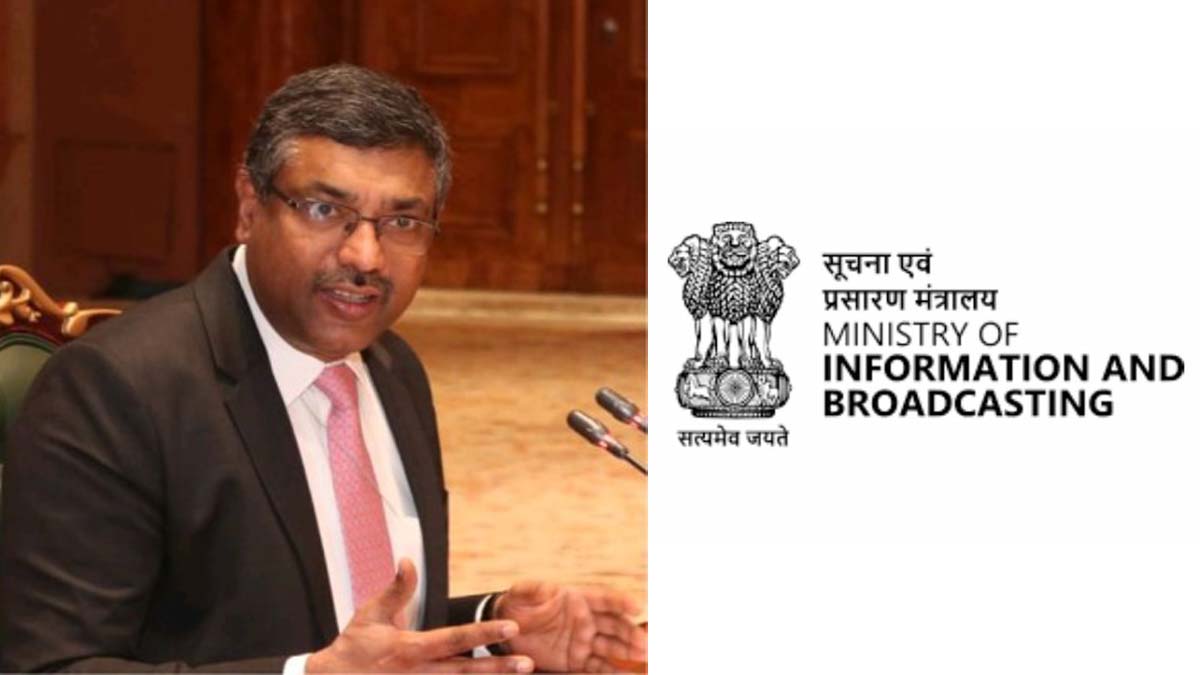
NEW DELHI: The Centre has sought to dial down concerns over its proposed amendments to the IT Rules, with Ministry of Electronics and Information Technology secretary S Krishnan asserting that the changes are intended as clarifications rather than an expansion of regulatory powers.
Pushing back against criticism from platforms and civil society, S Krishnan said the amendments “do not in any way actually give us wider powers” and are meant to remove ambiguity in how existing provisions are applied. He added that the trigger came largely from within the ecosystem, with intermediaries themselves seeking clearer guidance on compliance, takedowns and record preservation.
At the heart of the debate is the growing friction between platforms and policymakers over responsibility for user-generated content. Intermediaries have argued that they should not be treated on par with publishers, particularly when content is created and uploaded by users. Krishnan acknowledged this concern, noting that “a sharper distinction” between user content and publisher content is needed and is currently under examination.
The issue becomes more complex in enforcement scenarios. While registered publishers can be directly asked to modify or remove content, intermediaries often lack control over the original creator. “In such cases, the intermediary cannot direct those changes,” Krishnan explained, underlining the need for procedural nuance.
Another key proposal under discussion is to bring user-generated news and current affairs content within a more unified regulatory ambit, potentially under the Ministry of Information and Broadcasting. The move follows suggestions that a single authority should handle such content, regardless of whether it originates from a publisher or an individual user.
Even as the government frames the amendments as a tidy-up exercise, fault lines remain. Industry players have flagged concerns over compliance burdens, especially for smaller businesses, and questioned whether advisories could effectively become binding without explicit legislative backing. Krishnan said the government is mindful of these risks and is exploring ways to ease obligations, including possible relaxations under certain provisions.
The ministry is also considering consolidating multiple advisories and guidelines into a more structured framework, a step widely seen as addressing long-standing confusion over what platforms are expected to follow.
On takedowns, the government has reiterated that due process will remain unchanged. Krishnan stressed that actions will continue to be governed by established procedures, with reasons recorded and review mechanisms in place. He also pointed to the surge in deepfakes and synthetic media as a factor behind rising content disputes, calling it a “scale challenge” for regulators.
Interestingly, Krishnan also framed social media platforms as commercial entities rather than pure vehicles of free expression, hinting at a broader shift in regulatory thinking as platform economics come into sharper focus.
With stakeholders seeking more time and, in some cases, a rollback of the proposals, the government has kept the consultation process open-ended. Krishnan said further revisions remain on the table, signalling a willingness to adapt the draft based on feedback.
For now, the message from MeitY is clear: the rules may not be tightening in intent, but the effort to define them more clearly is well underway.






