I&B Ministry
MIB flags issue of anti-national content on cable channels, seeks industry advisory

NEW DELHI: Ministry of information and broadcasting (MIB) is seeking an advisory from the Indian media and entertainment industry on a number of issues, including ways to track and stop so-called anti-national content being aired on some local cable TV channels, which do not need to register with any government body.
In a meeting held in MIB’s headquarters in the Capital’s Shastri Bhawan yesterday, senior officials put forth their concerns to the industry representatives and sought their help in resolving the issues, which have been flagged in various sections of the government, including the Ministry of Home Affairs (MHA) responsible for internal security.
Government sources indicated that the MHA has requested MIB to look into the issue of cable channels being run by some LCOs in states like Tamil Nadu, Jammu & Kashmir and Uttar Pradesh where `objectionable’ content aimed at flaring sectarian passions were being telecast. Some such cable channels are also said to be illegally downloading unencrypted content from foreign TV channels for rebroadcast in various parts of India.

As cable channels run by LCOs or MSOs or similar channels on a DTH platform as part of value-added services or VAS are not yet required to register with the government, officials find it difficult to zero down on cable channels especially. As LCOs are required to register with the local post offices, a common database of such Indian LCOs is also not there for effective tracking, as admitted by a government official, who hastily added that work on creating a LCO database is underway.
As part of its many set of recommendations to streamline the carriage part of the cable and broadcast business, regulator TRAI had suggested that the government tweak relevant regulations to specify that all cable channels run by LCOs too would have to get government license like satellite or cable-delivered TV channels. However, because of effective lobbying by LCO organizations, MIB is yet to act on the regulator’s suggestions on cable channels.
Government sources indicated that more such meetings may be held with industry reps to understand and find solutions to issues linked to country’s national interest.
ALSO READ:
Peace TV saga & absence of rule of law
Indian govt warns against re-transmission of Peace TV illegally





I&B Ministry
Doordarshan, ICCR sign MoU to boost global reach of Indian culture
Pact taps TV, radio and digital platforms to take cultural content worldwide
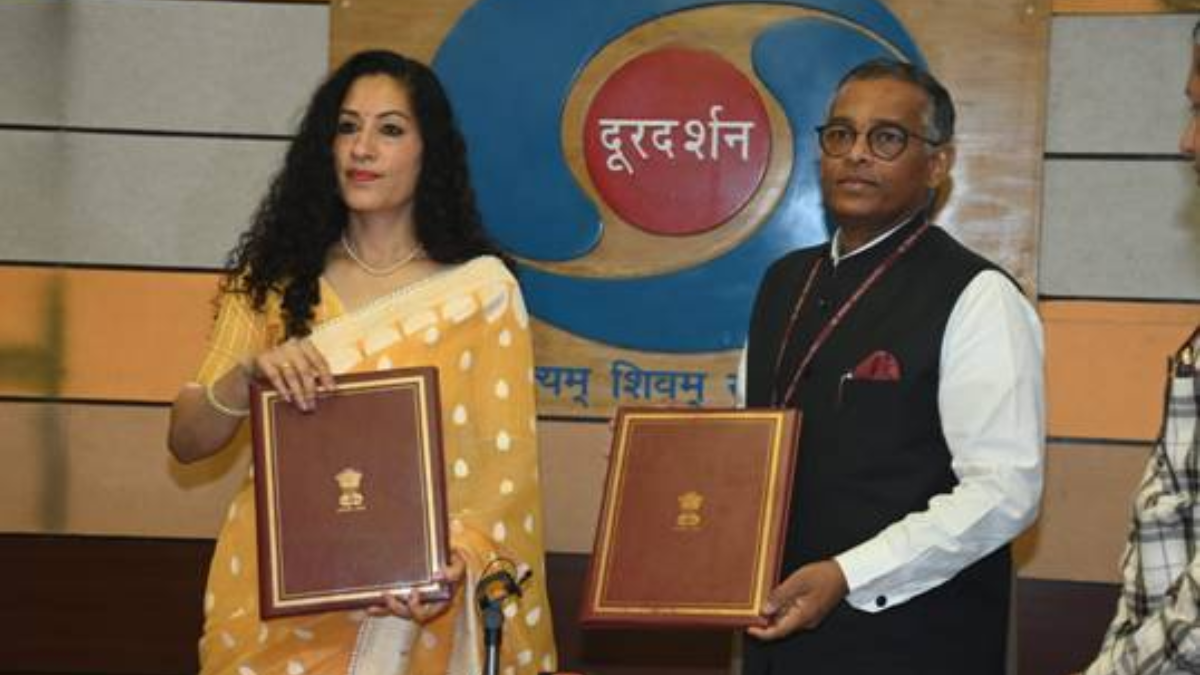
NEW DELHI: In a move aimed at taking India’s cultural story further across borders, Doordarshan under Prasar Bharati has signed a memorandum of understanding with the Indian Council for Cultural Relations to expand the global reach of Indian cultural content.
The agreement, signed on April 7 at Doordarshan Bhawan, brings together the content strength of ICCR and the wide broadcast network of Doordarshan, spanning television, radio and digital platforms.
Under the partnership, ICCR will provide a steady stream of cultural programming, including performances and events organised by Indian missions abroad such as embassies, consulates and cultural centres. Doordarshan will handle production, coverage and distribution, ensuring that these programmes find audiences not just in India but across the world.
The collaboration also opens the door for recorded cultural content from overseas missions to be aired across multiple platforms, including OTT and social media, making Indian art, music and heritage more accessible to global viewers.
A notable feature of the MoU is joint ownership of content rights in perpetuity, including digital rights. This allows both organisations to archive and reuse material over time, building a long-term cultural repository while maximising reach. Doordarshan will also support pre-event promotion and cross-platform visibility to drive engagement.
Speaking at the signing, Doordarshan director general K. Satish Nambudiripad and Indian Council for Cultural Relations director general K. Nandini Singla highlighted the potential of the partnership to strengthen India’s cultural diplomacy through modern media channels.
The agreement, initially valid for three years, also allows Doordarshan to explore monetisation opportunities from the content generated, adding a commercial layer to cultural broadcasting.
As India looks to blend tradition with technology, this partnership signals a clear intent to make its cultural voice not just heard, but seen and streamed across the globe.






