I&B Ministry
MIB admits no DTH infra sharing permission sought

NEW DELHI: Despite the initial hype and enthusiasm over infrastructure sharing by broadcast, cable and satellite-delivered service players (such as DTH operators) and lengthy suggestions on the subject by the Telecom Regulatory Authority of India (TRAI), the government has admitted no stakeholder has evinced interest so far.
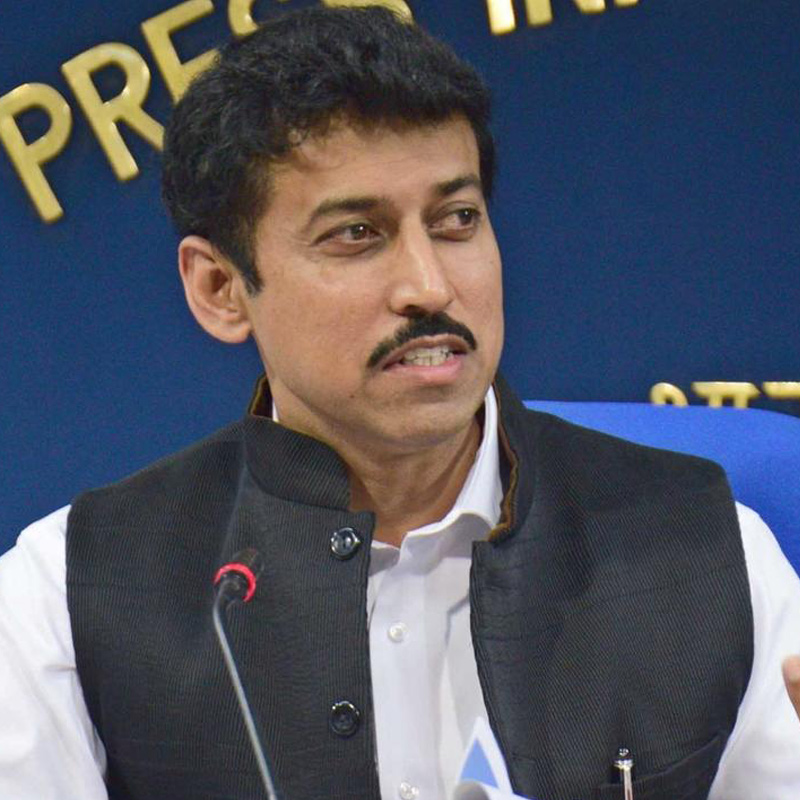
“Ministry of Information and Broadcasting has not received any proposal from DTH operators for sharing of satellite transponders and earth station facilities with other DTH players and distribution platforms,” junior MIB minister Rajyavardhan Rathore told the Indian Parliament last week.
Pointing out that sector regulator TRAI had made recommendations in March 2017 on infrastructure sharing by broadcast and cable sector players, the minister admitted that enabling sharing could address the issue of the demand-supply mismatch. Such a sharing could also “reduce capital and operating expenditure” of a service provider to an appreciable extent, Rathore added.

TRAI had made suggestions on the hows and whys of infrastructure sharing, especially by DTH players, and had also exhorted the government to tweak policy guidelines to enable such sharing.
“To enable [the] sharing of the DTH platform and transport streams transmitted on the DTH platform, the authority recommends that the guidelines for providing DTH services should be suitably amended,” TRAI had noted while making recommendations on infrastructure sharing.
A decision to review the DTH policy guidelines is pending with the MIB with no firm decision on it being taken yet, if industry sources are to be believed, who also pointed out that the ministry may be readying files to refer the issue to the Ministry of Law and Justice for an opinion—a move that could be time consuming. The lack of a policy review has resulted in several glitches hitting DTH operators in India.
TRAI had suggested that to ensure efficient use of scarce satellite resources, DTH operators—which have already set up earth stations and hired satellite transponder capacities, and willing to share the platform and transport stream of TV channels—should be allowed to do so with prior written intimation to the government.
Amongst other recommendations of TRAI on sharing of infrastructure by DTH and distribution platforms, the following are noteworthy:
— The central government should encourage sharing of infrastructure, wherever technically feasible, in TV broadcasting distribution network services on a voluntary basis.
— To allow a new DTH operator to use the existing DTH platform and transport streams of TV channels transmitted on that platform, the conditions relating to hiring of satellite capacity and setting up of an earth station should be amended suitably.
— A DTH operator, providing DTH services using the shared infrastructure with another DTH operator, should be allowed to establish, maintain and operate its own platform at a later date within the licence validity period if it decides so after following the due procedure.
— An easier process should be put in place to ensure continuity of services to subscribers in the event of any disaster. One of the way in which it could be ensured is sharing of the main and the disaster recovery site in hot standby mode with the prior approval of the licensor.
— The DTH operator, willing to share its transport stream of TV channels with another DTH operator, should ensure that the other DTH operator has valid written interconnection agreements with broadcasters concerned for distribution of pay TV channels to the subscribers.
— On a voluntary basis, sharing of head-end used for cable TV services and transport streams transmitting signals of TV channels, among MSOs, should be permitted.
Also Read :
Law ministry likely to give opinion on DTH guidelines review




I&B Ministry
Digital radio, D2M tech set to reshape broadcasting and public messaging
Govt pushes next-gen delivery while TRAI tightens grip on spam ecosystem
NEW DELHI: India’s broadcasting and telecom landscape is undergoing a quiet but significant upgrade, with digital radio and Direct-to-Mobile (D2M) technologies emerging as powerful tools for mass communication, while regulators step up efforts to tackle spam calls.
According to the Ministry of Information and Broadcasting, digital radio and D2M are poised to transform how content reaches audiences by making more efficient use of spectrum. In simple terms, multiple channels can now be delivered over a single frequency, opening the door to a wider range of free-to-air content.
D2M technology takes this a step further by enabling video, audio and data to be broadcast directly to mobile handsets without relying on SIM cards or mobile data. The result is a resilient and cost-effective data pipe that can deliver everything from entertainment and education to critical emergency alerts, even in low-connectivity scenarios.
At the same time, the Telecom Regulatory Authority of India is tightening its grip on unsolicited commercial communication, better known as spam calls. The regulator has deployed a distributed ledger technology platform to bring transparency and accountability into the system.
Through this blockchain-based setup, consumers can register their preferences on receiving promotional messages, while businesses and telemarketers must also sign up and operate within defined rules. The platform also includes a complaint mechanism that allows users to report spam, with complaints shared across telecom operators for coordinated action.
The government’s broader push is being supported by infrastructure upgrades under the Broadcasting Infrastructure and Network Development scheme. Implemented through Prasar Bharati, the initiative focuses on modernising networks such as Akashvani and Doordarshan, including digitisation and adoption of next-generation broadcast equipment.
In a written reply in the Lok Sabha, Ministry of Information and Broadcasting minister of state for information and broadcasting L. Murugan said these steps are part of a larger effort to promote emerging technologies and strengthen the country’s broadcasting backbone. The response came to a query raised by member of Parliament Rao Rajendra Singh.
Together, these developments point to a dual-track strategy: expanding access to reliable, low-cost content while cleaning up the communication ecosystem. As digital pipes get smarter and spam filters sharper, India’s airwaves may soon feel a lot less noisy and far more useful.






