International
Melancholia is NCFC’s best film

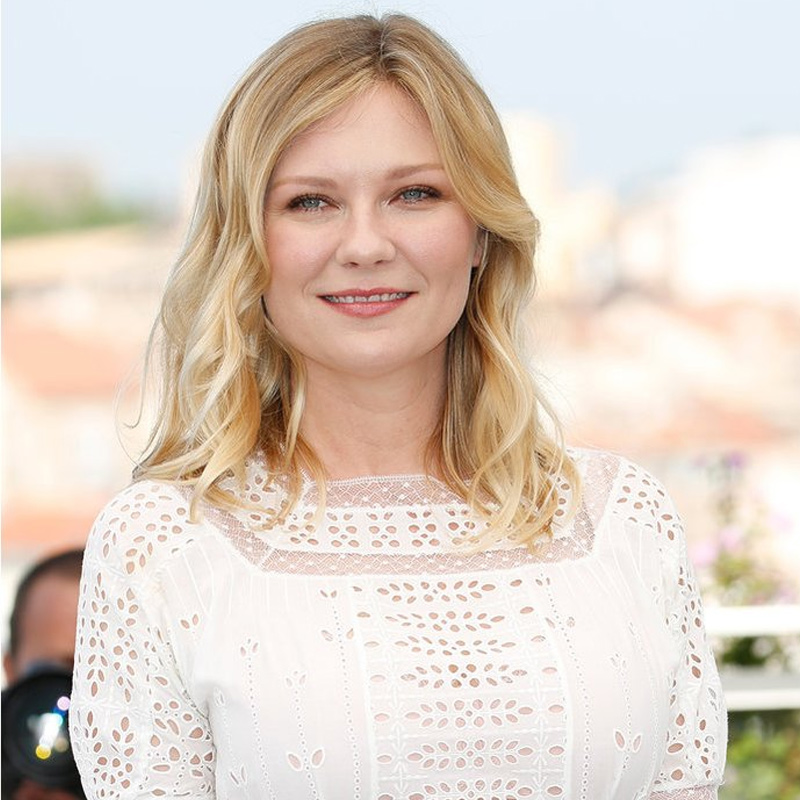
MUMBAI: The National Society of Film Critics (NCFC) has named apocalyptic psychological drama Melancholia as the year‘s best film.
The Society has also chosen Kirsten Dunst as best actress and Brad Pitt as best actor for the baseball drama Moneyball as well as The Tree of Life.
Though Lars von Trier lost out as the best director award for his work on Melancholia to Terrence Malick for The Tree of Life, his film‘s big win bolstered the offbeat film‘s chances for the upcoming Academy Awards that will announce nominees later this month.

Set against the backdrop of a country wedding, the dark film explores the strained relationship of two sisters, one a bride played by Dunst, while a strange planet threatens to collide with Earth, wiping out all traces of human existence.
Pitt, already a strong contender for the Oscars, was honoured for his roles as Oakland A‘s manager Billy Beane in Moneyball as well as a strict father in The Tree of Life.
Critics‘ awards are important in helping build momentum heading toward the Academy Awards, or Oscars, which are the world‘s top film awards given out on the final Sunday in February by the Academy of Motion Picture Arts and Sciences.
The NSFC includes 58 members from major newspapers in Los Angeles, Boston, New York, Chicago and other cities as well as from Time, Newsweek and The New Yorker and newspapers The Village Voice and the Boston Phoenix.
The Real Millionaire by Piyush Thakur will be screened in International Competition at 34th Clermont-Ferrand International Short Film Festival.
This is his story and that of his family and the villagers‘ journey towards realizing the actual meaning of the word “winning”, reads the synopsis of the film on the festival‘s website.
The festival will be held from January 27-February 4,2012.
The film is a story of a farmer Vishnu, who‘s life changes after he gets a call from the reality game show,KBC (Kaun Banega Crorepati). This is his story and that of his family and the villagers‘ journey towards realizing the actual meaning of the word winning.







International
Russia-India cinematic spectacle Persimmon of My Love set for grand Moscow debut
Hindi cinema style musical revives Indo-Soviet cinema ties for today

MUMBAI: A new chapter in cross-border storytelling is set to unfold as Persimmon of My Love gears up for its premiere in Moscow on 1 April 2026, marking the first large-scale cinematic collaboration between Russia and India in decades.
Positioned as a modern nod to the cultural exchange that once brought Indian classics to Soviet audiences, the film blends Hindi cinema flair with Russian storytelling, aiming to rekindle a long-standing cinematic friendship.
Directed by Marius Weisberg, the musical comedy follows two brothers navigating a lively world of music, family and romance. The lead roles are played by Demis Karibidis and Mikhail Galustyan, with Karibidis also contributing as a screenwriter.
Shot entirely in India, the production leans heavily into Hindi cinema style spectacle. Filming took place across Mumbai studios and the cities of Udaipur and Jodhpur, whose architecture was used to create the fictional setting of Khurmada. A crew of over 350 worked on the project, with large-scale sequences featuring up to 1,000 extras.
The film also brings Indian creative talent into the mix. Dance sequences are choreographed by Jay Kumar, while music by Zurab Matua features songs in both Hindi and Russian, adding to its cross-cultural appeal.
Backed by TNT channel, MyWayStudio and the Russian Cinema Fund, the project reflects a broader push to strengthen cultural ties between the two countries.
With its mix of colour, comedy and cross-border collaboration, Persimmon of My Love is not just a film release but a reminder that cinema, much like music, travels well across borders.







