News Headline
Meera Vaidya and the art of getting on in Hollywood

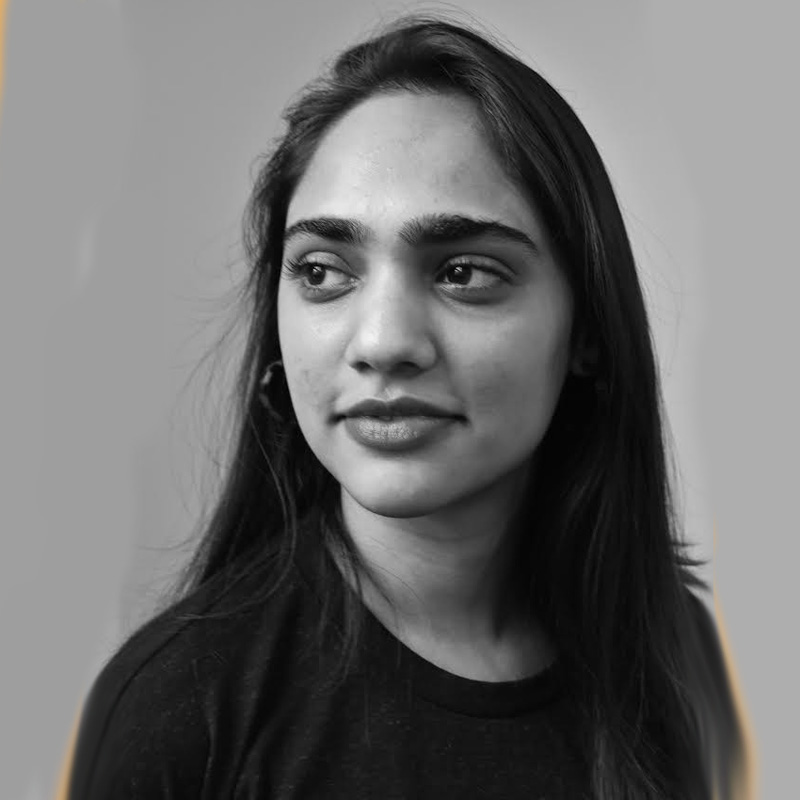
Mumbai: Meera Vaidya is not your regular young woman from Mumbai. The daughter of a celebrated journalist father-turned TV and film producer and an educationist mother, Vaidya has not let her pedigree affect her in any way. In fact, she has rebelled against it on almost every occasion.
“My entire family was and still is in the media industry and being the rebel I was; I was adamant to do anything but join them, afraid of accusations of nepotism,” says Vaidya who graduated with her Master of Fine Art in creative producing at Columbia University in the US. “When I worked in Mumbai in the film world, I worked harder than most people in the office because I knew even a small mistake could be held against me.”
Instead of joining her father’s and cousin’s successful production house and studio, she decided to do an undergrad media course in the UK. “I have always wanted to make sure I know about everything before I made my decisions so when I took the media course it gave me a chance to explore different facets of media like journalism, marketing, and PR while living in the UK helped me broaden my worldview and knowledge on European films before I decided on the world of film,” she confesses.

Once that was done, she spent some time at a TV commercial production house, Chrome Pictures.
“I decided to do ad films since I knew I wanted to apply for film school and wanted to experience the whole production process multiple times,” says Vaidya. “In fact, in my year of working there, I rose from production assistant to AD to director’s assistant and was a part of over 15 advertisements. This is what I wanted to do, and I was finally doing it. I was contributing to the process of creating these films whilst understanding the production process from the root up.”
With her decision made, she applied to Columbia University, which gladly accepted her.
“Coming to Columbia only strengthened the things I learnt at work. It made me a better writer and helped me understand the world of indie filmmaking; I wouldn’t have that knowledge if not for it. I loved the things that others hated. I didn’t mind the paperwork for location permits. I realised that was where I was meant to be: in the middle of set, during the chaos in between shots, or during pre-production while developing scripts and budgeting,” reveals Vaidya.
It was not easy going all the way, however, she points out, especially because she was a young international woman of colour. “Teachers question your language skills, and people undermine my knowledge because of my age—I faced it all,” she reveals.
Her riposte to that is: “Work harder than ever.” “I made sure to write the best I could and be on as many sets as possible so I wouldn’t be undermined,” she says. That rigour has paid off, with her peers from Puerto Rico or New York asking her to be a producer on their projects. Her CV includes work on several short films and an OTT series.
Vaidya has learned the differences in shooting throughout the US. She shot and produced both Limpia and I Was Always Coming Back in New York. This work taught her how to manage and secure locations on a budget, organise and schedule a crew over a large city area, and ensure the films were completed on time. In Los Angeles, she shot and produced Out Of Water which taught her the specifics of managing LA permits and insurance, working with unions such as the actors guild SAG-Aftra, and working with the more commercial-minded crews of LA.
After these films’ completion, Vaidya then determined the best festivals for the films to be played at. She worked to place Limpia at both the Bushwick and Coney Island Film Festivals, where the film was well received, and I Was Always Coming Back at the Woodstock Film Festival, the LA Black Film Festival, and the Brooklyn Film Festival. After being an associate producer on a short that went to the Sundance Film Festival, Vaidya understood the benefits of film festivals, not only for the films but also to meet new creators and future collaborators.
Since moving to LA, Vaidya has not slowed down one bit. She continues to produce and develop feature scripts with her creative collaborators.
Her work ethic stems from her school education at the J Krishnamurthy institution in India, where she was trained in asking the question “why” to everything and in every situation. “The school followed many of his philosophies: living with the most basic resources, finding your self-independence, seeing the world in its rawest and uncensored form, and finally, always asking “why.” For the longest time, it was the last philosophy I never understood. “Why” was the answer to every question someone asked him. This was until my English teacher told me something interesting: “If you don’t ask yourself why until the point where you feel the most vulnerable and get to know yourself truly, then how would you write your characters in a way that they feel real?”
That piece of advice will serve her in good stead as she moves on in her career.

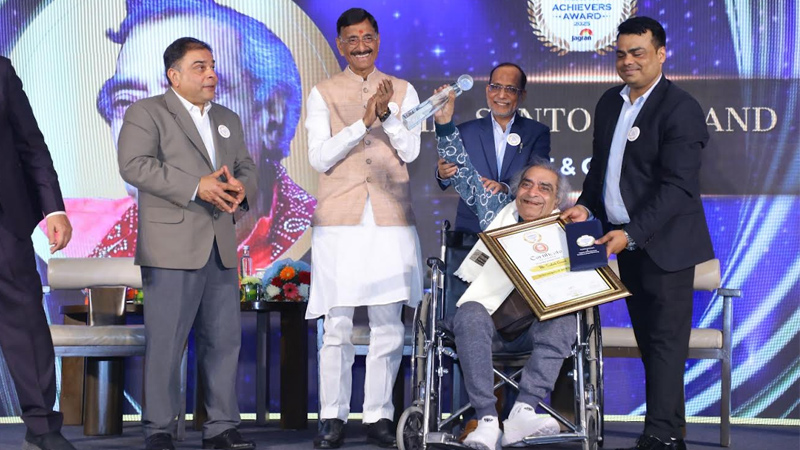
NEW DELHI: Hamdard Laboratories gathered a cross-section of India’s achievers in New Delhi on Friday, handing out the Hakeem Abdul Hameed Excellence Awards to figures who have left their mark across healthcare, education, sport, public service and the arts.
The ceremony, attended by minister of state for defence Sanjay Seth and senior officials from the ministry of Ayush, celebrated individuals whose work blends professional success with a sense of public purpose. It was as much a roll call of achievement as it was a reminder that influence is not measured only in profits or podiums, but in people reached and lives improved.
Among the headline awardees was Alakh Pandey, founder and chief executive of PhysicsWallah, recognised for turning affordable digital learning into a mass movement. On the sporting front, Arjuna Awardee and kabaddi player Sakshi Puniya was honoured for her contribution to the game and for pushing women’s participation onto bigger stages.
The cultural spotlight fell on veteran lyricist and poet Santosh Anand, whose songs have echoed across generations of Hindi cinema. At 97, Anand accepted the honour with characteristic humility, reflecting on a life shaped by perseverance and hope.
Healthcare honours spanned both modern and traditional systems. Manoj N. Nesari was recognised for strengthening Ayurveda’s place in national and global health frameworks. Padma shri Mohammed Abdul Waheed was honoured for his research-backed work in Unani medicine, while padma shri Mohsin Wali received recognition for his long-standing contribution to patient-centred care.
Education and social development also featured prominently. Padma shri Zahir Ishaq Kazi was honoured for decades of work in education, while former Meghalaya superintendent of Police T. C. Chacko was recognised for public service. Goonj founder Anshu Gupta received an award for his dignity-centred rural development initiatives, and the Hunar Shakti Foundation was honoured for empowering women and young girls through skill development.
The Lifetime Achievement Award went to former IAS officer Shailaja Chandra for her long career in public healthcare and governance, particularly in the traditional systems under Ayush.
Speaking at the event, Hamdard chairman Abdul Majeed said the awards were a tribute to those who combine excellence with empathy. “These awardees reflect Hakeem Sahib’s belief that healthcare, education and public service must ultimately serve humanity,” he said.
Minister Seth struck a forward-looking note, saying India’s young population gives the country a unique opportunity to become a global destination for learning, health and wellness by 2047.
The ceremony also featured the trailer launch of Unani Ki Kahaani, an upcoming documentary starring actor Jim Sarbh, set to premiere on Discovery on 11 February.
Instituted in memory of Unani scholar and educationist Hakeem Abdul Hameed, the awards have grown into a national platform that celebrates those building a more inclusive and resilient India. For one evening at least, the spotlight was not just on success, but on service with substance.







