Cable TV
Media valuations up, distribution pulls down industry

MUMBAI: Market valuations of the media industry in India has potential to go up but chaos at the distribution end is pulling it down, investment bankers and research experts said at the India Television Summit 2005 on Thursday in Mumbai.
The current market capitalisation of the media companies in India is $3.5 billion but is estimated to size up to $20-25 billion by 2010, according to DSP Merrill Lynch investment banking and merger and acquisition senior vice president Saurabh Agarwal. The profitability of the TV media is $350 million and the industry is growing at 17 per cent, he added.

The fundamental block is in the distribution side with leakages at the value chain ending at the last mile operator. Ironically, it is the subscription revenue which has a lot of potential to grow and broadcasters can increase their share of the cake from 20 per cent to 40 per cent by 2010, said Agarwal.
The way to attract investments is to have consolidation in the cable TV industry even at the last mile operator level. The industry is fragmented. Besides, issues on corporate governance of the cable companies have to be addressed to make the industry investable, said CLSA head of media investment banking Simon Dewhurst. “There is no way that the cable TV structure can change fundamentally. The last mile operators will continue to perform the functions of rent collection from the subscribers and it is a crucial function in the industry,” he added.
For cable companies, including last mile operators, there needs to be restructuring. “In cable companies, debt has a significant part to play. But that will require considerable consolidation in the last mile,” says Dewhurst.
The economics for consolidation is very compelling and the interest of all the parties is to address this, once addressability takes place. “There are 2,000 frachisees in Mumbai. There is interest in the cable companies but not in the current form where there are too many leakages,” said Agarwal.
Agreed Sahara Entertainment chief financial officer Srinivas Palakodeti: “Once there is pressure either from competition or mandatory, this will be the driving force for consolidation.”
But Kotak Securities senior analyst Sanjeev Prasad believes there is a gap between the valuation the buyer is willing to pay and the price that the seller wants. The industry, according to him, is growing at 17-18 per cent.
What about the direct-to-home (DTH) market? Prasad believes it would touch four million subscribers and $300 million revenues by 2010, restricted by the lack of exclusive content that it can provide from what is available on cable TV. “The growth of Dish TV is fast after it dropped the prices but it is probably adding in the cable dark areas. Once it comes into competition with the cable TV areas, growth will slow down,” he said.







Cable TV
Hathway Cable appoints Gurjeev Singh Kapoor as CEO
Leadership change comes as cable TV faces shrinking subscriber base and modest earnings pressure
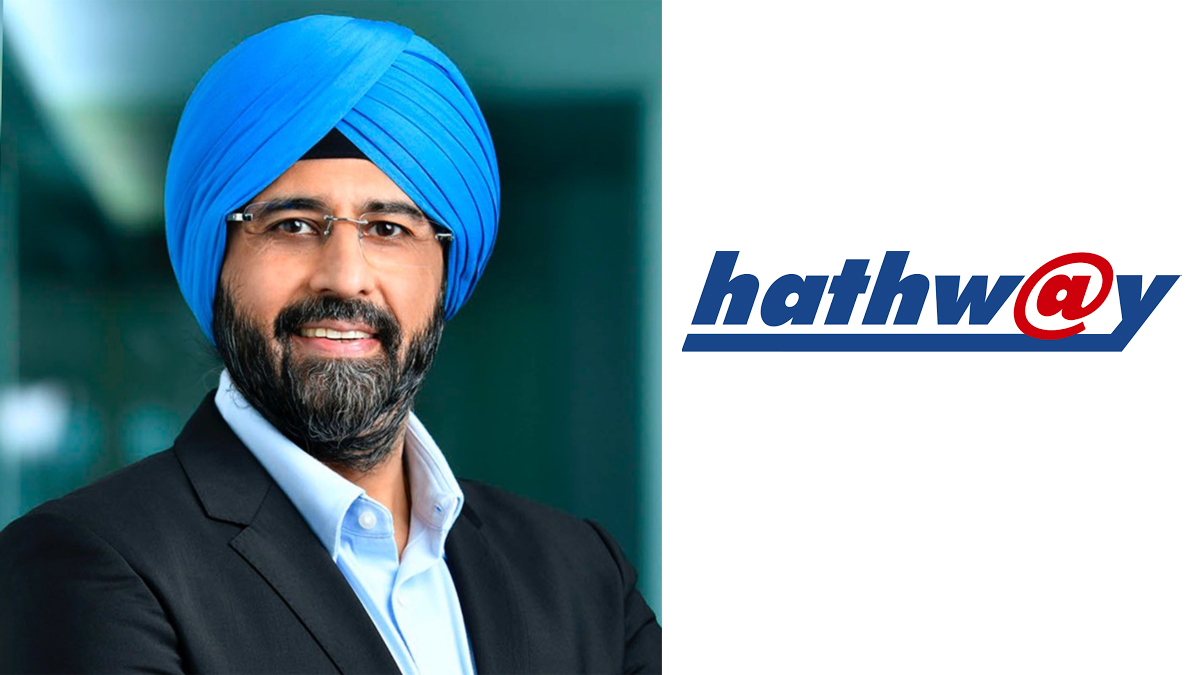
MUMBAI: Hathway Cable and Datacom has tapped industry veteran Gurjeev Singh Kapoor as chief executive officer, marking a leadership pivot at a time when India’s cable television business is under mounting strain.
Kapoor will take over from Tavinderjit Singh Panesar, who is set to retire in August after a long innings with the company. Panesar, chief executive since 2023, has held multiple leadership roles at Hathway, including his latest stint beginning in 2022.
Kapoor brings more than three decades of experience in media and entertainment. He most recently led distribution at The Walt Disney Company’s Star India business, now part of JioStar. His career spans television distribution and affiliate partnerships, with stints at Sony Pictures Networks India, Discovery Communications and Zee Entertainment.
Panesar, with over three decades in the industry, has worked across strategic planning, distribution and business development in media, broadcasting and manufacturing. His past associations include ESPN Star Sports, Star India, Apollo Tyres and JK Industries.
The transition lands as the cable sector grapples with structural disruption. Traditional operators are losing ground to streaming platforms, while telecom and broadband players tighten the squeeze with bundled offerings.
An EY report estimates India’s pay-TV base could shrink by a further 30 to 40 million households by 2030, taking the total down to 71 to 81 million. The slide follows a loss of nearly 40 million homes between 2018 and 2024, a contraction that has already wiped out more than 37,000 jobs in the local cable operator ecosystem.
Hathway’s numbers reflect the strain. The company reported a consolidated net profit of Rs 93 crore for FY25, down from Rs 99 crore a year earlier. Revenue inched up to Rs 2,040 crore from Rs 1,981 crore. As of December 2025, it had about 4.7 million cable TV subscribers and roughly 1.02 million broadband users.
Kapoor steps in with a familiar brief but a shrinking playbook. In a market where viewers are cutting cords faster than companies can reinvent them, the new chief executive inherits a business fighting to stay plugged in.







