News Broadcasting
Media tome throws light on the biz growth pre and post pandemic


Mumbai: The Indian media business is estimated to be a $19 billion industry in 2021 (EY estimates), said veteran business journalist Vanita Kohli-Khandekar. She observed that the media industry had doubled in the period between 2013 to 2019. But what’s remarkable is not only the change in size but also the composition of the industry.
Khandekar was speaking at the launch of the latest edition of her book- ‘The Indian Media Business: Pandemic and After’ on Wednesday. The fifth edition of the book published by Sage Publications India was unveiled at a virtual event attended by noted industry leaders.
To highlight the transformation that the industry has undergone in recent times, she opened the discussion with an intriguing question “What is a media company?”.

Unlike in the past where media companies used to compete for consumers’ leisure time, today media consumption is no longer only about leisure and entertainment but has permeated every aspect of the consumers’ lives. “The pandemic imprisoned audiences in their homes and access to media via their smartphones, TVs and other devices were the only way they were connected to the world,” she said.
In FY 2010, the top 10 media companies comprised Times Group (Rs 5000 crore), Zee Group (Rs 4,000 crore), Star India (Rs 3,500 crore), Airtel (Rs 2,900 crore), HT Media (Rs 1,500 crore), Sun (Rs 1,400 crore), Network18 (Rs 1,300 crore), Sony (Rs 1,300 crore), DB Corp (1,100 crore) and Jagran (Rs 900 crore). There isn’t a single digital media company in the top 10 list which is dominated entirely by linear broadcast media organisations.
Fast forward to FY 2019 where the composition of the media landscape changed significantly. The top 10 companies were Zee Group (Rs 16,300 crore), Star India (Rs 13,500 crore), Times Group (Rs 10,000 crore), Google India (Rs 9,400 crore), Sony (Rs 6,300 crore), Tata Sky (Rs 6,200 crore), Network18 (Rs 5,100 crore), Airtel TV (Rs 4,100 crore), Sun Network (Rs 4,000 crore) and PVR Cinemas (Rs 3,100 crore).
The pandemic reshuffled the top 10 companies once again but the composition remained largely unchanged. Disney-Star (Rs 14,350 crore), Zee Group (Rs 13,300 crore), Google India (Rs 13,000 crore), Times Group (Rs 10,000 crore), Sony (Rs 5,900 crore), Tata Sky (Rs 5,700 crore), Network18 (4,700 crore), Sun Network (Rs 3,800 crore), Airtel TV (Rs 3,100 crore) and Netflix (Rs 1,500 crore).
Netflix breaking into the top 10 bracket in FY21 with only Rs 1,500 crore in revenues is indicative of how badly the pandemic impacted the industry on the whole. A leading cinema exhibition chain saw revenues drop from Rs 3,500 crores to effectively zero and a burn rate of Rs 100 crores a month in 2020. Khandekar observed that the opening of theatres and return of film exhibition business is a key indicator that the ecosystem has come back to health. Films are the Gangotri of the media business, she remarked.
“A key trend during the pandemic was the explosion of audiences without the ability to monetise them,” said Khandekar. “Apart from digital media companies which saw a marginal increase in revenues, most media companies were not able to successfully monetise the growth in audiences during the pandemic.” According to her, Indian media companies have been successful at driving penetration of their business, however, post-pandemic they have realised the need to focus on effective monetisation.
Khandekar observed that even though there is no import quota on entertainment in India, 90 per cent of the market is watching local content. “We don’t celebrate this industry enough,” she said, adding that the Indian media business is the highest tax-paying industry and could easily contribute five to seven per cent to the country’s GDP. Countries like the US and the UK nurture their media companies but in India, the TV broadcast ecosystem is caught in a regulatory mess and the entire industry is reeling from the pandemic. The media industry that employs over three million people is one of the best markers of India’s soft power,” she concluded.
Some of the media industry leaders who attended the event included PVR Cinemas chairman and managing director Ajay Bijli, India Today Group vice-chairperson Kalli Purie, director of University of Oxford’s Reuters Institute for the study of journalism and professor of political communication Rasmus Kleis Nielsen and director of YouTube content partnerships at YouTube India Satya Raghavan.







News Broadcasting
CNN-News18 to host Fury in the Gulf conclave on West Asia crisis
Three-hour summit to unpack geopolitical fallout and impact on India
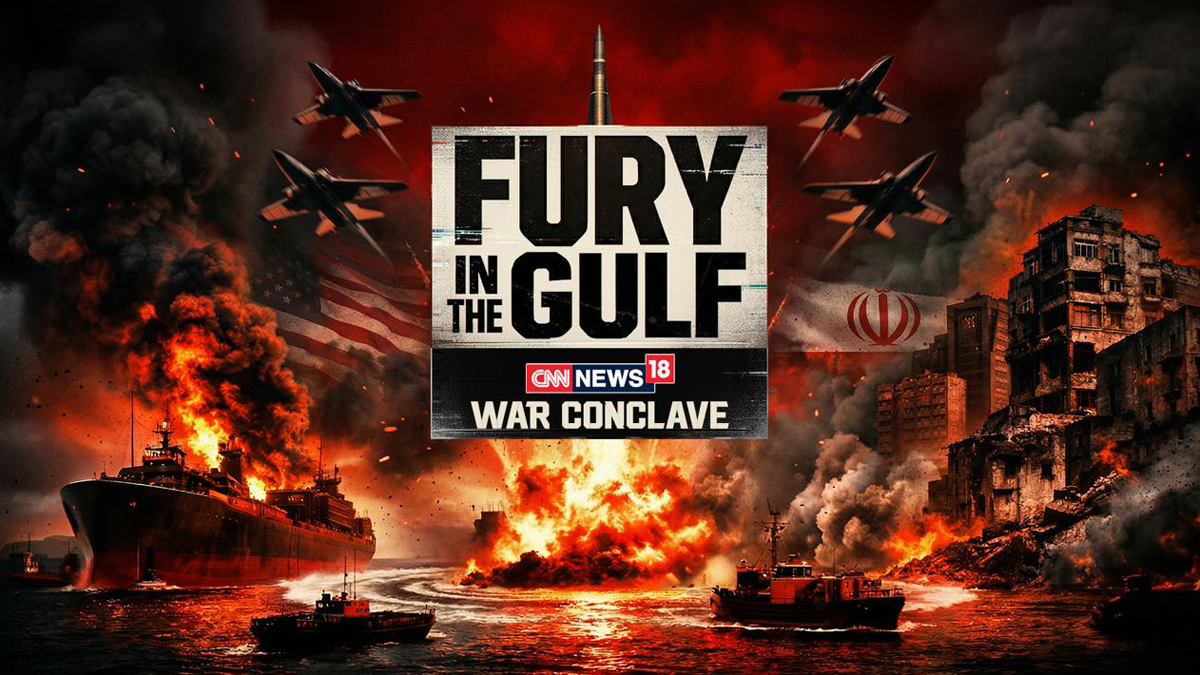
MUMBAI: CNN-News18 is set to host a special three-hour broadcast, Fury in the Gulf – War Conclave, on April 7, aiming to decode the escalating West Asia crisis and its far-reaching implications for India.
Scheduled from 4:00 PM to 7:00 PM, the conclave comes at a time when tensions between Iran and the United States are reshaping global geopolitics and triggering economic uncertainty. With India’s deep energy ties, trade links and large diaspora in the Gulf, the developments carry significant domestic relevance.
Built around the theme ‘Conflict, Consequences, and The Future,’ the programme will feature six curated sessions combining one-on-one interviews and panel discussions. The focus is to cut through the clutter and offer viewers a clearer understanding of the fast-evolving situation.
Key sessions include ‘Diplomacy in Times of War’ featuring Shashi Tharoor, and ‘World After the Iran Conflict’ with voices such as Ram Madhav, Reuven Azar, representatives from the European Union and the Iranian Deputy Envoy. Another session titled ‘Another Dunkirk?’ will bring together K. J. S. Dhillon and Jitin Prasada among others.
CNN-News18 editorial affairs director Rahul Shivshankar said, “In times of war, clarity becomes the most powerful tool. Fury in the Gulf – War Conclave brings together credible voices to address the questions and confusion that arise amid an overwhelming influx of information.”
He added that the initiative is aimed at delivering “facts, perspective, and insight” at a time when misinformation can easily cloud public understanding.
Echoing the sentiment, CNN-News18 CEO– English and business news Smriti Mehra said the conflict marks a defining global moment, with consequences that extend well beyond the region. She noted that the conclave seeks to present the crisis with “depth, nuance and responsibility” so audiences can better grasp its real-world impact.
As geopolitical tensions continue to dominate headlines, the conclave positions itself as an attempt to bring order to the noise, offering viewers a structured, insight-led look at a complex and rapidly shifting global situation.






