News Broadcasting
Media General completes purchase of four NBC TV stations


MUMBAI: Media General, Inc. has completed its previously announced acquisition of four NBC stations.
The stations and their designated market areas (DMAs) are: WNCN in Raleigh, WCMH in Columbus, WVTM in Birmingham and WJAR in Providence.
All four stations are ranked among the top three in their respective markets. The stations are located in large, growing markets, and all four produce attractive operating and cash flow margins.”This acquisition is compelling from both an operational and financial perspective. Investors can be highly confident of our ability to execute as planned. We’ve successfully integrated numerous acquisitions. We achieved or exceeded our projected operating synergies, and we repaid debt as quickly as, or faster than, projected,” said Media General president and CEO Marshall N. Morton.

“We are especially pleased to add Raleigh-Durham to our Southeast footprint. In Birmingham, WVTM has a broader signal than WIAT, the CBS station we currently own there, so we will reach more households. The Columbus and Providence stations are located in political battleground states, so they benefit greatly from campaign spending, especially in Presidential election years,” he added.
The acquisition increases Media General’s number of NBC stations from five to nine and makes the company NBC’s third largest independent affiliate, further enhancing its relationship with the network. The addition of these four stations will improve the profit contribution mix of Media General’s Publishing and Broadcast segments, from approximately 60 per cent (publishing) and 40 per cent (broadcast) to approximately 50/50.
“We have conservatively estimated operating synergies of $3 million annually by 2008. The synergies will come from enhanced revenues, which are expected to result from the implementation of Media General’s sales training and systems as well as its inventory management and pricing processes. Cost reductions will result from bringing the new stations into Media General’s Central Traffic Operation and from centralizing Master Control for all of its NBC stations,” said Morton.
The new NBC stations add approximately 450 employees. “We are very impressed with the quality of the local management and staff,” he added.
The acquisition will immediately and significantly improve the Broadcast Division’s operating margin and drive meaningful growth in its revenues and segment cash flow.
“Substantial free cash flow generated by our four new stations will enable us to quickly reduce the debt we incur to finance the acquisition,” said Morton. He added that at the end of 2006, the company expects its leverage multiple to be four times and that it will be reduced to 2.5 times by the end of 2008.
The cash transaction cost approximately $600 million. Future cash tax savings will result from a step-up in basis that is allowed for an asset purchase and the related amortisation and depreciation deductions. The net transaction value, reduced by the present value of the expected tax savings, is approximately $450 million. Including the tax benefits and synergies, the transaction represents a multiple of less than 10.0 times 2004-2005 average broadcast cash flow for the four stations.
The acquisition ultimately will be funded from three sources: drawing on the company’s existing $1 billion credit facility, issuing new public or bank term debt that includes $100 million for the acquisition and the refinancing of $200 million of existing notes due September 2006, and at least $100 million in net proceeds from the divestiture of assets previously identified as non-core.
Media General is in the process of selling its CBS affiliate in Wichita, including that station’s three satellites, and its CBS stations in Birmingham, Ala., Mason City, Iowa, and Chattanooga, Tenn.
“There is substantial interest in the stations to be sold, and we expect to complete the sale of all the stations by the end of the year,” said Morton.
As part of the acquisition of the NBC stations, Media General was granted a six-month duopoly waiver in Birmingham by the Federal Communications Commission, and the company has entered into an agreement with the Department of Justice to divest its CBS affiliate within six months.





News Broadcasting
Kamlesh Singh receives Haldi Ghati Award from MMCF
India Today Group editor honoured for three decades of journalism at Udaipur ceremony.
MUMBAI- Kamlesh Singh just turned a lifetime of sharp words into a shiny shield because when journalism wakes up a society, even the Maharana of Mewar wants to pin a medal on it.
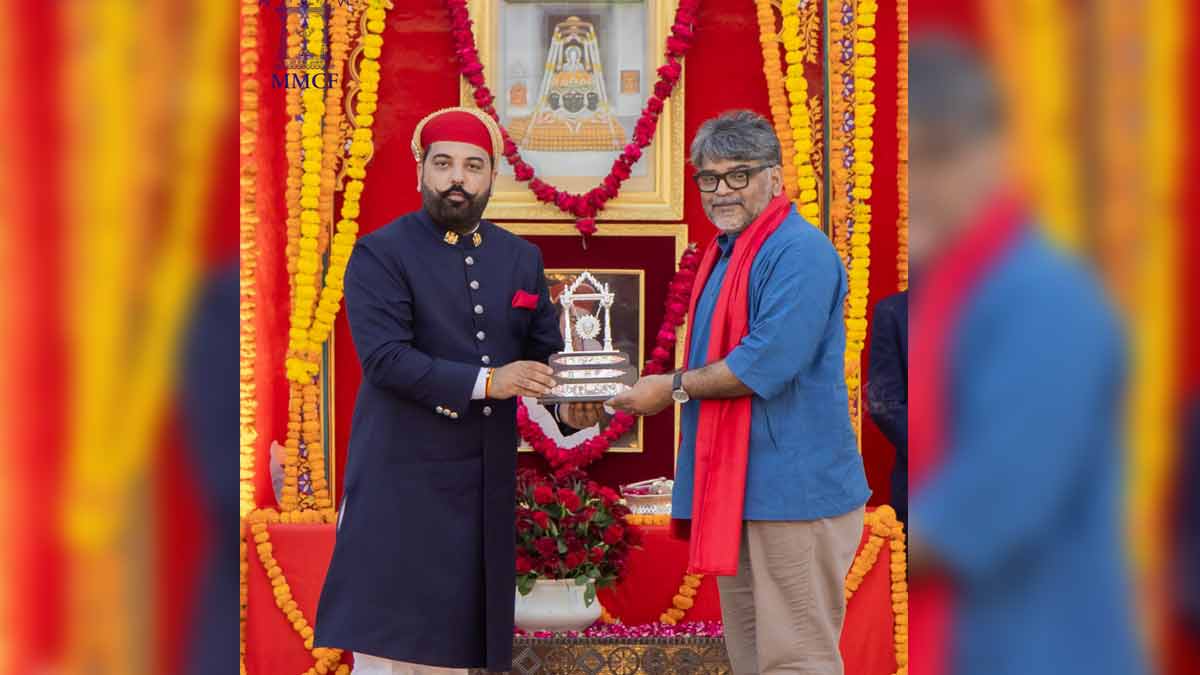
The Maharana of Mewar Charitable Foundation (MMCF) conferred its prestigious Haldi Ghati Award on Kamlesh Singh, a senior editor at the India Today Group, during a ceremony in Udaipur on 15 March 2026. The national award, instituted in 1981-82, recognises “work of permanent value that initiates an awakening in society through the medium of journalism.”
Singh, who leads several editorial initiatives including Aaj Tak Radio, the Teen Taal community and The Lallantop, was presented the honour by Lakshyaraj Singh Mewar, Managing Trustee of MMCF. The citation highlighted his three decades of contributions to Indian media, innovations in digital journalism, mentoring young reporters, and his popular podcast persona “Tau” on Teen Taal, which fosters thoughtful public discourse.
The Haldi Ghati Award, named after the historic Battle of Haldighati symbolising valour and resilience, is one of four national awards given annually by MMCF. Past recipients include Tavleen Singh, Piyush Pandey and Raj Chengappa.
Other honourees this year included Padma Vibhushan Pt Hari Prasad Chaurasia, Vedamurti Devvrat Rekhe, Treeman of India Marimuthu Yoganathan, Vir Chakra Capt Rizwan Malik, and US-based researcher Molly Emma Aitken, who received the Colonel James Tod Award for contributions to understanding Mewar’s spirit and values.
In an era where headlines often shout louder than substance, the MMCF quietly reminded everyone that real journalism isn’t about noise, it’s about the quiet, persistent work that stirs society awake, one thoughtful story at a time.







