GECs
‘Media and entertainment sector has lost a whopping Rs 640 billion of market value since last year’ : Sadanand Shetty – Kotak Securities vice president


Media and entertainment companies have been riding the market boom to expand and fund their diversified ventures. But the tide has turned against them and they are faced with a scarce capital situation.
Being in the equitties market for over 14 years, Kotak Securities vice president Sadanand Shetty knows best how rough the path is going to be for media companies to tide over the slowdown phase. Managing money on behalf of investors, he is one of the few fund managers to have caught early the trends across verticals within the media and entertainment sector.
In an interview with Sibabrata Das, Shetty talks candidly about the massive erosion of values media companies have seen over the last one year and how grim the real world is for most of them.

Excerpts:
|
Aren’t these companies seeing a massive skid in valuations? Most media companies fall under mid cap and small cap categories. These categories have lost much more in stock value than the large cap companies. September ’08 has been the worst quarter in recent times for most media companies that are part of the broad-based BSE 500 Indices. The profits of aggregate listed companies are down by 60 per cent for the said quarter, including losses of new Hindi GECs (general entertainment channels). Slowdown in revenue and rising costs have hit earnings. The market has not even spared large companies like Zee Entertainment Enterprises Ltd and Sun TV Network Ltd; they together have lost market value of close to around Rs 160 billion (as of 10 January 2009 over the year ago period). The broadcasting space has alone lost market value of nearly Rs 280 billion. Economic slowdown in general has impacted the advertising revenues of the sector. Subscription revenues, to some extend, provide the much needed cushion to falling profitability of the broadcasting companies. |
||
|
Why were media valuations so unrealistic? |
||
|
Weren’t companies stretching themselves too thin in a market hype situation? The industry also witnessed entry of new players with other objectives. For some it was pure market capitalisation as easy money poured into the sector. Investors – foreign and local – have jumped the gun and funded some of the unviable projects. Shortsighted foray into ‘new media’ business verticals that some companies have ventured into will be hard hit. |
||
|
What are the lessons to be learnt from this? |
||
|
||
|
Have media companies become dependent on foreign capital? We are also witnessing rapid rise in FDI (foreign direct investments) and portfolio investments in media companies. You, after all, can’t ignore the second fastest growing economy of the world. India is also in a sweet spot today because of its huge youth population. |
||
|
What are the challenges the Indian media companies face due to slowdown? Overall, the economic slowdown will impact the growth plans of most of the companies. Priorities have shifted to consolidating the existing businesses; expansion can wait. It is testing time for media companies. There will be no better time to demonstrate the strength of their respective market/channel shares as we expect ad spend to consolidate towards the top. |
||
|
||
|
Will news channels have a free fall as they operate in a highly cluttered environment? Only few news channels with strong brand equity and distribution network would be able to make reasonable profits. Companies with strong balance sheets will survive. Rest all will fade away. |
||
|
What do you think of the television content companies? Unless there is substantial change in the current business model, I do not see real scalability coming to companies. TV content companies also suffer from fragmentation. Having said that, this year has been particularly good for content companies as some of the dominant incumbent players have witnessed loss of market. New players have emerged and done well. I expect few credible players to emerge in the future. |
||
|
Do you find the cable industry attractive? |








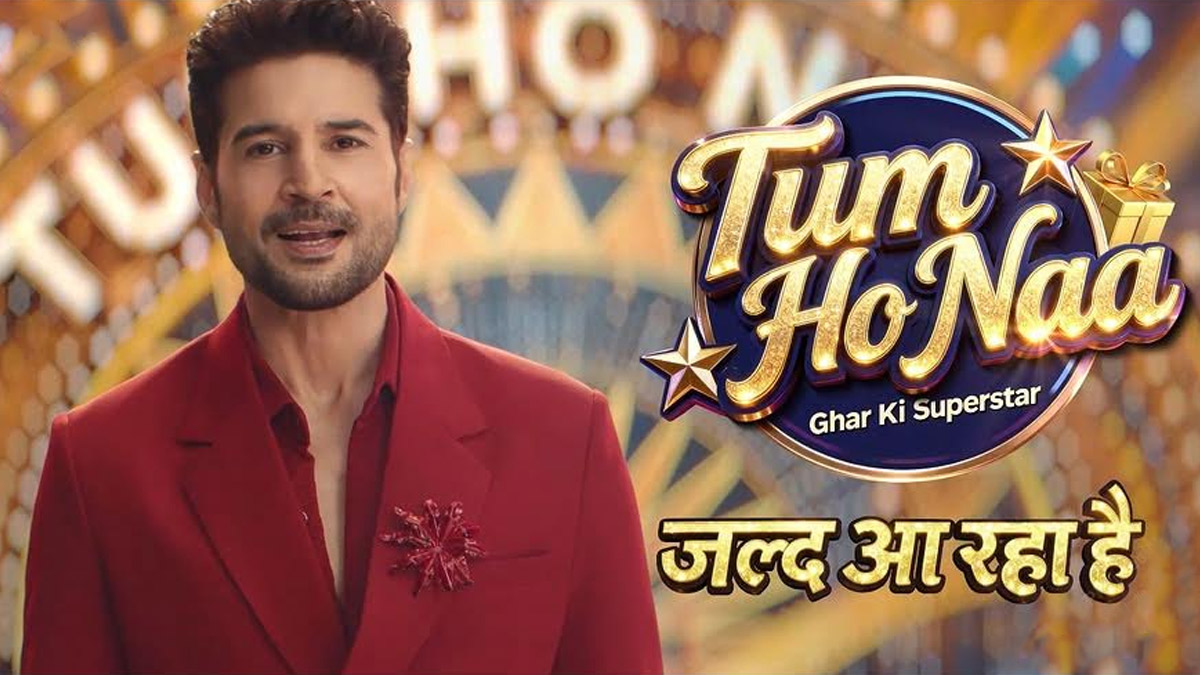
MUMBAI: Lights, camera… connection because this time, the game isn’t just about winning, it’s about who’s with you. Sony Pictures Networks India is gearing up to launch a new reality game show, Tum Ho Naa, expanding its unscripted slate with a format that promises both emotion and engagement.
The show will premiere soon on Sony Entertainment Television and stream on Sony LIV, with Rajeev Khandelwal stepping in as host. Known for his measured screen presence and selective choices, Khandelwal’s return to television adds a layer of familiarity and credibility to the upcoming format.
While specific details of the gameplay remain under wraps, the positioning suggests a reality format that leans as much on emotional resonance as it does on competition, an increasingly popular blend in Indian television, where audiences are gravitating towards content that offers both stakes and storytelling.
Khandelwal, reflecting on his return, noted that his choices have often been guided by instinct rather than convention, describing Tum Ho Naa as a project that feels “close to the heart”. His association also signals Sony’s continued focus on anchoring new formats with recognisable faces who bring both relatability and depth.
The launch comes at a time when broadcasters are doubling down on original non-fiction formats to drive appointment viewing, even as digital platforms expand parallel reach. By placing the show across both linear television and OTT, Sony appears to be aiming for a dual-audience strategy capturing traditional viewers while engaging digital-first consumers.
As the countdown to premiere begins, Tum Ho Naa positions itself not just as another game show, but as a reminder that sometimes, the biggest prize on screen isn’t the jackpot, it’s the journey shared along the way.






