Cable TV
MCOF gets entertainment tax extension in Maharashtra


MUMBAI: The last mile operators (LMOs) in Maharashtra have got a further extension until 21 January from filing joint affidavits along with the multi-system operators (MSOs). The cable operators can also in the interim continue paying entertainment tax to the Bombay High Court, following an extension given by it today. The next hearing of the case is on 21 January.
The Maharashtra Cable Operators Federation (MCOF) had on 13 December moved the Court challenging the Maharashtra state government’s amended gazette resolution (GR) regarding entertainment tax. According to the amended GR, it was mandatory for the LMOs to file a joint affidavit with the MSOs while paying entertainment tax.
The Court during the 17 December hearing gave interim relief to the LMOs from filing joint affidavits along with the MSOs. The case was up for hearing today. “The state government advocate wasn’t ready with its response and hence the case was adjourned to another date,” says advocate Sudeep Nargolkar.

While the case is still on in the Court, the public accounts committee (PAC) of the Maharashtra state legislature has come up with the recommendation of bringing in a few amendments in the Entertainment Duty Act, 1923. The amendments have been recommended based on: one, the numerous advertisements running on cable TV networks, which according to a Times of India report runs into crores; and two, while private TV channels need to follow procedures and seek permission from the Telecom Regulatory Authority of India (TRAI) before launching a new channel, there is no body governing the channels that the cable TV operators run.
The committee has also objected to the absence of tax that should be levied on cable TV operators for running advertisements on their network.
The PAC has suggested measures to increase the revenue from entertainment tax. This includes: creating a database of cable and DTH viewers; decentralising entertainment tax collection at district and taluka levels; and regular inspection by both the IT department and revenue officials to find out the number of cable TV subscribers under each operator.
The changes are being thought of at a time when the LMOs are fighting against the high entertainment tax fees.Are we in for another round of litigation?






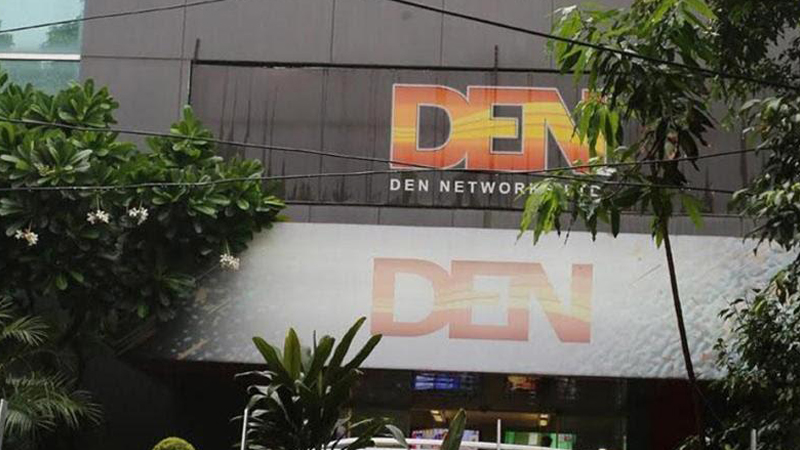
MUMBAI: When margins wobble, liquidity talks and in Q3 FY25-26, cash did most of the talking. Den Networks Limited closed the December quarter with consolidated revenue of Rs.251 crore, marginally higher than the previous quarter but down 4 per cent year-on-year, even as profitability stayed resilient on the back of strong cash reserves and disciplined cost control.
Subscription income softened to Rs.98 crore, slipping 3 per cent sequentially and 14 per cent from last year, while placement and marketing income offered some cheer, rising 15 per cent quarter-on-quarter to Rs.148 crore. Total costs climbed faster than revenue, up 7 per cent QoQ to Rs.238 crore, driven largely by higher content costs and operating expenses. As a result, EBITDA dropped sharply to Rs.13 crore from Rs.19 crore in Q2 and Rs.28 crore a year ago, pulling margins down to 5 per cent.
Yet, the bottom line refused to blink. Profit after tax stood at Rs.40 crore, up 15 per cent sequentially and only marginally lower than last year’s Rs.42 crore. A healthy Rs.57 crore in other income helped cushion operating pressure, keeping profit before tax at Rs.48 crore, broadly stable quarter-on-quarter despite the tougher cost environment.
The real headline-grabber, however, sits on the balance sheet. The company remains debt-free, with cash and cash equivalents swelling to Rs.3,279 crore as of December 31, 2025. Net worth rose to Rs.3,748 crore, while online collections accounted for 97 per cent of total receipts, underscoring strong cash discipline across operations, including subsidiaries.
In short, while Q3 showed signs of operating strain, the financial backbone remains solid. With zero gross debt, steady profits and a formidable cash war chest, the company enters the next quarter with flexibility firmly on its side proving that in uncertain markets, balance sheet strength can be the best growth strategy.






