News Headline
Marathi TV serial stars looking for greener pastures

MUMBAI: Marathi TV serial actors and actresses seem to making hay while the sun is shining. Several actors who started their career with Marathi serials have moved up the chain and are getting plum offers in Hindi serials, films and theatre.
Others, who are currently working in the serials, are experiencing the joys of having a regular shoots (9 am-5 pm) and taking home a fixed packet every month. In fact, several young actors and actresses are getting more offers than the established ones.
However, some senior stars are shifting back to Marathi theatre as they find it to be more stimulating and satisfying. But, all of them agree that the TV serials have given a new lease of life to their careers and a glimpse of the rich and diverse Marathi culture.
Several younger stars who have been on the scene since the last two-three years have become choosy and pick scripts. They are juggling their time between TV serials, advertising films, telefilms and feature films in Marathi, English and Hindi. The offers never seem to be declining.
Shreyas Talpade is currently working in serials such as Avantika and Shri Gangadhar Tipri (Zee Alpha); Bedhund Manache Lahiri and the forthcoming period drama Ek Hota Raja (ETV Marathi) scheduled for April 2003. He is also eagerly awaiting the bilingual feature film Resham Ghaat (Marathi) also titled as Mrs Anna Smith (English) directed by Resham Soni. He is also acting in a telefilm for ETV Marathi.
Santosh Juvekar, another actor, can claim to be a veteran of sorts. He has done shows such as Jagavegali (Alpha Marathi); Bedhund Manache Lahiri and Ya Gojirvaniya Gharath on ETV. He has worked in a total of 18 serials, five plays and also has two Hindi serials in his portfolio. He has also worked in Dev Benegal’s Split Wide Open.
Iravati Harshe is currently seen in more Hindi TV serials and ad films rather than Marathi serials.
Another actress, who refuses to be named, has actually forsaken Marathi serials and moved on to advertising films and feature films. “I shall not deny that working in Marathi serials gave me noticeability. I started getting offers and leveraged the same in order to pitch for more attractive offers – not necessarily in TV serials,” she adds. The actors and actresses with ideal faces and figures get offers from TV ad film makers.
“The foray to Hindi serials, telefilms or commercial films depends on the career goals of each actor. Theatre offers spontaneity, immediate reactions from discerning audiences and prompt payments. All actors always dream of making it big in feature films. TV serials are also a satisfying experience,” says Talpade.
Sources say that actors and actresses are paid anything between Rs 500-1000 per day. In the case of Marathi theatre, they start with Rs 300 per night and the established stars get much higher – but this amount is paid upfront.
Several Marathi stars such as Prashant Damle have gone back to theatre because they earn the same amount of money as they earn in TV serials; but theatre is a satisfying experience, they claim.
However, the delay in payments is a big issue. “My family’s livelihood depends on my earnings. It would help if the conveyance is paid on a daily basis as there is a time lag in monthly payments. Several actors travel to the sets from places such as Thane, Karjat and even Pune,” says Santosh Juvekar.
A certain veteran actress however claims that there is a delay of anything between two to three months; if there is a dispute between a production house and the TV channel, then the payments are delayed indefinitely. A case in point being Nimbus’s serial Indradhanush.
However, everyone agrees that the producers who develop content for DD-10 Sahyadri are prompt paymasters. The point to be noted is the fact that TV spends on vernacular channels (even Marathi) seem to be improving judging by the number of advertising that these channels get.
The budgets for Marathi serials seem to have decreased over the last two years. The budget for a typical episode is anything between Rs 1,00,000 to a maximum of Rs 1,20,000. However, the budgets are always less than those of the Hindi TV serials.
With channels reducing the budgets, producers are feeling the pinch and stepping up the production time schedules. The effort is to complete a 22-minute episode within a day. This in turn affects the output and the remuneration. This has become a major issue.
“If we have to do 15-20 scenes a day, exhaustion is bound to set in and quality of work suffers. Another issue is related to scripts; it would help if we get the scripts in advance in order to help us prepare,” says Talpade.
Well, it looks as if these actors don’t mind working hard as long as offers involving good money and quality scripts keep pouring in.


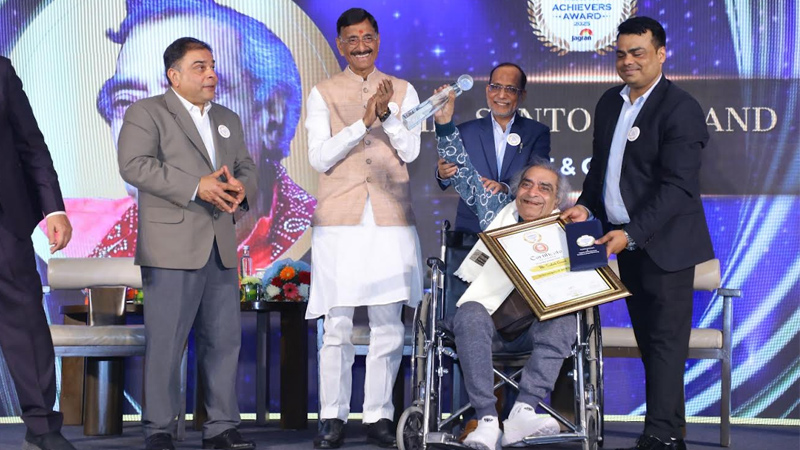
NEW DELHI: Hamdard Laboratories gathered a cross-section of India’s achievers in New Delhi on Friday, handing out the Hakeem Abdul Hameed Excellence Awards to figures who have left their mark across healthcare, education, sport, public service and the arts.
The ceremony, attended by minister of state for defence Sanjay Seth and senior officials from the ministry of Ayush, celebrated individuals whose work blends professional success with a sense of public purpose. It was as much a roll call of achievement as it was a reminder that influence is not measured only in profits or podiums, but in people reached and lives improved.
Among the headline awardees was Alakh Pandey, founder and chief executive of PhysicsWallah, recognised for turning affordable digital learning into a mass movement. On the sporting front, Arjuna Awardee and kabaddi player Sakshi Puniya was honoured for her contribution to the game and for pushing women’s participation onto bigger stages.

The cultural spotlight fell on veteran lyricist and poet Santosh Anand, whose songs have echoed across generations of Hindi cinema. At 97, Anand accepted the honour with characteristic humility, reflecting on a life shaped by perseverance and hope.
Healthcare honours spanned both modern and traditional systems. Manoj N. Nesari was recognised for strengthening Ayurveda’s place in national and global health frameworks. Padma shri Mohammed Abdul Waheed was honoured for his research-backed work in Unani medicine, while padma shri Mohsin Wali received recognition for his long-standing contribution to patient-centred care.
Education and social development also featured prominently. Padma shri Zahir Ishaq Kazi was honoured for decades of work in education, while former Meghalaya superintendent of Police T. C. Chacko was recognised for public service. Goonj founder Anshu Gupta received an award for his dignity-centred rural development initiatives, and the Hunar Shakti Foundation was honoured for empowering women and young girls through skill development.
The Lifetime Achievement Award went to former IAS officer Shailaja Chandra for her long career in public healthcare and governance, particularly in the traditional systems under Ayush.
Speaking at the event, Hamdard chairman Abdul Majeed said the awards were a tribute to those who combine excellence with empathy. “These awardees reflect Hakeem Sahib’s belief that healthcare, education and public service must ultimately serve humanity,” he said.
Minister Seth struck a forward-looking note, saying India’s young population gives the country a unique opportunity to become a global destination for learning, health and wellness by 2047.
The ceremony also featured the trailer launch of Unani Ki Kahaani, an upcoming documentary starring actor Jim Sarbh, set to premiere on Discovery on 11 February.
Instituted in memory of Unani scholar and educationist Hakeem Abdul Hameed, the awards have grown into a national platform that celebrates those building a more inclusive and resilient India. For one evening at least, the spotlight was not just on success, but on service with substance.






