News Broadcasting
Marathi new channels have potential to grow

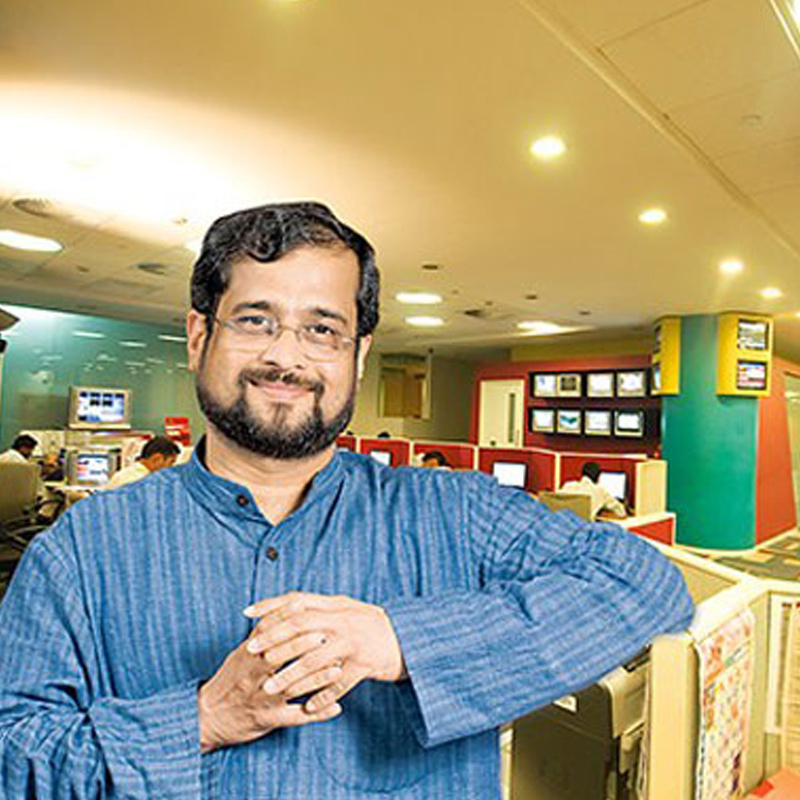
NEW DELHI: Even if Marathi viewers understand Hindi with equal ease, the future is bright for Marathi TV news channels. And the reason behind this is that Hindi news channels fail to meet the needs of a Marathi viewer.
Marathi TV news editors believe that viewers of Maharashtra have an appetite for hard news, which the national news channels lag behind in the state.
Talking at the 4th News Television Summit, Star Majha editorial head Rajiv Khandekar and IBN Lokmat News editor Mandar Phanse agreed that the sensational and trivial content served by Hindi news channels is not digested by the Marathi viewer.
Khandekar started the discussion saying that all the three 24-hour Marathi news channels – Star Majha, IBN Lokmat and Zee 24 Taas – strictly adhere to “news and meaningful programming”.

“We don’t show bhoot-pret stuff on our channel, and neither sensationalise stories. Our programming also is focused on value addition, in terms of education, religion etc,” Khandekar said.
Phanse said Marathi news channels have to focus on politics and other issues. “There are so many issues within the state and we don’t need to drift focus. IBN Lokmat has made an impact with its programming.”
Talking about the financial aspects and business model of the channels, both agreed that being a part of a group helped in many ways. They don’t need to spend much on carriage as they are part of the bouquet; they can also get the national and international feed easily and the wide network of bureaux helps in news gathering operations.
Star Majha is a part of MCCS, which also operates Star News (Hindi) and Star Anand (Bangla). Zee 24 Taas, on the other hand, is part of Zee News Ltd, which has Hindi news channel Zee News and many regional language news channels. IBN Lokmat is a JV between Lokmat Group and IBN18, which runs CNN IBN and IBN7.
Phanse and Khandekar said revenues were not accurately tapped as their channels lacked in proper marketing and promotions.
“A properly marketed Marathi news channel can attain break-even in less than three years. But the problem is our channels are not marketed well,” Phanse agreed.
When questioned about the scope for more news channels in the same space, Khandekar cited examples of local cable channels. “In towns like Sholapur and Kolhapur there are 24-hour cable news channels. Actually, Maharashtra is so diverse that there can be news channels for specific regions – Vidarbha, Marathwada and Nagpur – and all can flourish,” said Khandekar.
Currently, apart from these three channels, public broadcaster DD Sahyadri, ETV Marathi, Saam Marathi and Mi Marathi telecast news capsules.




News Broadcasting
UDF poised to return to power in Kerala, says Manorama-CVoter survey
Massive opinion poll projects shift in Kerala politics ahead of 2026 Assembly elections.
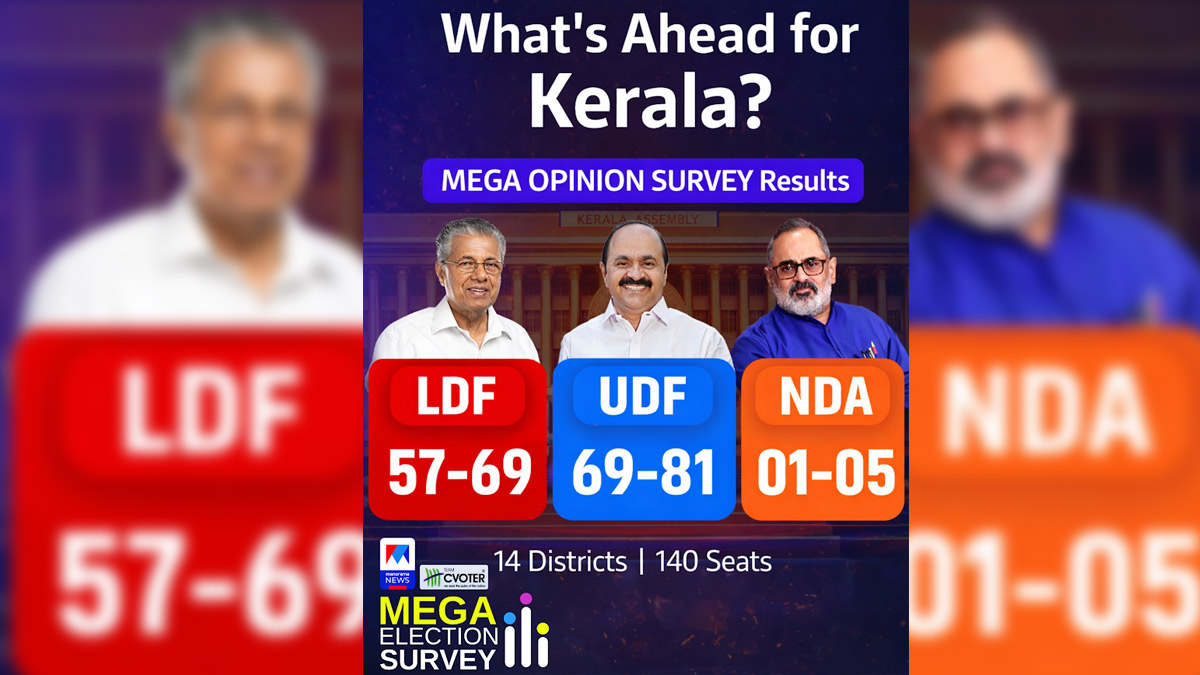
MUMBAI: The winds of change appear to be blowing through Kerala’s political landscape and this time, they seem to favour the United Democratic Front. A comprehensive mega opinion survey conducted by Manorama News in partnership with CVoter projects a potential comeback for the UDF in the upcoming Kerala Legislative Assembly Elections 2026. The survey, covering all 140 constituencies with a massive sample size of nearly 90,000 respondents, predicts the UDF could win between 69 and 81 seats.
The ruling Left Democratic Front (LDF) is expected to secure 57 to 69 seats, a significant drop from the 99 seats it won in the 2021 elections. This would mean the LDF losing 30 to 42 of its sitting seats. Meanwhile, the National Democratic Alliance (NDA), which drew a blank in 2021, is projected to open its account with 1 to 5 seats.
Region-wise, the UDF is expected to make strong gains in Malabar, winning 25 to 34 out of 48 seats, and in Central Kerala, where it could bag 29 to 33 out of 53 seats. In South Kerala, the LDF is likely to retain an edge with 21 to 25 seats, while the UDF may improve to 12 to 16 seats. The NDA could pick up 1 to 3 seats in the southern region.
The survey was conducted between 14 and 26 March 2026, with additional tracker and snap polls carried out from December 2025 to March 2026. A total of 89,693 respondents participated, ensuring representation across all demographics and social segments.
Manorama News has a strong track record of accuracy, with its previous projections closely matching the actual results of the 2019 and 2024 Lok Sabha elections as well as the 2021 Kerala Assembly polls.
In Kerala’s famously fierce political battles, this survey suggests the pendulum may be swinging back. Whether the final verdict matches these numbers or throws up another surprise, one thing is clear, the 2026 Assembly elections are shaping up to be one of the most keenly watched contests in the state’s history.






