News Broadcasting
Many issues covered, little by way of solutions at CETMA seminar on CAS


Do the amendments being sought in the Cable TV (Networks) regulation Act, 1995 address the issue of subscriber management system? Will there be a penalty for under-declaration of subscriber base by cable operators? Who will invest in the upgradation of head-ends when conditional access is implemented? What should be the business model in a post-CAS era? What should be the ideal technical specifications – open architecture or proprietary technology?
There were more questions and concerns than answers and solutions. That, in a nutshell, was the outcome of a seminar on conditional access systems (CAS) and pay TV channels that had been organised by the Consumer Electronics & TV Manufacturers’ Association (CETMA) in Delhi today.
After the seminar, a chief executive of a joint venture cable distribution company admitted in private that “too may issues and concerns were voiced with almost no solutions offered.”

If Shantanu Aditya, head of Sony Entertainment TV Discovery Pvt Ltd, a cable distribution company, felt that the amendments which have been proposed in the Cable TV (Networks) regulation Act, 1995, would not help India leapfrog where technology is concerned and also does not address the issue of under-reporting by cable operators, Vikki Choudhry, an independent cable operator in Delhi was of the opinion that the broadcasters, most of the time, do not take into account the problems of cable operators which include financial ones too. “In such a scenario, CAS is a good thing for the whole industry as it will bring about some transparency,” he added.
However, the three major concerns, which CETMA will apprise the government of after collating facts from the seminar, amongst others, are the following:
1. The cost factor: higher duties on set top boxes (STBs) which at present total up to about 58.6 per cent, must be reduced drastically. According to Rajeev Karwal, senior vice-president (consumer electronics) of Philips India Ltd, “If the government really wishes to popularise CAS through STBs, then the various duties on STBs need to be reduced.”
2. Safeguard against unauthorised re-distribution of pay channels after CAS is implemented. Explained Sanjiv Kainth, general manager, digital products, Thomson Multimedia India Pvt. Ltd: “The government has to ensure that after CAS is implemented, nobody illegally redistributes pay channels. This is very important as it will defeat the whole purpose of CAS.”
3. The analog vs digital STB issue: With confusion prevailing in the Indian market whether India should go in for anlaog or digital STBs, Thomson’s Kainth said that various lobbies be damned as market forces, based on economic factors of the region serviced by cable operators will decide whether it will be analog or digital STBs. “As I see it, in all probability, it will be a mix of both with cable operators servicing more affluent areas having the option to go in for digital STBs,” he added. But differing with Kainth on this issue was Aditya who felt that analog STBs would be a “step backward.”
K. Jayaraman, managing director of Hathaway & Datacom Cable, felt that CAS may address the issue of piracy which results in loss of revenue for everybody, but added that some pilot projects undertaken by his company has shown that digital STBs don’t seem to work very well in India.
But it was Thomson’s Kainth, airing CETMA’s overall view, who came out with a splendid presentation on CAS and pay channels which covered the whole gamut of issues from investments to the business models to the technical specifications.
According to Kainth, investment between Rs 25 million to Rs 100 million would be needed in a headend that is distributing 40-odd digital channels and “ultimately it would be the cable operator who owns the subscriber and the subscribers themselves who will have to bear a major share of the investment pie.” A point of view also voiced by Dayanidhi Maran, chief executive of the Sun-owned Sumangali Cable Vision cable distribution company.
Sunil Khanna, chief executive of Zee Turner Pvt. Ltd, referred to the idea of “headend in the sky” which will drastically reduce the cost of physical implementation of CAS throughout the country in various phases.
Head in the sky concept involves forming a platform of broadcasters who uplink from a common place where all the signals are encrypted after the various channel signals are passed through a box and then uplinked again in that format. The cable operator then downlinks the encrypted bunch of signals, mixes the free to air channels and re-distributes to consumers according to their needs.
But, countered, a senior executive from a hardware manufacturing firm, headend-in-the-sky concept sounds very good theoretically, but will remain a fantasy as in this case the broadcasters have to decide first to come together which looks a remote possibility.
Then, of course, consumer activist and columnist Pushpa Girimaji, presenting the consumers’ viewpoint said that CAS is fine but the way everything has been framed it seems to limit the consumer’s options rather make it flexible.
“The Bill on CAS takes away the people’s right of choice and gives the power to the government to decide what they should see. It curtails consumers choice and nobody should decide how many channels people should see (or not see),” Girimaji said while referring to the CAS and the basic tier of free to air channels being proposed by the government.


News Broadcasting
CNN-News18 to host Fury in the Gulf conclave on West Asia crisis
Three-hour summit to unpack geopolitical fallout and impact on India
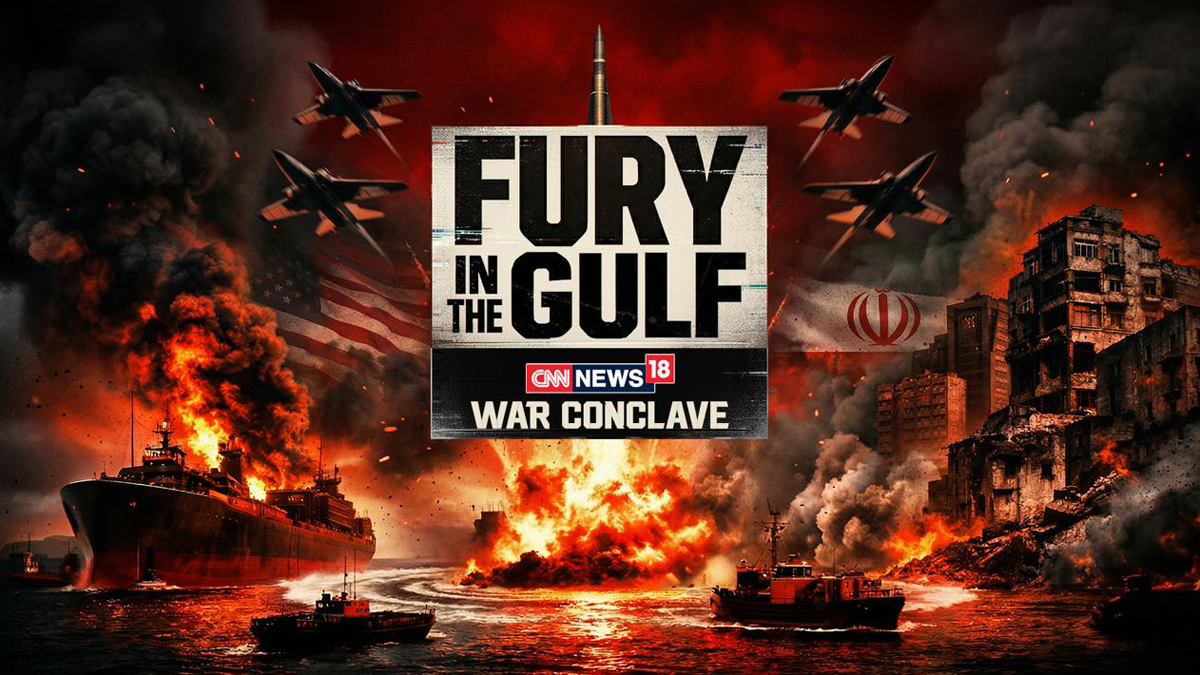
MUMBAI: CNN-News18 is set to host a special three-hour broadcast, Fury in the Gulf – War Conclave, on April 7, aiming to decode the escalating West Asia crisis and its far-reaching implications for India.
Scheduled from 4:00 PM to 7:00 PM, the conclave comes at a time when tensions between Iran and the United States are reshaping global geopolitics and triggering economic uncertainty. With India’s deep energy ties, trade links and large diaspora in the Gulf, the developments carry significant domestic relevance.
Built around the theme ‘Conflict, Consequences, and The Future,’ the programme will feature six curated sessions combining one-on-one interviews and panel discussions. The focus is to cut through the clutter and offer viewers a clearer understanding of the fast-evolving situation.
Key sessions include ‘Diplomacy in Times of War’ featuring Shashi Tharoor, and ‘World After the Iran Conflict’ with voices such as Ram Madhav, Reuven Azar, representatives from the European Union and the Iranian Deputy Envoy. Another session titled ‘Another Dunkirk?’ will bring together K. J. S. Dhillon and Jitin Prasada among others.
CNN-News18 editorial affairs director Rahul Shivshankar said, “In times of war, clarity becomes the most powerful tool. Fury in the Gulf – War Conclave brings together credible voices to address the questions and confusion that arise amid an overwhelming influx of information.”
He added that the initiative is aimed at delivering “facts, perspective, and insight” at a time when misinformation can easily cloud public understanding.
Echoing the sentiment, CNN-News18 CEO– English and business news Smriti Mehra said the conflict marks a defining global moment, with consequences that extend well beyond the region. She noted that the conclave seeks to present the crisis with “depth, nuance and responsibility” so audiences can better grasp its real-world impact.
As geopolitical tensions continue to dominate headlines, the conclave positions itself as an attempt to bring order to the noise, offering viewers a structured, insight-led look at a complex and rapidly shifting global situation.






