News Broadcasting
Manna Dey sings for Prasar Bharati’s archival collections

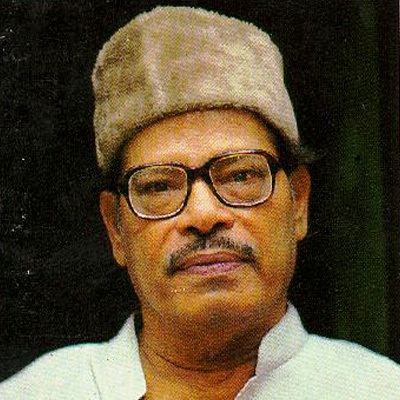
NEW DELHI: Age has not withered his voice or affected his sense of humour. And though the grey lines are beginning to show, legendary playback singer Manna Dey still shows the same enthusiasm while performing that he had been popular for two decades ago.
Expectedly, he left the audience entranced as he sang some his most popular numbers here last night at a concert organised by Doordarshan. The entire performance was recorded by Doordarshan for telecast and for being converted with CDs and VCDs as part of the archival collection of Prasar Bharati.
Apart from the singer, the evening also saw the recitation of poetry by well-known lyricist Gopal Das Neeraj who in fact has also written some of the songs that the 86-year old Manna Dey sang.

The singer obliged by singing some of Neeraj’s lyrics, including ‘aye bhai, zaraa Dekh ke chalo’ from the film ‘Mera Naam Joker’ made by probably the best showman of Indian cinema, Raj Kapoor, and ‘Aie mere pyaare watan, aie mere bichchde chaman’ from ‘Kabuliwala’ based on the story by Gurudev Rabindranath Tagore and ‘Poochho na kaise maine ran bitaayi’. Both Manna Dey and Neeraj received the National Awards for this song from ‘Mera Naam Joker’.
The maestro chose to pick his own songs, and though he had a book in front of him with the lyrics written in them, he seldom had need to look down as he got carried away and the words came on their own from the corners of memory.
Other songs rendered by Manna Dey included ‘Umarya Katti Jaye’, ‘Phul Gendwa Na maaro’, ‘Jeevan se lambe hain jeevan ke raste’, ‘Ai meri Zohra Zabeen tujhe maloom nahin’, and so many others including a Bengali song inspired by a famous coffee house in Kolkata which used to be frequented by artistes and filmmakers like Satyajit Ray.
He also sang a composition of his favourite music director S D Burman– ‘Piya Maine Kya kiya, hame chhodh ke jayyo na’ and a few verses from ‘Madhushala’ composed by Harivansh Rai Bachchan.
He was accompanied on the tabla by Indranath Mukherji, Richard Mitra on electric guitar and Mahendra Gokhale on keyboard.
Manna Dey ‘s soulmate and ”inspiration” of his art Sulochana was also among the audience.Earlier, CEO Prasar Bharati BS Lalli welcomed Manna Dey with a bouquet of flowers and presented him a shawl. Senior officials of Doordarshan and All India Radio were also present.
Born in 1920 in Kolkata, Manna day learnt the basic nuances of singing from his uncle Krishna Chandra Day and Ustad Dabir Khan. Later, when he came to Mumbai in 1942, he perfected his art under the tutelage of Sachin Dev Burman and under two stalwarts, Ustad Aman Ali Khan and Ustad Abdul Rahman Khan.






News Broadcasting
CNN-News18 to host Fury in the Gulf conclave on West Asia crisis
Three-hour summit to unpack geopolitical fallout and impact on India
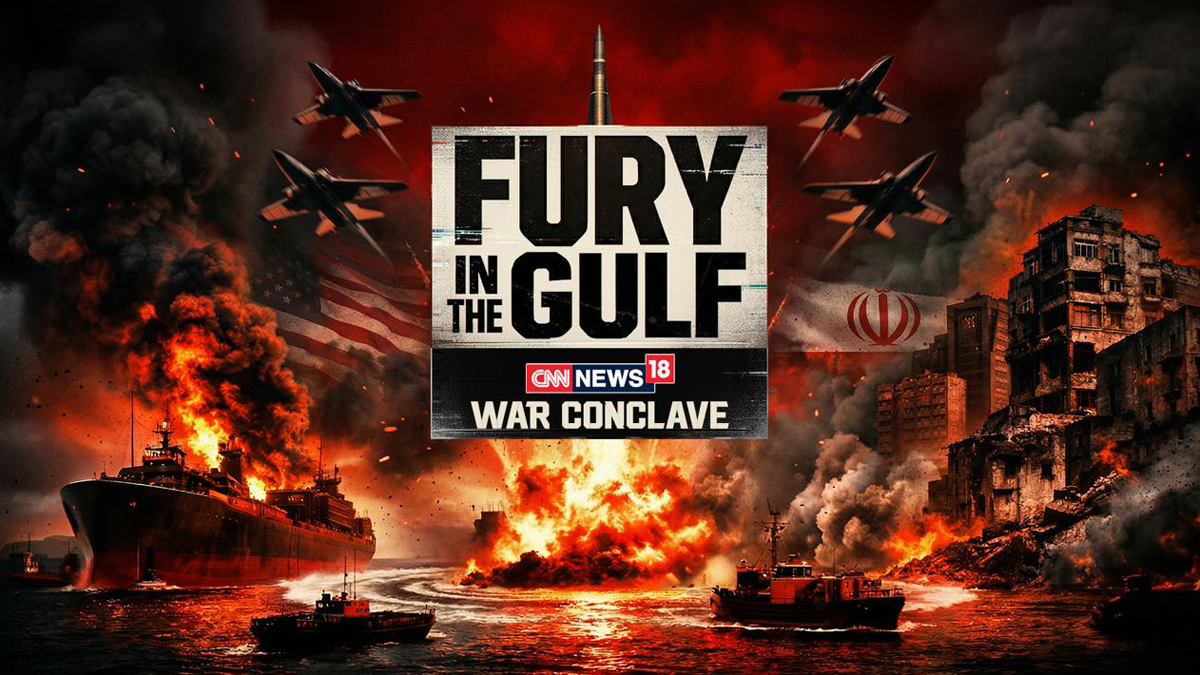
MUMBAI: CNN-News18 is set to host a special three-hour broadcast, Fury in the Gulf – War Conclave, on April 7, aiming to decode the escalating West Asia crisis and its far-reaching implications for India.
Scheduled from 4:00 PM to 7:00 PM, the conclave comes at a time when tensions between Iran and the United States are reshaping global geopolitics and triggering economic uncertainty. With India’s deep energy ties, trade links and large diaspora in the Gulf, the developments carry significant domestic relevance.
Built around the theme ‘Conflict, Consequences, and The Future,’ the programme will feature six curated sessions combining one-on-one interviews and panel discussions. The focus is to cut through the clutter and offer viewers a clearer understanding of the fast-evolving situation.
Key sessions include ‘Diplomacy in Times of War’ featuring Shashi Tharoor, and ‘World After the Iran Conflict’ with voices such as Ram Madhav, Reuven Azar, representatives from the European Union and the Iranian Deputy Envoy. Another session titled ‘Another Dunkirk?’ will bring together K. J. S. Dhillon and Jitin Prasada among others.
CNN-News18 editorial affairs director Rahul Shivshankar said, “In times of war, clarity becomes the most powerful tool. Fury in the Gulf – War Conclave brings together credible voices to address the questions and confusion that arise amid an overwhelming influx of information.”
He added that the initiative is aimed at delivering “facts, perspective, and insight” at a time when misinformation can easily cloud public understanding.
Echoing the sentiment, CNN-News18 CEO– English and business news Smriti Mehra said the conflict marks a defining global moment, with consequences that extend well beyond the region. She noted that the conclave seeks to present the crisis with “depth, nuance and responsibility” so audiences can better grasp its real-world impact.
As geopolitical tensions continue to dominate headlines, the conclave positions itself as an attempt to bring order to the noise, offering viewers a structured, insight-led look at a complex and rapidly shifting global situation.






