News Broadcasting
Manmohan Singh CNN IBN’s ‘Man of the Year’

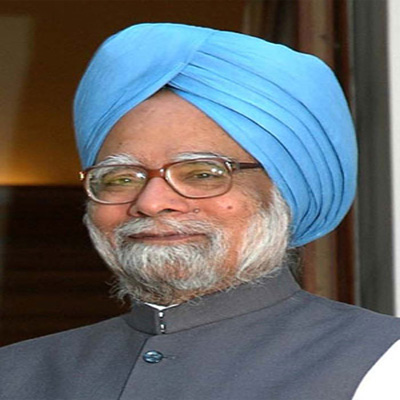
NEW DELHI: The word was out early last morning in huge ads splashed in newspapers that Dr Manmohan Singh, the Indian premier had won the Indian Man of the Year in the “Politics” category, but later in the evening in a high-tech massive awards ceremony, he was declared the overall winner of the CNN-IBN Indian Man of the Year 2007.
The organisers had thought he would perhaps finally be able to make it, but he could not. The award was received on his behalf by Dr Sanjay Baru, his media in-charge. But soon after, Singh was shown receiving his award at his residence in a special TV coverage. The gala event saw some of the top men and women from business, media and political fields attend the first ever CNN-IBN Indian Man of the Year awards.
With the biggest ever business takeover of Corus Steel by the Tata group, Ratan Tata expectedly won the award in the business category. He too could not attend and the prize and citation were received by his representative.

Laxmi Narayan Mittal had also been in the running in the business section, but had to make way to Tata. However, his stature and achievement was rewarded by a Jury Award. But perhaps the best surprise was in the sports category, with Jeev Milkha Singh winning the sports award, with a proud father, Flying Sikh, Milkha Singh applauding. Sania Mirza failed the rigorous tests and processes involved, though Amar Singh, sitting in the audience would have none other than her as his choice.
“Jeev’s mother and I never wanted him to be a sportsperson, because when we were in sports there was no money in it. We wanted him to become a doctor or engineer, but he went ahead and became a golfer. Now that he has done so, he must win every award in the sport,” Milkha Singh said.
There were two other delightful decisions. Rajkumar Hirani, director of “Lagey Raho Munnabhai” and the right to information missionary Arvind Kejriwal won the awards in the entertainment and social work categories.
Hirani said he was overwhelmed by the audience reaction to the film. “I was scared when we did the film. It is truly gratifying that a concept like Gandhism has found a meaning in the context of the 21st century India,” Hirani said.
Introducing the awards, CNN-IBN chief editor Rajdeep Sardesai said that the idea was first floated by one of his senior colleagues but “My first reaction was – Oh, another award.” He said that most Indian awards were confusing: who chose them, on what criteria, what was the credibility?
“We decided that if we have to go for an awards ceremony, we needed to have that credibility. That is why some of India’s top people were selected as jury, headed by eminent jurist Soli J Sorabjee.” Strict criteria were fixed and nominations received from across the country. These were scrutinised and the jury spent days going through the process.
“We wanted the Indian’s to vote as a whole and hence the SMS votes were also invited,” However, Sardesai said that “We knew SMS votes can be fixed, so there was a modicum of doubt about that.” Still, he said, some factors were considered from there.
Finally, the awardees were decided and he along with the jury were satisfied with the choice as credible and acceptable.
The jury comprised of Sorabjee, senior police officer and social worker Kiran Bedi, former billiards champion Geet Sethi, industrialist Deepak Parekh and Infosys boss Nandan Nilekani.
Interestingly, before the announcement of prize for each category, members of the audience were asked their choice. In one such response, railways minister Laloo Prasad drew laughter when he refused to comment. “Yeh judicial mamla hain, to jury nay jo kaha hum usko mantey hain (This is a judicial matter, and I stand by the verdict of the jury).
Sadesai had spoken of the new, vibrant India, the cynosure of world business, and it was thus in the fitness of things that Pepsi CEO Indra Nooyi bagged the jury’s verdict in the NRI category.
The audience was regaled when Sorabjee said that deciding on awards was fraught with danger, of losing old friends, but in a more serious note, added that 100 top Indians had been initially short-listed and the most important deciding factor in the final verdict was, did the person concerned do India proud in his or her area of activity and put India on the global map?
Somenath Chatterjee, Speaker, Lok Sabha brought the ceremony late at night by a long and arduous speech.



News Broadcasting
News18 India launches Command Centre war explainer with Arya
New show shifts from debates to decoding global conflicts and impacts
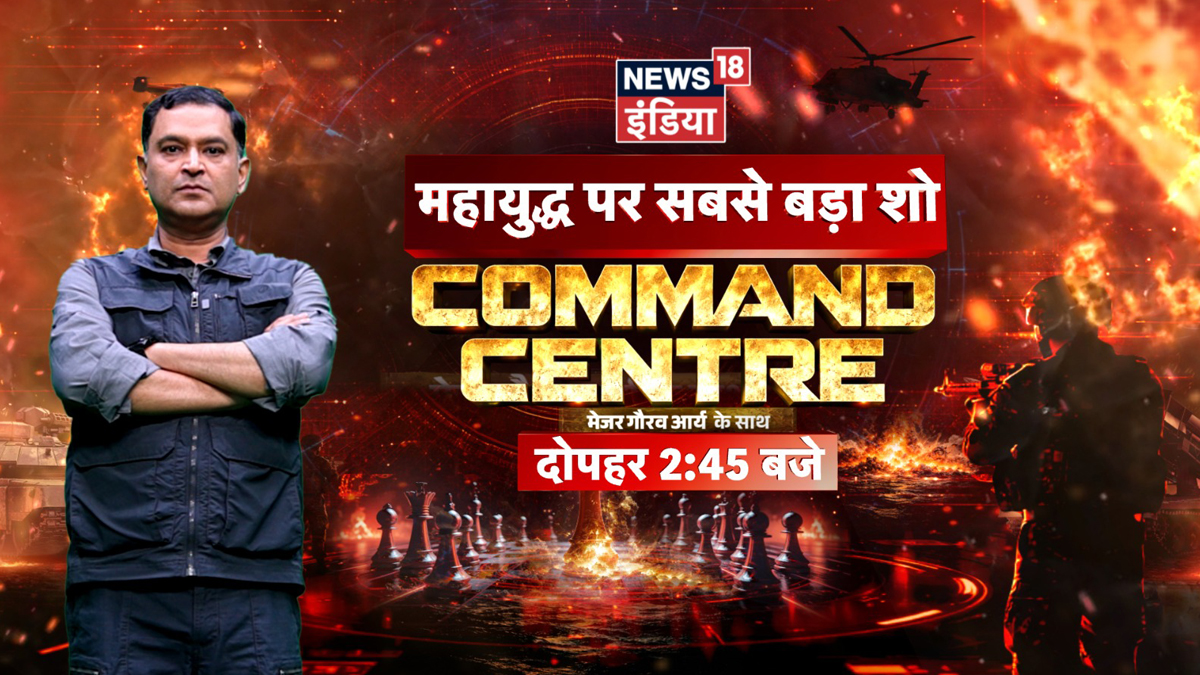
MUMBAI: News18 India has rolled out a new war-focused programme, Command Centre, featuring Gaurav Arya, as it looks to offer viewers a sharper, more grounded take on global conflicts amid rising tensions in West Asia.
Positioned as an “insider war room”, the show moves away from conventional panel debates and instead focuses on explaining military developments, decoding strategy and connecting global events to their everyday impact, from fuel prices to economic shifts.
The format leans heavily on visuals and data. The studio has been designed like a command hub, complete with large LED war maps, real-time graphics and an alert system to track developments as they unfold.
At the centre of it all is Arya, who brings his military background to simplify complex war strategies for viewers. His signature line, “Seedhi baat samjhiye”, anchors the show’s promise of clarity over noise.
News18 India managing editor Jyoti Kamal said, “Command Centre, featuring Major Gaurav Arya is designed to deliver accurate insights and a clear perspective on how evolving conflicts impact everyday life, from household budgets to national security. With expert voices analysing every development in real time, the show goes beyond headlines to decode what’s happening now, what it means, and what could come next.”
Echoing the intent, Gaurav Arya added, “In times of war, confusion is the biggest threat. With News18 India’s Command Centre, we are bringing viewers inside the war room, decoding strategies, tracking every escalation, and explaining, in the simplest terms, what it means for India and for every household. Seedhi baat samjhiye, this is where you understand not just what is happening, but what happens next.”
The weekday show will air in the afternoon slot and will also feature Gaurav Shukla, adding to its editorial depth.
With its mix of analysis, visuals and a clear focus on impact, the show reflects a broader shift in news consumption. Viewers are no longer just watching events unfold, they are looking to understand what those events mean for them.






