Hindi
Manipuri film bags top award at Mumbai International Film Festival


MUMBAI: The Manipuri documentary film Phum Shang has won the Golden Conch Award for the Best Documentary Film (upto 60 minutes) at the 14th Mumbai International Film Festival for Documentary, Animation and Short Films, which concluded here today.
The Swiss film My Name is Salt and Indian entry Placebo shared the Gold Conch award for the Best Feature length Documentary Film.
Debanjan Nandy’s animation film Chhaya bagged the first prize in the Animation Category of International Competition. Mumbai filmmaker Devashish Makhija’s Agli Baar shared the Best Short Fiction Film honours with the UK entry Solo Finale by Ingo Putze.

The Dadasaheb Phalke Award for the Best Debut Film of a Director went to Far From Home by Copenhagen, Denmark based film maker Nitesh Anjan.
The Festival organised by the Films Division every second year in collaboration with the Government of Maharashtra and the Indian Documentary Producers Association had commenced on 28 January.
The main awards were given away by Maharashtra Governor Vidyasagar Rao in the presence of Maharashtra Culture Minister Vinod Shreedhar Tawde, filmmaker Ramesh Sippy, brand ambassador Jackie Shroff and Festival director Mukesh Sharma.
Speaking on the occasion, Rao said that he would like documentaries to transform themselves from those for a young India since the average age of the Indian today was 29, which was far below that of the United States or China.
He also wanted the Films Division to explore new talent from remote parts of the country and even economically weaker sections. Rao urged the Division to work with universities and schools in the state to ensure that films are made by students and also shown there.
“The documentary format is important as these films help to understand the complexities of the situation in all parts of the world,” he said.
He wanted Doordarshan to reserve a one-hour slot every week for documentary, short and animation films.
Rao also rooted for more women filmmakers to emerge and said MIFF should encourage innovation and new ideas.
Tawde said that documentaries provoked governments to action when they exposed ills in society and thereby played an important role. “MIFF should be held every year, and the state government can host it in the intervening year in case the Information and Broadcasting Ministry at the centre is not inclined to do so,” he added.
Sippy said that commercial cinema was glamorous but the real challenge lay in making documentary or short films. “This should be encouraged,” he said.
Shroff said he had come into the Festival as the brand ambassador but was leaving as a student who had learnt so much about documentaries and shorts. He also wanted the Festival to be made an annual affair. Answering a question by presenter Sameera Gujjar, he said that commercial films were dreams whereas the documentary were facts. Asked about national and international cinema, he said feelings were the same everywhere.
Biju Dhanapalan who had been a member of the national jury said that special awards should be instituted for investigative documentaries, and those which have archival value, apart from making a strong appeal for restoring the Silver Conch award for the second best film. He also wanted the event to made into an annual feature. He said the national jury saw 27 films.
Ashish Kulkarni, who headed the Animation and New Media Jury, said that films by professionals and students could not be clubbed together and there had to be separate awards for these. He also wanted more awards for new media category. He said that the jury saw 21 animation and 32 new media films and was impressed with the way the filmmakers combined various mediums.
A total of 385 documentaries, shorts and animation films were shown at the Festival from around 20 countries out of the 850 received.
The 52 minute documentary Phum Shang directed by Hao Bam Pabankumar who is an alumnus of the Satyajit Ray Film & Television Institute, Kolkata, critically examines the serious environmental problems faced at the Loktak lake. The largest fresh water lake in North East India characterised by its unique floating biomass, known as ‘Phumdi,’ is today considered a dying lake due to unchecked human activity. Pabankumar won the Golden Conch Award and a cash prize of Rs 3 lakhs.
My Name is Salt directed by Mumbai born and Zurich based Farida Pacha is a film about the journey of thousands of families to the Rann of Kutch to extract whitest salt in the world. Chandigarh based film maker Abhay Kumar’s 96 minutes film Placebo explores the stress and pressure faced by medical students.
My Name Is Salt also won the Best Cinematographer award for Lutz Konermann, while Placebo, which won the Award for Best Editor, was also declared the Most Innovative Film in the competition section.





Hindi
Zee5 and Applause Entertainment team up for whodunnit ‘Everybody Loves Sohrab Handa’
Rajat Kapoor directs star-studded murder mystery streaming from 10 April.
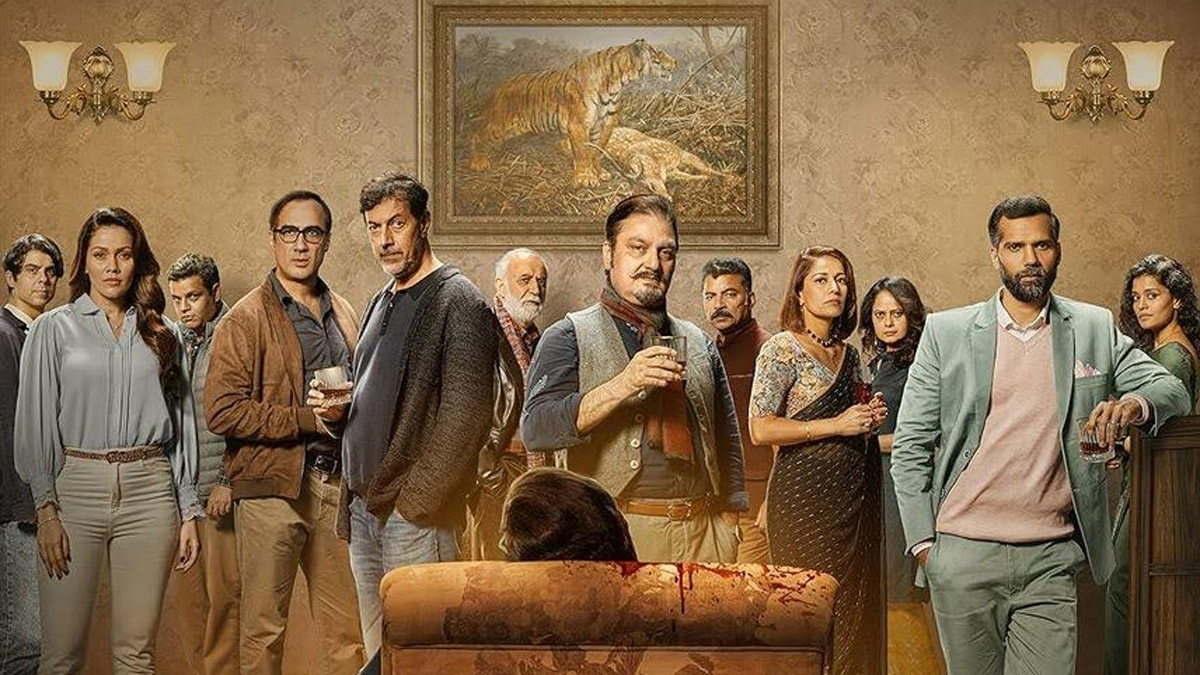
MUMBAI: Zee5 is serving up another killer collaboration and this time, the murder mystery comes with a generous side of dark humour and family dysfunction. The streaming platform has partnered with Applause Entertainment and Mithya Talkies to bring Everybody Loves Sohrab Handa, a fresh, twisted whodunnit written and directed by acclaimed filmmaker and actor Rajat Kapoor. The film will stream exclusively on Hindi Zee5 from 10 April.
The movie reimagines the classic murder mystery genre with a contemporary, darkly comic edge. It revolves around a group of friends and family who smile, drink, and celebrate together until the silence snaps and long-buried secrets spill out. The stellar ensemble cast includes Vinay Pathak, Ranvir Shorey, Waluscha De Sousa, Saurabh Shukla, Chandrachoor Rai, Neil Bhoopalam, Koel Purie, Palomi Ghosh, and Rajat Kapoor himself.
This latest offering continues the successful partnership between Zee5 and Applause Entertainment, which has previously delivered diverse hits such as Mithya, Bloody Brothers, and Jab Khuli Kitaab.
&TV Business Head of hindi Zee5 and chief channel officer Kaveri Das said, “Our collaboration with Applause Entertainment has consistently delivered distinct, high-impact storytelling. Everybody Loves Sohrab Handa is a natural progression, reinforcing our focus on genre-led content with a compelling whodunnit premise and a strong ensemble cast.”
Applause Entertainment business head for movies Sunil Chainani added, “This film adds yet another compelling layer to our slate with Rajat Kapoor’s unmistakable voice.”
Rajat Kapoor shared, “What interested me was not just the mechanics of a whodunnit, but the emotional violence that precedes physical violence. These are people who smile at each other, but there’s so much that is not said.”
The film promises razor-sharp writing, layered performances, and simmering tension, inviting viewers not just to solve the crime but to unravel the complex relationships at its heart.
If you love a good murder mystery served with wit and emotional depth, Everybody Loves Sohrab Handa looks set to be your next addictive watch. Mark your calendars, the whodunnit drops on Hindi Zee5 from 10 April.







