News Broadcasting
Mandals to the Metaverse Zee 24 Taas Goes Global with Ganpati

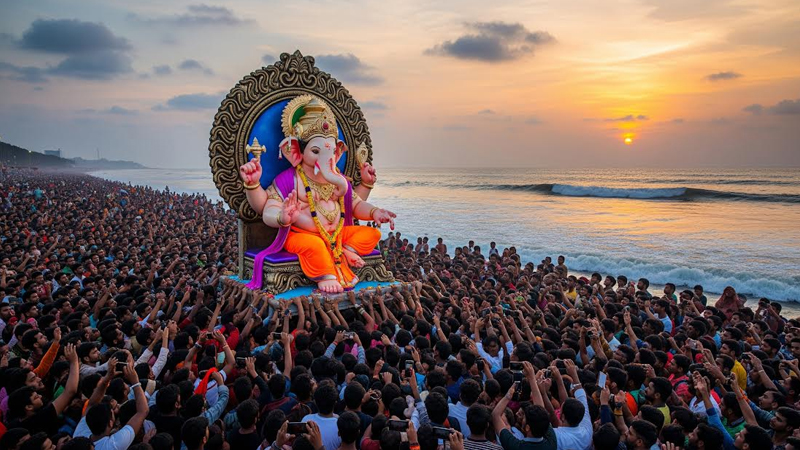
MUMBAI: Ganpati Goes Global, and Zee 24 Taas Is Right at the Heart of It. From Glasgow to Girgaon, Ganpati is no longer just a local celebration, it’s a global phenomenon. And Zee 24 Taas isn’t just covering the news, it’s shaping the narrative. In an engaging conversation with Indian Television Dot Com Zee 24 Taas editor Kamlesh Sutar shared how the channel is reimagining festive programming to reflect both tradition and tech, rural reverence and social media sparkle.
“It starts with Shravan,” Sutar explains, “Dahi Handi and Gokulashtami kick off the season, followed by Ganesh Utsav, Navratri, and Diwali. Our audience spans the globe now diaspora in the US, UK, UAE, even Pakistan tunes in.” Last year, the channel’s Desho Deshi Se Bappa special featured live coverage from Glasgow, where the Grand Maharashtra Mandal’s celebrations lit up screens back home.
Zee 24 Taas plans to go bigger this year, capturing Ganesh festivities in cities with strong Maharashtrian communities Dubai, New York, Spain, and beyond showing how faith travels and festivals follow.

Back home, the strategy is rooted in hyper-local storytelling. “Mumbai isn’t just Mumbai,” Sutar says. “We go down to the mohalla Dadar, Parel, Girgaon. And the same for other cities Ashur in Pune, Hatkanangle in Kolhapur. Hyper-local gives us deeper engagement and a stronger emotional connect.”
The channel’s on-ground teams no longer report from the field they are the field. Anchors now go live from pandals and mandals, turning static coverage into immersive storytelling.
Zee 24 Taas is also speaking the language of Gen Z. “Young people don’t tune into conventional news, they scroll it,” Sutar says. So the team infuses digital-first formats like Instagram Lives, trending reels, and celeb-driven content. A Celebrity Ganpati segment is in the works, roping in well-known faces to boost youth engagement across platforms. “We’re not just live on TV, we’re live on YouTube, Instagram, everywhere.”
To keep audiences plugged into the pulse of the festival, Zee 24 Taas has lined up a comprehensive slate of special programming that blends devotion with entertainment. For television viewers, the schedule includes Shree Ganesh Aarti, a daily broadcast of the morning aarti from 27 August to 6 September at 6:45am, and Zee 24 Taas Sukhkarta, airing twice first as a build-up from 21 to 26 August at 10:30am, and later as a daily festival bulletin from 27 August to 6 September at 7:30am.
Global Bappa, telecast at 12:30pm, brings a glimpse of Ganeshotsav celebrations from across the world, while Bappa Aaj Kai Khanar spices things up with festive recipes during the same afternoon slot. Gharguti Ganesh Spardha, airing from 1:30pm to 2pm, invites viewers to showcase their home celebrations, while Celebrity Ganpati brings star-studded darshans to the screen from 5:30pm. Gavakadcha Bappa, scheduled at 7:30pm, offers local flavours through festival walk-throughs from across Maharashtra. Special aarti broadcasts like Shree Ganeshachi Pran Prathishtha will mark the festival’s start on 26 and 27 August. The finale, Pudhchya Varshi Lavkar Ya, on Anant Chaturdashi (6 September), will run from 7am to 11pm, capturing the immersion-day fervour.
Beyond the box, Zee 24 Taas is equally charged up on digital. Their festival content package includes a mix of festival news, informative stories on Ganesh Chaturthi’s significance and rituals, vibrant photo galleries featuring eco-friendly idols and pandals, and specially curated recipes. The channel’s social feeds will also be abuzz with original and syndicated videos, plus crowd-sourced web stories featuring images sent by enthusiastic devotees. This integrated multi-platform strategy ensures Zee 24 Taas celebrates Ganeshotsav not just as a regional affair, but as a global experience echoing across living rooms in India and beyond.
Sustainability, too, has made its way into editorial choices. The channel spotlights eco-friendly idols, online pujas, and even the rise of online Ganesh shopping. “Modern-day concerns like the environment and accessibility are integrated seamlessly,” Sutar notes.
Zee 24 Taas is mindful of maintaining editorial sanctity while embracing advertiser partnerships. “Brand integration works when it’s organic,” says Sutar. “For instance, a mithai brand during Ganpati feels natural. We steer clear of irrelevant sponsorships. It has to be a win-win for the brand and for our audience.”
The channel’s approach ensures advertisers find a contextual home during peak seasons, and viewers get content that’s immersive, not intrusive. With tailored brand stories, past campaigns have seen solid ROI and lasting recall.
At its heart, Zee 24 Taas’ festive coverage is driven by a simple belief: India’s festivals aren’t bound by state lines or even national ones. They resonate worldwide, evolve with technology, and unite communities through shared celebration.
And as Kamlesh Sutar puts it best, “I may not celebrate Ganpati at home anymore, but with Zee 24 Taas, I get to celebrate it with a million households across the world.”


News Broadcasting
CNN-News18 to host Fury in the Gulf conclave on West Asia crisis
Three-hour summit to unpack geopolitical fallout and impact on India
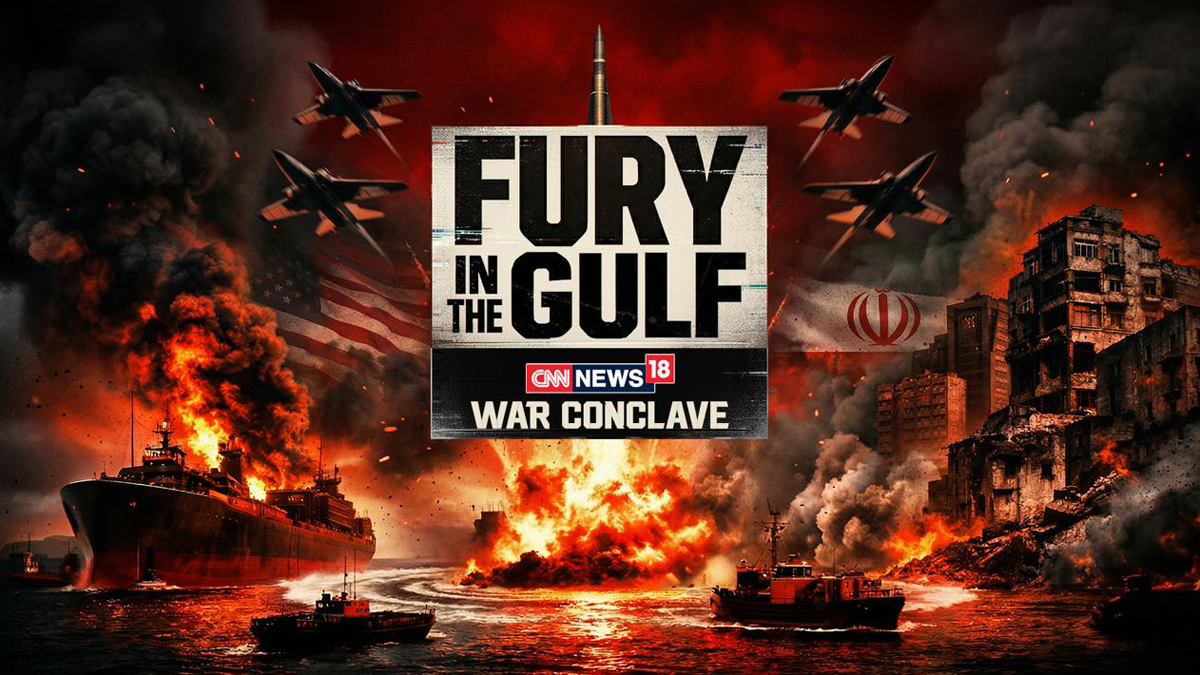
MUMBAI: CNN-News18 is set to host a special three-hour broadcast, Fury in the Gulf – War Conclave, on April 7, aiming to decode the escalating West Asia crisis and its far-reaching implications for India.
Scheduled from 4:00 PM to 7:00 PM, the conclave comes at a time when tensions between Iran and the United States are reshaping global geopolitics and triggering economic uncertainty. With India’s deep energy ties, trade links and large diaspora in the Gulf, the developments carry significant domestic relevance.
Built around the theme ‘Conflict, Consequences, and The Future,’ the programme will feature six curated sessions combining one-on-one interviews and panel discussions. The focus is to cut through the clutter and offer viewers a clearer understanding of the fast-evolving situation.
Key sessions include ‘Diplomacy in Times of War’ featuring Shashi Tharoor, and ‘World After the Iran Conflict’ with voices such as Ram Madhav, Reuven Azar, representatives from the European Union and the Iranian Deputy Envoy. Another session titled ‘Another Dunkirk?’ will bring together K. J. S. Dhillon and Jitin Prasada among others.
CNN-News18 editorial affairs director Rahul Shivshankar said, “In times of war, clarity becomes the most powerful tool. Fury in the Gulf – War Conclave brings together credible voices to address the questions and confusion that arise amid an overwhelming influx of information.”
He added that the initiative is aimed at delivering “facts, perspective, and insight” at a time when misinformation can easily cloud public understanding.
Echoing the sentiment, CNN-News18 CEO– English and business news Smriti Mehra said the conflict marks a defining global moment, with consequences that extend well beyond the region. She noted that the conclave seeks to present the crisis with “depth, nuance and responsibility” so audiences can better grasp its real-world impact.
As geopolitical tensions continue to dominate headlines, the conclave positions itself as an attempt to bring order to the noise, offering viewers a structured, insight-led look at a complex and rapidly shifting global situation.






