News Broadcasting
Major UK broadcasters team up for DTT high definition trial


MUMBAI: BBC, ITV, Channel 4 and Five have joined forces to launch the UK’s first high definition (HD) trial broadcasts to terrestrial aerials.
A specially selected 450-strong audience sample collect their trial HD set top boxes this week for the closed technical digital terrestrial television (DTT) technical trial which is due to last six months.
In an joint official statement issued, high definition is a step change in television technology which provides far clearer and more detailed pictures than normal standard definition TV. Each picture contains up to five times as much digital information as an ordinary TV picture.

The trial will offer participating broadcasters and their technical partners valuable lessons about delivering HD broadcasts on a digital terrestrial network and also research how the audience enjoys this new format.
It will help to discover whether there could be HD broadcasts on Freeview in future. The trial is being conducted under an Ofcom licence which strictly limits the number of receivers and forbids reception of the trial stream by general members of the public.
Humax and ADB (Advanced Digital Broadcast) have supplied the HD set top boxes for the trial. The DTT HD trial consists of low power transmissions from Crystal Palace in London on frequencies that are not suitable for high power broadcasting.
National Grid Wireless (NGW) is transmitting the BBC’s HD stream, which went on air last month, and Red Bee Media provides play-out services.
Arqiva is transmitting the multiplex shared by ITV, Channel 4 and Five, with Grass Valley, a business within Thomson, providing broadcast playout and video encoding equipment, states the official statement.
Siemens Business Services is providing technical support for the BBC’s HD trial. The test broadcasts will use MPEG4 video coding, 8K carriers and 64QAM modulation at launch – different parameters may be tested during the trial period.
The BBC’s trial DTT HD stream will offer identical programming to its HD trial broadcasts on satellite and cable over the trial period. That includes the BBC’s World Cup coverage, major Wimbledon matches and programming highlights such as Planet Earth and Bleak House.




News Broadcasting
CNN-News18 to host Fury in the Gulf conclave on West Asia crisis
Three-hour summit to unpack geopolitical fallout and impact on India
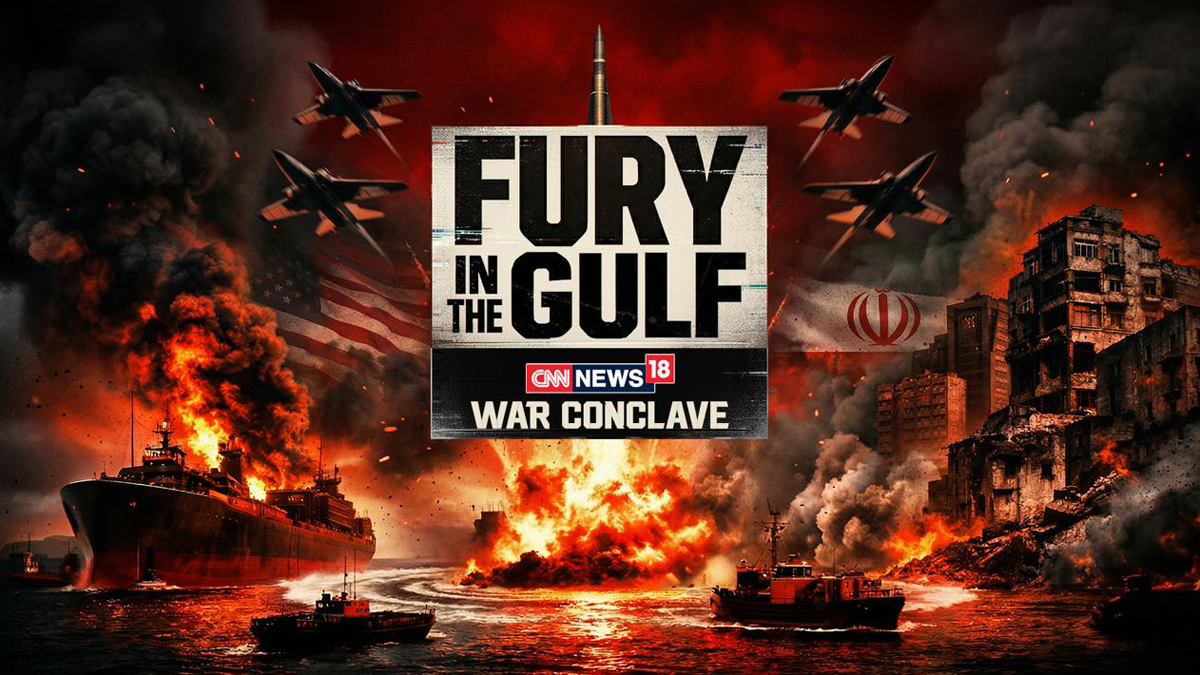
MUMBAI: CNN-News18 is set to host a special three-hour broadcast, Fury in the Gulf – War Conclave, on April 7, aiming to decode the escalating West Asia crisis and its far-reaching implications for India.
Scheduled from 4:00 PM to 7:00 PM, the conclave comes at a time when tensions between Iran and the United States are reshaping global geopolitics and triggering economic uncertainty. With India’s deep energy ties, trade links and large diaspora in the Gulf, the developments carry significant domestic relevance.
Built around the theme ‘Conflict, Consequences, and The Future,’ the programme will feature six curated sessions combining one-on-one interviews and panel discussions. The focus is to cut through the clutter and offer viewers a clearer understanding of the fast-evolving situation.
Key sessions include ‘Diplomacy in Times of War’ featuring Shashi Tharoor, and ‘World After the Iran Conflict’ with voices such as Ram Madhav, Reuven Azar, representatives from the European Union and the Iranian Deputy Envoy. Another session titled ‘Another Dunkirk?’ will bring together K. J. S. Dhillon and Jitin Prasada among others.
CNN-News18 editorial affairs director Rahul Shivshankar said, “In times of war, clarity becomes the most powerful tool. Fury in the Gulf – War Conclave brings together credible voices to address the questions and confusion that arise amid an overwhelming influx of information.”
He added that the initiative is aimed at delivering “facts, perspective, and insight” at a time when misinformation can easily cloud public understanding.
Echoing the sentiment, CNN-News18 CEO– English and business news Smriti Mehra said the conflict marks a defining global moment, with consequences that extend well beyond the region. She noted that the conclave seeks to present the crisis with “depth, nuance and responsibility” so audiences can better grasp its real-world impact.
As geopolitical tensions continue to dominate headlines, the conclave positions itself as an attempt to bring order to the noise, offering viewers a structured, insight-led look at a complex and rapidly shifting global situation.






