Cable TV
Maharashtra’s LMOs to blackout TV on 2 Oct

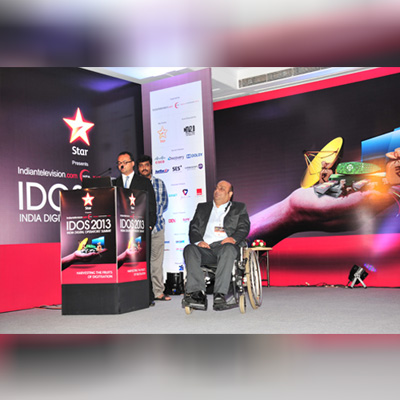
MUMBAI: A mid- week holiday is always welcome and is a good time to catch up with friends and family as well as your favourite TV shows and channels. However, this Gandhi Jayanti will see a different type of revolt on television in the west Indian state as the Maharashtra Cable Operators Federation (MCOF) has decided to put their foot down on the alleged “harassment” that they have been facing from the MSOs.
From 6:00 pm to 9:00 pm tomorrow, 2 October, about 3,000 cable operators under the MCOF have decided to blackout their screens opposing the ‘high-handed’ behavior that MSOs have adopted towards LMOs (Last Mile Operators), as MCOF president Arvind Prabhoo puts it. This includes the areas of Mumbai, Pune, Pimpri-Chinchwad, Nasik and Indore in MP where DAS I and II have been implemented. Approximately 15-20 lakh customers in Maharashtra alone will not get to see their favourite shows during prime time. LMOs in Gujarat have also been approached and a response is awaited from them.
Arvind Prabhoo feels that it is time to start treating LMOs as equals and respect their demands

The federation says that its intention is not to harass customers but just demonstrate that cable operators are united and it is high time MSOs give them their due credit in the cable TV chain. Communications to customers have already started in the form of SMSes and emails as well as leading papers – both English and Marathi – are being used to inform people about the flash blackout.
“If the MSOs and broadcasters sit and talk with us there is no need to do this but no one is listening to us,” stresses Prabhoo. He does not even feel that the two will reach out to the LMOs before evening of tomorrow. Initially the plan was to shut it down for a whole day but due to legal regulations, it was reduced to three hours.
This isn’t the end as well. If nothing comes out of this then more such days will see blackouts with increased hours especially during festive times.
There is a possibility that MSOs may take legal action against MCOF for this move but it is ready to fight the biggies. “This is exactly what we are opposing. When an MSO switches off channels on its own, no one questions its decision but the local guy is questioned. No legal action is taken but we have to bear all the brunt from both the MSOs as well as the customers,” adds Prabhoo. Recently, InCable had decided to switch off signals to all sports channels, right before the Champions Trophy T20, a way to bully the LMOs to cough up more cash, claims the federation.
The issues that LMOs have been grappling with are many. Prabhoo points out that last minute decisions taken by MSOs lead to chaos which has to be resolved by local operators. This happened during DAS Phase I when STBs (Set Top Boxes) were being installed in homes. Unending trips to customers to fill forms is a burden on them as well, discloses Prabhoo. MSOs have the power to switch off signals to channels arbitrarily as well as make channels unavailable on a-la-carte rates so that only packages exist. “They should talk business, not superiority or inferiority,” adds Prabhoo.
For now, the impending blackout is on the cards for tomorrow. Unless discussions take place soon, cable TV viewers in Maharashtra could well be in for more evenings of just looking at a blank TV set or one with a flickering static-riddled picture.







MUMBAI: When margins wobble, liquidity talks and in Q3 FY25-26, cash did most of the talking. Den Networks Limited closed the December quarter with consolidated revenue of Rs.251 crore, marginally higher than the previous quarter but down 4 per cent year-on-year, even as profitability stayed resilient on the back of strong cash reserves and disciplined cost control.
Subscription income softened to Rs.98 crore, slipping 3 per cent sequentially and 14 per cent from last year, while placement and marketing income offered some cheer, rising 15 per cent quarter-on-quarter to Rs.148 crore. Total costs climbed faster than revenue, up 7 per cent QoQ to Rs.238 crore, driven largely by higher content costs and operating expenses. As a result, EBITDA dropped sharply to Rs.13 crore from Rs.19 crore in Q2 and Rs.28 crore a year ago, pulling margins down to 5 per cent.
Yet, the bottom line refused to blink. Profit after tax stood at Rs.40 crore, up 15 per cent sequentially and only marginally lower than last year’s Rs.42 crore. A healthy Rs.57 crore in other income helped cushion operating pressure, keeping profit before tax at Rs.48 crore, broadly stable quarter-on-quarter despite the tougher cost environment.
The real headline-grabber, however, sits on the balance sheet. The company remains debt-free, with cash and cash equivalents swelling to Rs.3,279 crore as of December 31, 2025. Net worth rose to Rs.3,748 crore, while online collections accounted for 97 per cent of total receipts, underscoring strong cash discipline across operations, including subsidiaries.
In short, while Q3 showed signs of operating strain, the financial backbone remains solid. With zero gross debt, steady profits and a formidable cash war chest, the company enters the next quarter with flexibility firmly on its side proving that in uncertain markets, balance sheet strength can be the best growth strategy.






