News Broadcasting
Madhavan expounds on the wisdom of CO-producing

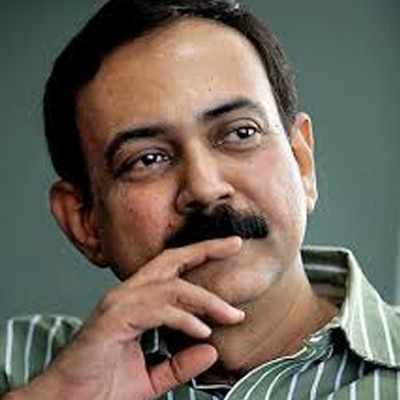
AK Madhavan,the genial and smiling CEO of Crest Communications spoke on ‘International CO-production in animation’.
Asking the audience, “How many of you here want to be entrepreneurs owning animation studios?” Madhavan began the session by sampling the aspirational quotient amongst India’s future animators.
“I see that I have severe competition” remarked the successful CEO, on seeing many hands arise.

Madhavan then introduced the students to the different business models on which studios work.
“There are various types of business models on which studios work. One of them is doing work for hire, purely work for hire, and why we do it is cost of production is cheaper. Traditionally studios from Europe, US and Canada send work overseas to reduce costs. The other model is CO production. It denotes you have 2 or more than 2 partners.” explained Madhavan.
Further commenting on the benefits of co-prouction and the complexities involved therein, Madhavan stated that CO-productions minimize risks, and the upside could be plenty.
Regarding complexities he stated that CO productions could have various ways in which monies were regrouped, there were several instances when deals were done for a particular platform. “Agreements” said Madhavan, ” also vary from territory to territory and geography to geography.”
Commenting on the long shelf life that animated content has and therefore the potential of perennial revenue inflows, Madhavan cited the example of Mickey Mouse, which he had seen as a child, which his children had also seen and his grandchildren would see too.
He also drew light upon the CO production treaties that existed between countries like ‘Canada and France’ , ‘Canada and Germany’ etc. where each studio that produces content in the 2 countries has to input talent from the partner country.
“Jakers is running in 17 countries across the globe, including PBS in the US, BBC in the UK, TF1 in France, and ABC in Australia” said Madhavan,talking about the high levels of appreciation and acceptance that content produced in Crest had received internationally.
He concluded by saying that “One has to build a mix, in the business model (CO-productions and work for hire) also it has to be remembered that there can be no compromise on deliveries and the quality. I think we are getting there.
This was followed by an interactive session with the audience, some of which is described below….
Madhavan’s reply on … distribution models “So far what we have been doing is we’ve been working with different producers. India doesn’t have the skills to distribute or market content worldwide. What we do is we either go to distribution companies, obviously there is a fee for it. Also there are agents who do it.”
Madhavan’s reply on … government involvement and human talent “I don’t think that the government is not interested. Government of India has not seen the potential yet. Industry associations are trying to get the government involved to encourage and fund projects. I am sure over the years, in the near future there will be participation.”
“All of the Indian animation studios and there are 60-70 of us, are focussing on enhancing talent, we are hiring from overseas, conducting workshops and retraining our people.”
Madhavan’s reply on … why only Tenali Ramas and Hanumans “If you have something interesting I’ll do it for you. The real reason is something called as copyright. Public domain stories don’t cost a copyright, this cuts on costs. They also have more immediate acceptance.”





News Broadcasting
News18 India launches Command Centre war explainer with Arya
New show shifts from debates to decoding global conflicts and impacts
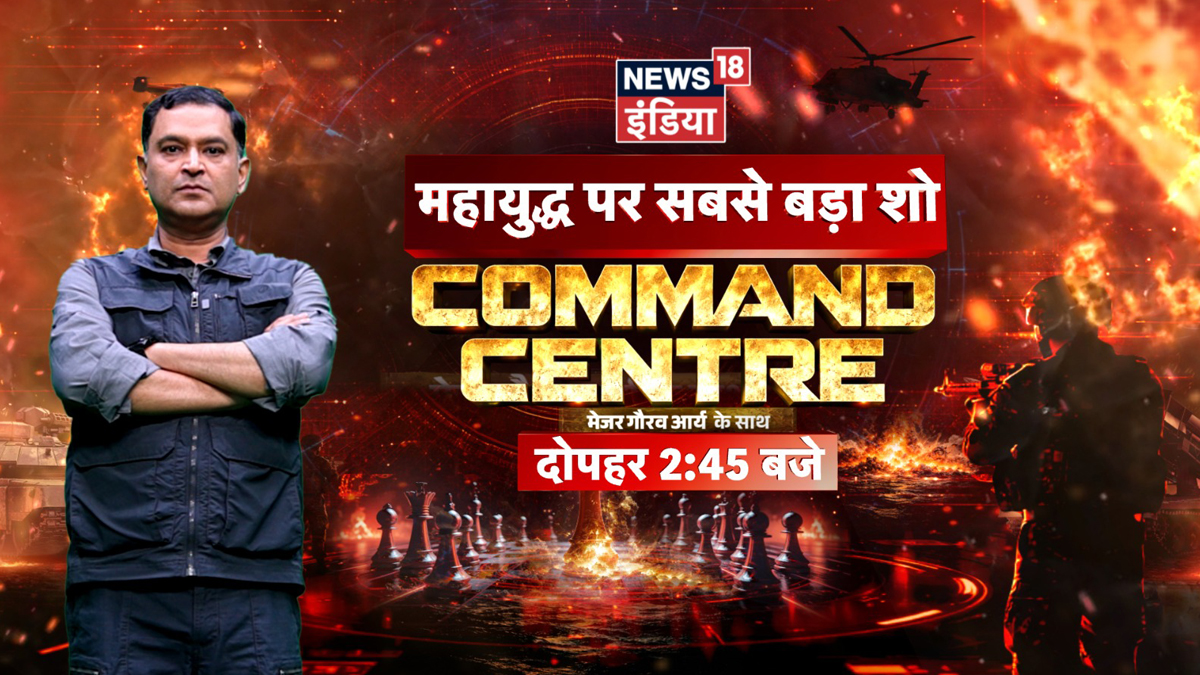
MUMBAI: News18 India has rolled out a new war-focused programme, Command Centre, featuring Gaurav Arya, as it looks to offer viewers a sharper, more grounded take on global conflicts amid rising tensions in West Asia.
Positioned as an “insider war room”, the show moves away from conventional panel debates and instead focuses on explaining military developments, decoding strategy and connecting global events to their everyday impact, from fuel prices to economic shifts.
The format leans heavily on visuals and data. The studio has been designed like a command hub, complete with large LED war maps, real-time graphics and an alert system to track developments as they unfold.
At the centre of it all is Arya, who brings his military background to simplify complex war strategies for viewers. His signature line, “Seedhi baat samjhiye”, anchors the show’s promise of clarity over noise.
News18 India managing editor Jyoti Kamal said, “Command Centre, featuring Major Gaurav Arya is designed to deliver accurate insights and a clear perspective on how evolving conflicts impact everyday life, from household budgets to national security. With expert voices analysing every development in real time, the show goes beyond headlines to decode what’s happening now, what it means, and what could come next.”
Echoing the intent, Gaurav Arya added, “In times of war, confusion is the biggest threat. With News18 India’s Command Centre, we are bringing viewers inside the war room, decoding strategies, tracking every escalation, and explaining, in the simplest terms, what it means for India and for every household. Seedhi baat samjhiye, this is where you understand not just what is happening, but what happens next.”
The weekday show will air in the afternoon slot and will also feature Gaurav Shukla, adding to its editorial depth.
With its mix of analysis, visuals and a clear focus on impact, the show reflects a broader shift in news consumption. Viewers are no longer just watching events unfold, they are looking to understand what those events mean for them.






